Primary source · Koine Greek
The Shepherd of Hermas
Hermas of Rome · c. AD 90–150 (in stages)

What this text is
The Roman church's book of visions, mandates, and similitudes — so beloved it stands bound with the New Testament in Codex Sinaiticus. Vision II names Clement as Rome's foreign correspondent.
Interlinear passages
Word-for-word glosses of the original; the complete public-domain translation is linked below.
Public-domain translations
J. B. Lightfoot (1891)
First of all, believe that God is One, even He who created all things and set them in order, and brought all things from non-existence into being. …Thou shalt therefore write two little books, and shalt send one to Clement and one to Grapte. So Clement shall send to the foreign cities, for this is his duty.
Roberts–Donaldson (ANF, 1885)
First of all, believe that there is one God who created and finished all things… Write two books, and give one to Clemens and one to Grapte. And Clemens will send his to foreign countries, for permission has been granted to him to do so.
Manuscript witnesses
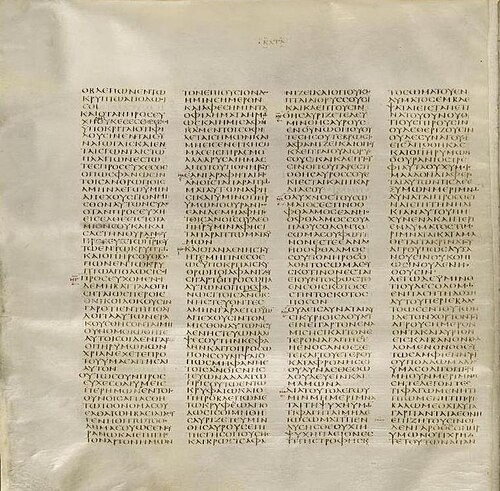
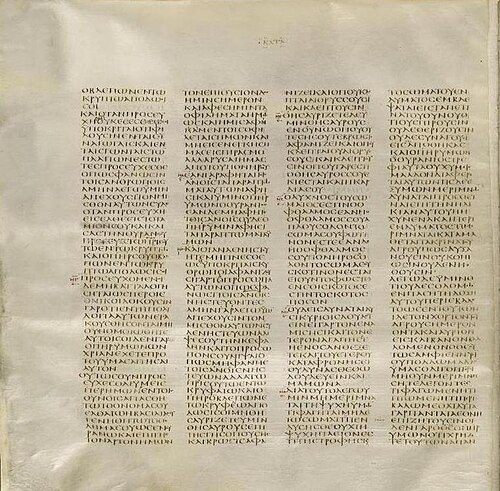
Codex Sinaiticus (British Library)
4th c.The Shepherd closes the Sinaiticus Bible (first quarter surviving) — the clearest sign of its near-canonical rank.
P.Michigan 130 and the papyrus swarm
2nd–3rd c.More early papyri survive of Hermas than of most NT books — over twenty fragments.
Codex Athous (Grigoriou 96)
14th–15th c.The Mount Athos copy that supplies most of the later visions.
Provenance
Rome, c. AD 90–150; the most-copied non-biblical text of early Christianity
Editions & scholarship
Critical editions and standard translations behind the text above.
- Le Pasteur d'Hermas (SC 53 bis)Robert Joly, 1968Critical edition with French translation.
- The Shepherd of Hermas: A Commentary (Hermeneia)Carolyn Osiek, 1999The standard commentary.