Primary source · Syriac and/or Greek
The Diatessaron (Gospel Harmony)
Tatian the Assyrian · c. AD 170

What this text is
The four gospels woven into one continuous narrative — for two centuries THE gospel text of the Syriac church, until Rabbula and Theodoret hunted the copies out in favour of the separated gospels.
Profile of Tatian the Assyrian →
Public-domain translations
J. Hamlyn Hill (1894, from the Arabic)
In the beginning was the Word, and the Word was with God, and God was that Word. This was in the beginning with God. Everything was by his hand, and without him not even one existing thing was made.
Manuscript witnesses
Dura-Europos parchment 24
c. AD 220Fourteen Greek lines found in the ruins of the fortress destroyed in 256 — a harmony text within fifty years of Tatian.
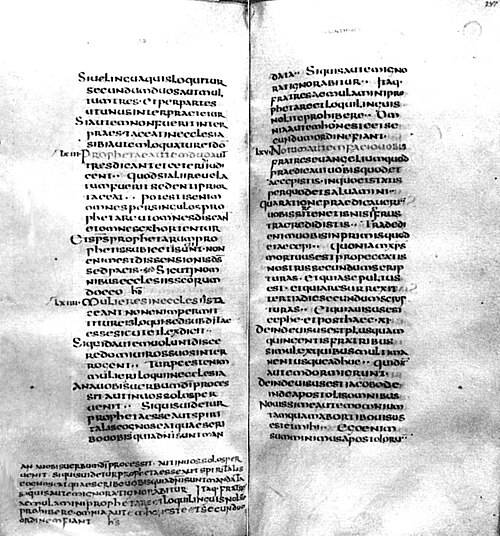
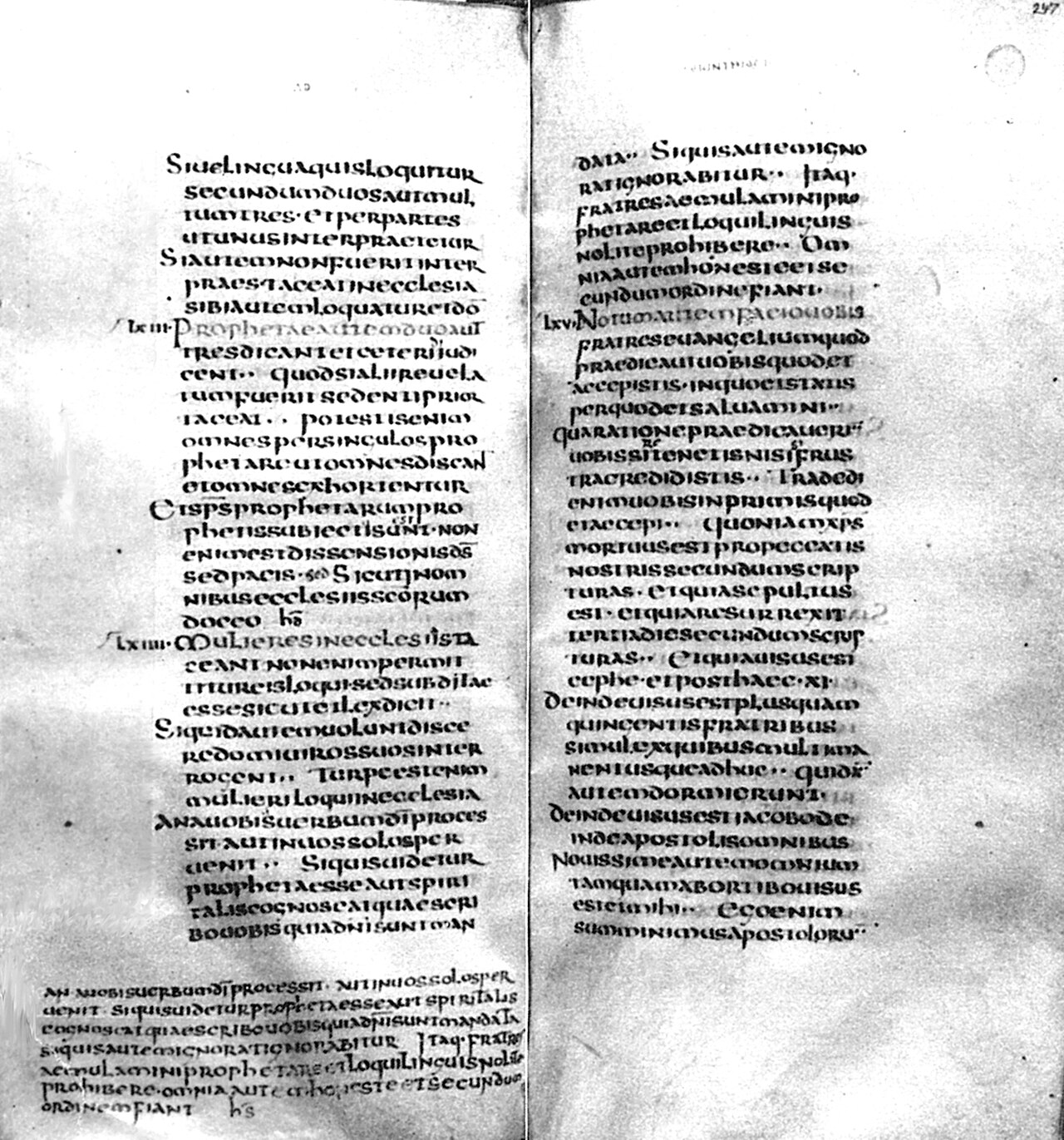
Codex Fuldensis
AD 546Bishop Victor of Capua's Latin gospel-harmony, copied and corrected in his own hand — the Diatessaron's shape in Vulgate dress.
Arabic harmony manuscripts
12th c. onwardThe Arabic Diatessaron, translated from Syriac copies since lost.
Provenance
Syria (or Rome), c. AD 170 — the four Gospels woven into one
Editions & scholarship
Critical editions and standard translations behind the text above.
- Tatian's Diatessaron: Its Creation, Dissemination, Significance, and History in ScholarshipWilliam L. Petersen, 1994The standard study of the whole tradition.
- The Diatessaron and Ephrem Syrus as Sources of Romanos the Melodist(and) Ephrem's Commentary, ed. C. McCarthy, 1993The Syriac commentary that preserves much of the harmony's text.