The Ante-Nicene Church · AD 180–313
Cornelius of Rome
d. c. 253 · Bishop of Rome · Martyr · Rome → Centumcellae
The Ante-Nicene Church
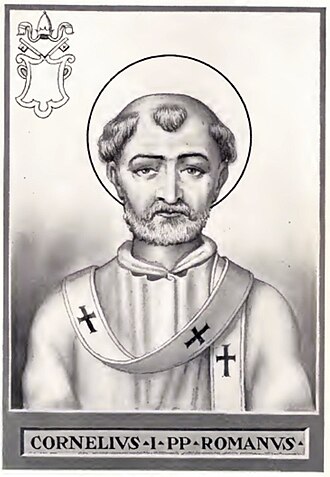
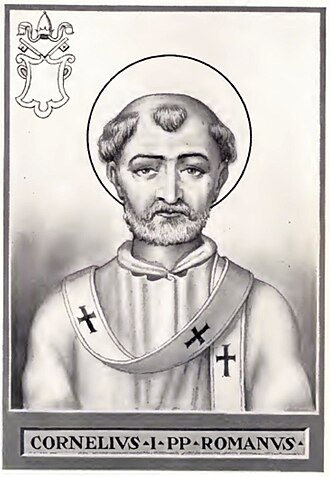

Who Cornelius of Rome was
Elected bishop of Rome in 251 after the Decian terror eased, and at once faced with the rigorist Novatian, who had himself consecrated as rival bishop over the question of readmitting the lapsed. Cornelius, backed by Cyprian of Carthage and a Roman synod of sixty bishops, held the moderate line — the fallen might be restored after penance — and his letters (quoted by Eusebius) give a priceless census of the Roman church: forty-six presbyters, seven deacons, seven subdeacons, and “more than fifteen hundred widows and persons in distress.” Exiled under Gallus to Centumcellae, he died there in 253 and was counted a martyr; Cyprian’s correspondence with him is one of the great records of inter-church solidarity.
Also listed in the bishops of Rome and martyrs.
Common questions
When did Cornelius die?
Cornelius of Rome is dated d. c. 253 in the archive, which places Cornelius in the Ante-Nicene Church (AD 180–313). The dating is traditional and approximate; the archive marks it as uncertain rather than fixing a year the sources do not give.
What did Cornelius write?
Cornelius of Rome has 2 catalogued writings in the archive: Letters to Cyprian (Epistles 49–50) and Letter to Fabius of Antioch (fragments).
Which early sources mention Cornelius?
Cornelius of Rome is named in 4 primary-source passages catalogued here, drawn from Cornelius of Rome (letter to Fabius), Cyprian of Carthage, The chronographer of 354 and Jerome of Stridon. Every passage is quoted from a named public-domain translation, earliest first.
Where was Cornelius from?
The archive associates Cornelius of Rome with Rome, Centumcellae. The sources record more than one location, so the places are listed in the order the record moves through them.
Writings (2)
Letters to Cyprian (Epistles 49–50)
Two of his letters travel inside Cyprian's correspondence[His own hand survives in the Cyprianic corpus: the reconciliation of the confessors, and the flight of the schismatics]Read the interlinear source text →
Letter to Fabius of Antioch (fragments)
The census of the Roman clergy, against NovatianHe did not know that there should be one bishop in a catholic church; yet he was not ignorant that in it there were forty-six presbyters, seven deacons, seven sub-deacons... and above fifteen hundred widows and persons in distress.Read the interlinear source text →
Primary-source mentions (4)
Every passage below is quoted from a named public-domain translation, earliest first.
Ecclesiastical History VI.43
c. AD 251There are in this church forty-six presbyters, seven deacons, seven subdeacons, forty-two acolytes, fifty-two exorcists, readers, and janitors, and above fifteen hundred widows and persons in distress.Cornelius of Rome (letter to Fabius) · VI.43 · source text
Epistle 60 (Cyprian to Cornelius, on his confessorship)
c. AD 252Depositio martyrum: 'Cornelii in Callisti'
c. AD 354Cornelii in Callisti — Cornelius, in the cemetery of Callistus.The chronographer of 354 · Depositio martyrum · source text
On Illustrious Men 66
c. AD 392Cornelius, bishop of Rome, to whom eight letters of Cyprian exist, wrote a letter to Fabius, bishop of the church at Antioch.Jerome of Stridon · On Illustrious Men 66 · source text
Connected in the archive
People
- Fabian of Rome
- Novatian of Rome
- Cyprian of Carthage
- Lucius I of Rome
- Moyses of Rome
- Novatus of Carthage
- Fabius of Antioch
Events in this lifetime
- AD 190 · The Quartodeciman controversy, AD 190
- AD 202 · Perpetua and Felicity martyred, AD 202
- AD 235 · Maximinus Thrax targets the clergy, AD 235
- AD 250 · The Decian persecution, AD 250
- AD 251 · The Novatianist schism, AD 251
Place
Places served
The one place the sources put Cornelius.
- 1Rome