The Ante-Nicene Church · AD 180–313
Cyprian of Carthage
Also known as Thascius Caecilius Cyprianus
c. 210 – 258 · Bishop of Carthage · Martyr · Carthage
The Ante-Nicene Church
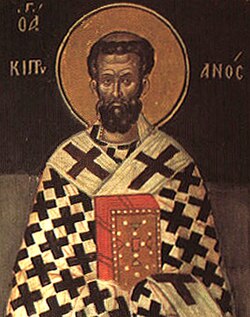
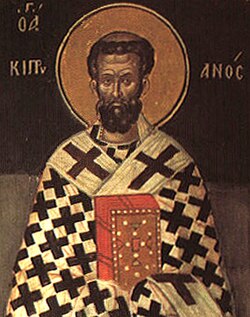
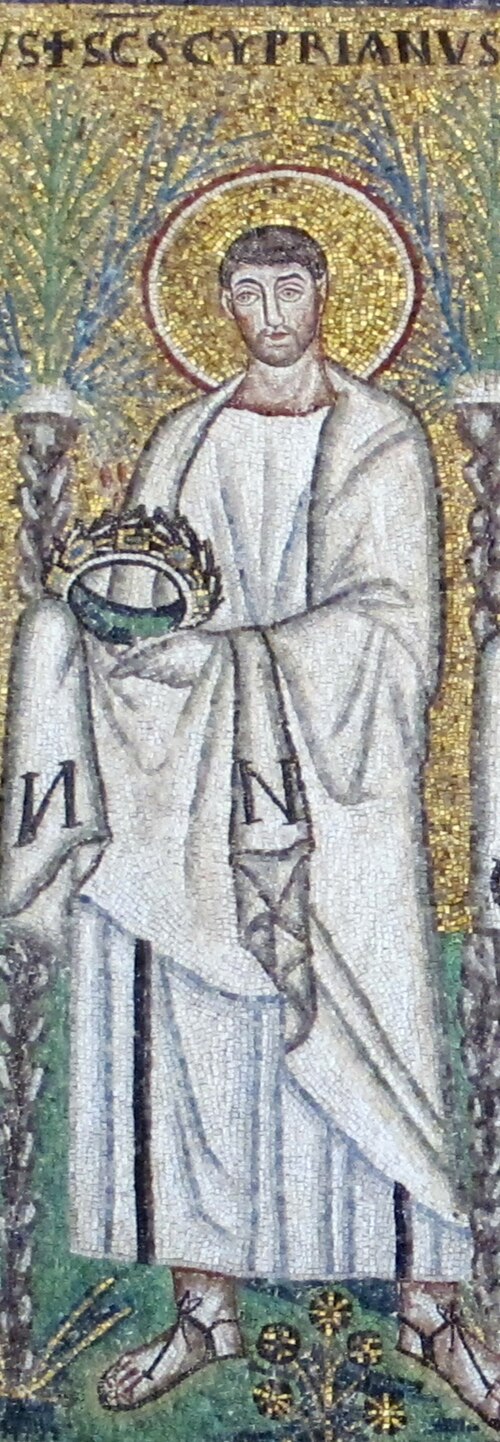
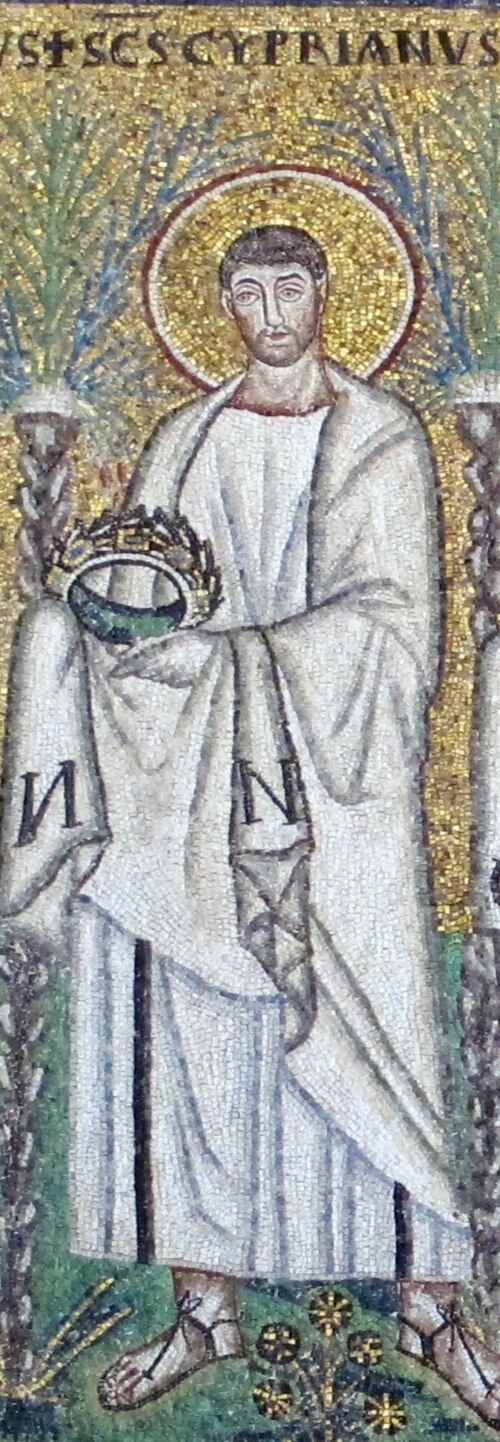
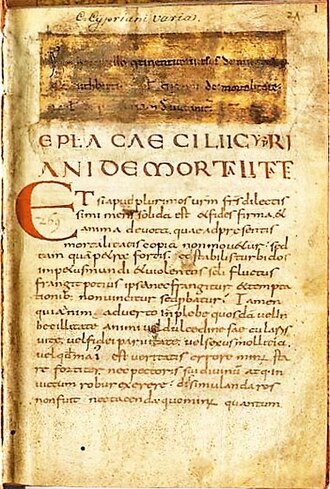
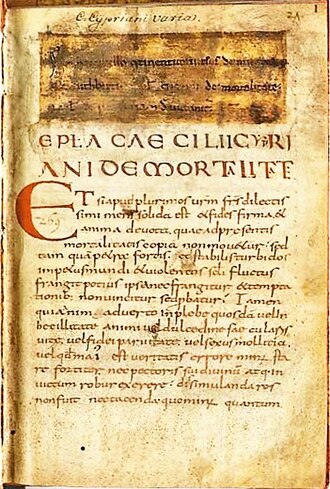


.jpg)
Who Cyprian of Carthage was
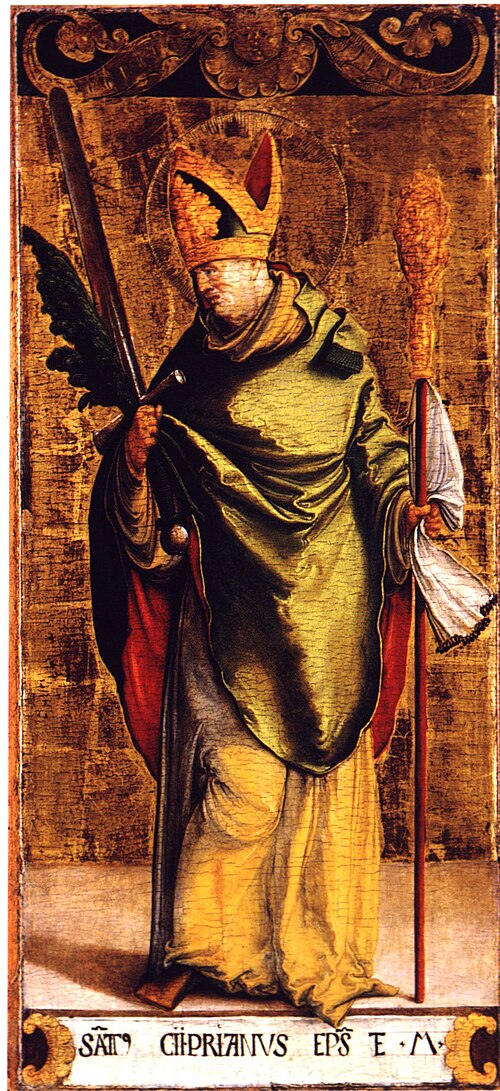
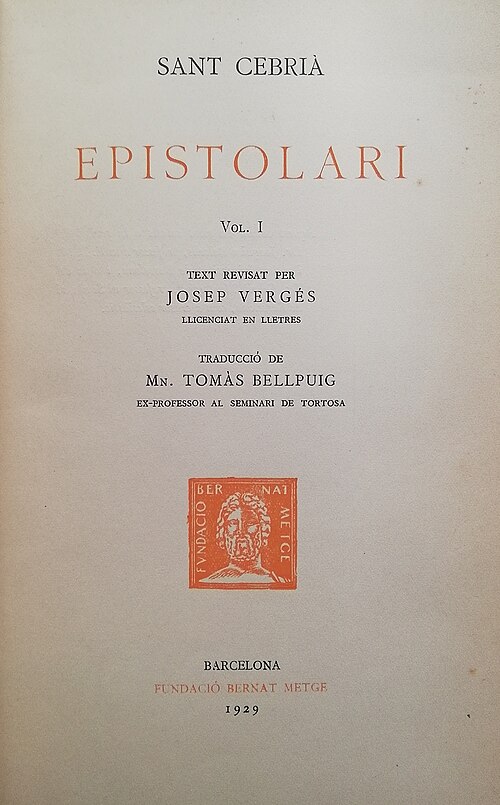
Thascius Caecilius Cyprianus was a wealthy rhetor of Carthage who sold his gardens for the poor at his conversion in 246 and was bishop within two years. The Decian persecution broke almost at once: thousands lapsed, and Cyprian — governing by letter from hiding — spent the decade rebuilding, against rigorists who would never readmit the fallen and laxists who asked nothing of them. His On the Unity of the Church became the West’s textbook of churchmanship; his eighty-one surviving letters are the century’s richest administrative archive; his plague sermons organized Carthage’s relief for pagan and Christian alike. Under Valerian he was exiled, tried, and beheaded on September 14, 258 — the first bishop-martyr of Africa, facing the sword with “Thanks be to God.”
Also listed in the bishops of Carthage and martyrs.
Common questions
When did Cyprian live?
Cyprian of Carthage is dated c. 210 – 258 in the archive, which places Cyprian in the Ante-Nicene Church (AD 180–313). The dating is traditional and approximate; the archive marks it as uncertain rather than fixing a year the sources do not give.
What did Cyprian write?
Cyprian of Carthage has 2 catalogued writings in the archive: On the Unity of the Church and To Donatus (on his conversion).
Which early sources mention Cyprian?
Cyprian of Carthage is named in 6 primary-source passages catalogued here, drawn from The proconsular record, Pontius the Deacon, The chronographer of 354 and Jerome of Stridon. Every passage is quoted from a named public-domain translation, earliest first.
Where was Cyprian from?
The archive associates Cyprian of Carthage with Carthage.
Writings (2)
On the Unity of the Church
251He can no longer have God for his Father, who has not the Church for his mother. If any one could escape who was outside the ark of Noah, then he also may escape who shall be outside of the Church.Read the interlinear source text →
To Donatus (on his conversion)
c. 246By the agency of the Spirit breathed from heaven, a second birth had restored me to a new man. Then, in a wondrous manner, doubtful things at once began to assure themselves to me… what before had seemed difficult began to suggest a means of accomplishment.Read the interlinear source text →
Primary-source mentions (6)
Every passage below is quoted from a named public-domain translation, earliest first.
Acta Proconsularia Cypriani (the court record of his sentence)
c. AD 258[The court record of 14 September 258: the proconsul Galerius Maximus puts the question, Cyprian answers, and the sentence is read out.]The proconsular record · Acta Proconsularia Sancti Cypriani
The Acta Proconsularia Sancti Cypriani, the official record of Cyprian's two hearings and his execution at Carthage in AD 257–258 — among the most reliable of all martyr acts, since it derives from the court minutes. Critical text: Wilhelm von Hartel, Corpus Scriptorum Ecclesiasticorum Latinorum 3.3 (1871); also A. A. R. Bastiaensen, Atti e passioni dei martiri (1987). English translation by Herbert Musurillo, The Acts of the Christian Martyrs, Oxford Early Christian Texts (1972).
The Life and Passion of Cyprian
c. AD 258What should the priest of God do at such an hour but what he taught?… He covered his eyes with his own hand; and when the executioner's hand trembled, the crown of God's priest was accomplished. His people cried, 'Let us also be beheaded with him!'Pontius the Deacon · source text
Depositio martyrum: 'XVIII Kal. Oct. Cypriani Africae, Romae celebratur in Callisti'
c. AD 354XVIII Kal. Oct.: Cypriani Africae, Romae celebratur in Callisti — Cyprian of Africa; at Rome his feast is kept in the cemetery of Callistus.The chronographer of 354 · Depositio martyrum · source text
On Illustrious Men 67
c. AD 392It is superfluous to make a catalogue of his genius, since his works are more brilliant than the sun.Jerome of Stridon · On Illustrious Men 67 · source text
Crowns of Martyrdom 13 (the poet's Cyprian, teacher of all the West)
c. AD 405Sermons 309–313 (preached on his feast at the Mensa Cypriani)
c. AD 410Connected in the archive
Called Tertullian “the master”; corresponded with Rome through the Novatianist crisis; his letters cross those of Dionysius of Alexandria
People
- Tertullian of Carthage
- Novatian of Rome
- Dionysius the Great
- Caecilius (Caecilianus)
- Emperor Decius
- Felicissimus of Carthage
- Novatus of Carthage
- Cornelius of Rome
- Stephen I of Rome
- Fructuosus of Tarragona
- Pontius the Deacon
- Aurelius the Lector
- Celerinus of Carthage
- Commodian
- Emperor Valerian
- Firmilian of Caesarea
- Donatus the friend of Cyprian
Events in this lifetime
- AD 235 · Maximinus Thrax targets the clergy, AD 235
- AD 250 · The Decian persecution, AD 250
- AD 251 · The Novatianist schism, AD 251
- AD 257 · The Valerian persecution, AD 257
Place
Places served
The one place the sources put Cyprian.