The Ante-Nicene Church · AD 180–313
Hippolytus of Rome
c. 170 – 235 · Presbyter · Liturgist · Martyr · Rome → Sardinia
The Ante-Nicene Church
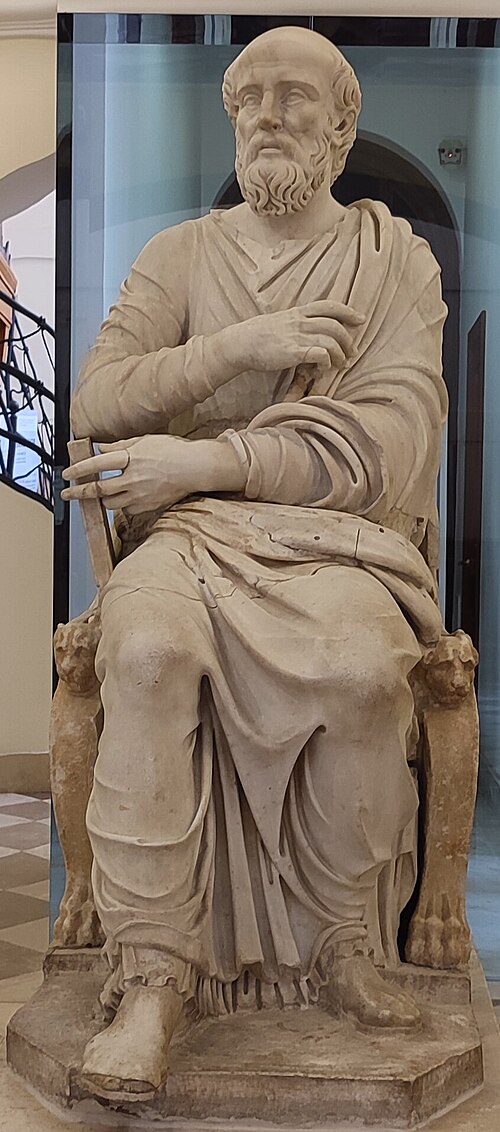
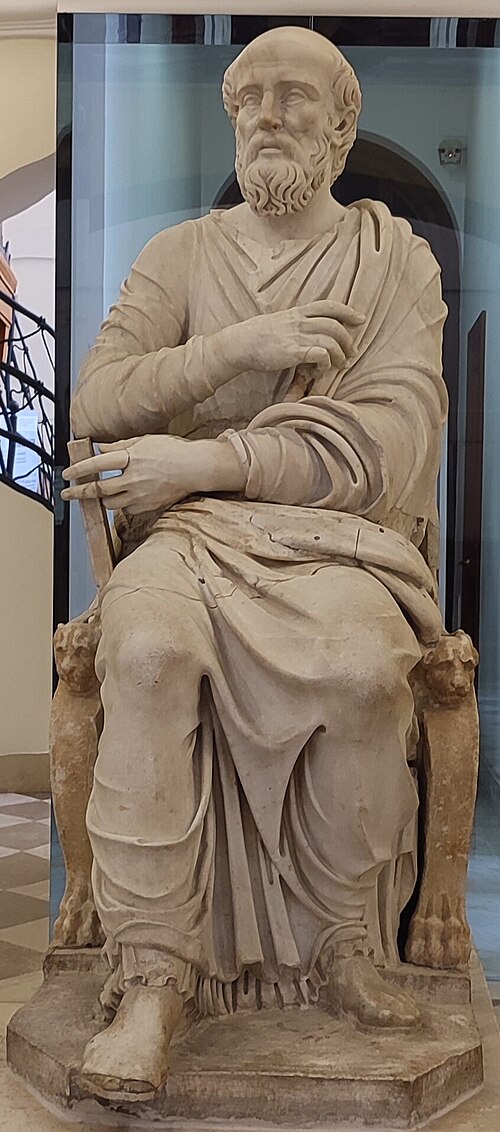
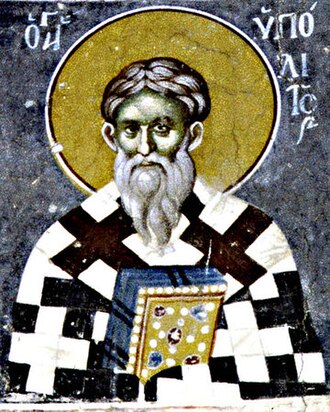
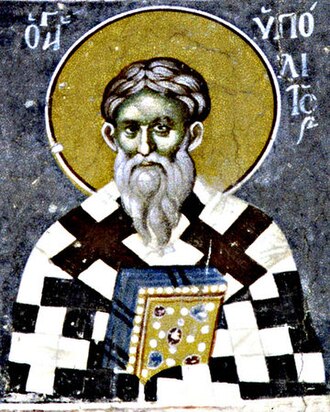
.jpg)


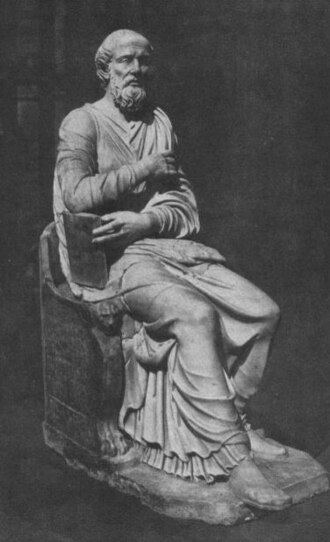
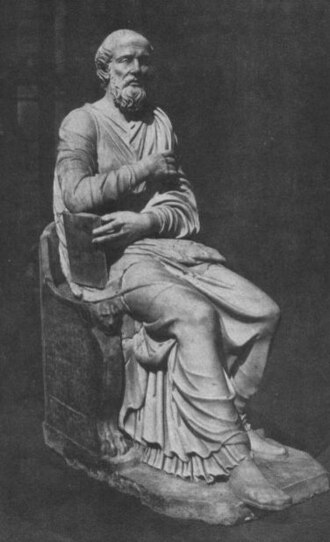
Who Hippolytus of Rome was
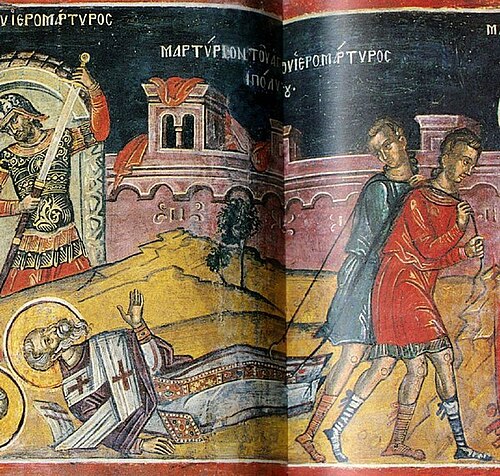
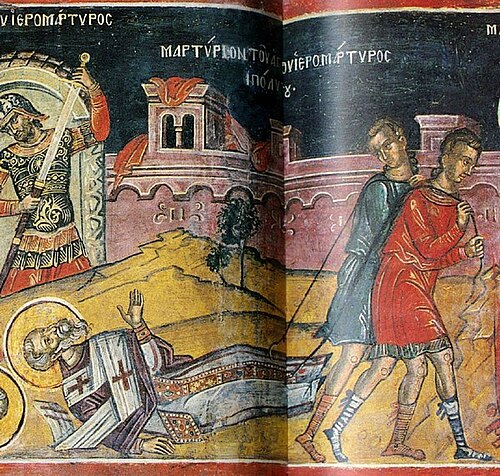
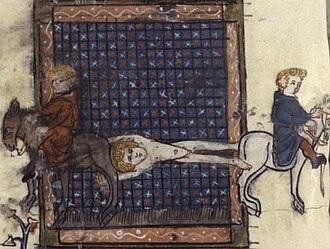
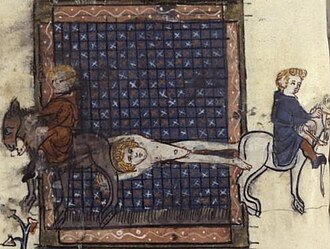
The most learned man in the Roman church of his day — and its most difficult. A presbyter reckoned a disciple of Irenaeus, Hippolytus wrote the earliest surviving Christian biblical commentary (on Daniel), a chronicle of the world, and the Refutation of All Heresies, which traces every heresy to a pagan philosophy. Accusing bishop Callistus of laxity toward penitent sinners, he let himself be set up as a rival bishop — the first “antipope.” In 235 the emperor Maximinus deported both him and bishop Pontian to the Sardinian mines, where the rivals reconciled before dying; Rome brought their bodies home on the same day and honored both as martyrs. The Apostolic Tradition attributed to him preserves the era’s baptismal questions and ordination prayers.
Also listed in martyrs.
Common questions
When did Hippolytus live?
Hippolytus of Rome is dated c. 170 – 235 in the archive, which places Hippolytus in the Ante-Nicene Church (AD 180–313). The dating is traditional and approximate; the archive marks it as uncertain rather than fixing a year the sources do not give.
What did Hippolytus write?
Hippolytus of Rome has 2 catalogued writings in the archive: The Apostolic Tradition (attributed) [attribution disputed — the ‘two-Hippolytus’ question] and Refutation of All Heresies.
Which early sources mention Hippolytus?
Hippolytus of Rome is named in 5 primary-source passages catalogued here, drawn from Eusebius of Caesarea, The chronographer of 354, Damasus of Rome and Jerome of Stridon. Every passage is quoted from a named public-domain translation, earliest first.
Where was Hippolytus from?
The archive associates Hippolytus of Rome with Rome, Sardinia. The sources record more than one location, so the places are listed in the order the record moves through them.
Writings (2)
The Apostolic Tradition (attributed) [attribution disputed — the ‘two-Hippolytus’ question]
c. 215Dost thou believe in Christ Jesus, the Son of God, who was born of the Holy Spirit and the Virgin Mary, who was crucified under Pontius Pilate, and died, and rose the third day living from the dead…? — the baptismal questions of the Roman churchRead the interlinear source text →
Refutation of All Heresies
c. 222–235Rediscovered in 1842 in a monastery on Mount Athos — ten books tracing the genealogy of every sect back to the philosophers and mysteries of the Greeks.Read the interlinear source text →
Primary-source mentions (5)
Every passage below is quoted from a named public-domain translation, earliest first.
Ecclesiastical History VI.22
c. AD 325At that time Hippolytus, besides many other treatises, wrote a work on the passover. He gives in this a chronological table, and presents a certain paschal canon of sixteen years.Eusebius of Caesarea · VI.22 · source text
Depositio martyrum: 'Id. Aug. Ypoliti in Tiburtina' — the shared feast with Pontian
c. AD 354Idibus Aug.: Ypoliti in Tiburtina et Pontiani in Callisti — On the Ides of August, Hippolytus on the Tiburtine Way, and Pontian in the cemetery of Callistus.The chronographer of 354 · Depositio martyrum · source text
Epigram of Damasus at the Tiburtine crypt (the presbyter of the schism, returning to peace)
c. AD 380On Illustrious Men 61
c. AD 392Hippolytus, bishop of some church — the name of the city I have not been able to learn — wrote a reckoning of the paschal feast and chronological tables.Jerome of Stridon · On Illustrious Men 61 · source text
Crowns of Martyrdom 11 (the pilgrim-poem on his shrine and painted passion)
c. AD 405Connected in the archive
Pupil of Irenaeus by Photius’s report; sparred with the successors of Victor; reconciled with Pontian in the mines
People
- Irenaeus of Lyon
- Justin Martyr
- Elchasai (Elxai)
- Justinus the Gnostic
- Monoimus the Arab
- Epigonus
- Noetus of Smyrna
- Zephyrinus of Rome
- Callistus I of Rome
- Alcibiades of Apamea
- Pontian of Rome
- Emperor Maximinus Thrax
Events in this lifetime
- AD 177 · Persecution at Lyon and Vienne, AD 177
- AD 180 · The Scillitan martyrs, AD 180
- AD 190 · The Quartodeciman controversy, AD 190
- AD 202 · Perpetua and Felicity martyred, AD 202
- AD 235 · Maximinus Thrax targets the clergy, AD 235
Place
Places served
The 2 places the sources put Hippolytus, in the order the record moves through them. This is what the sources attest, not a reconstructed route.