The Apostolic Age · AD 4–70 · External witness
Judas Iscariot
d. AD 30 · Apostle who betrayed the Lord · Kerioth(?) → Jerusalem
External witness
_-_WGA09216.jpg)
Who Judas Iscariot was
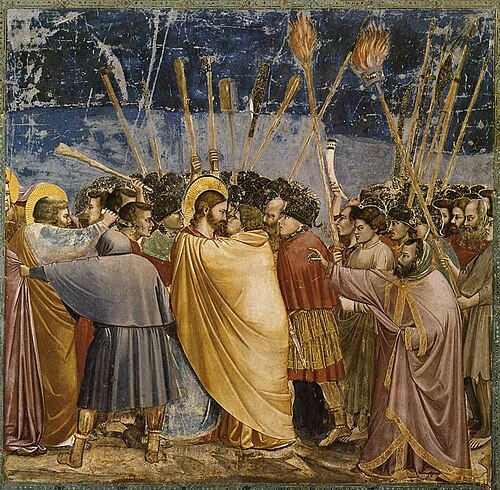
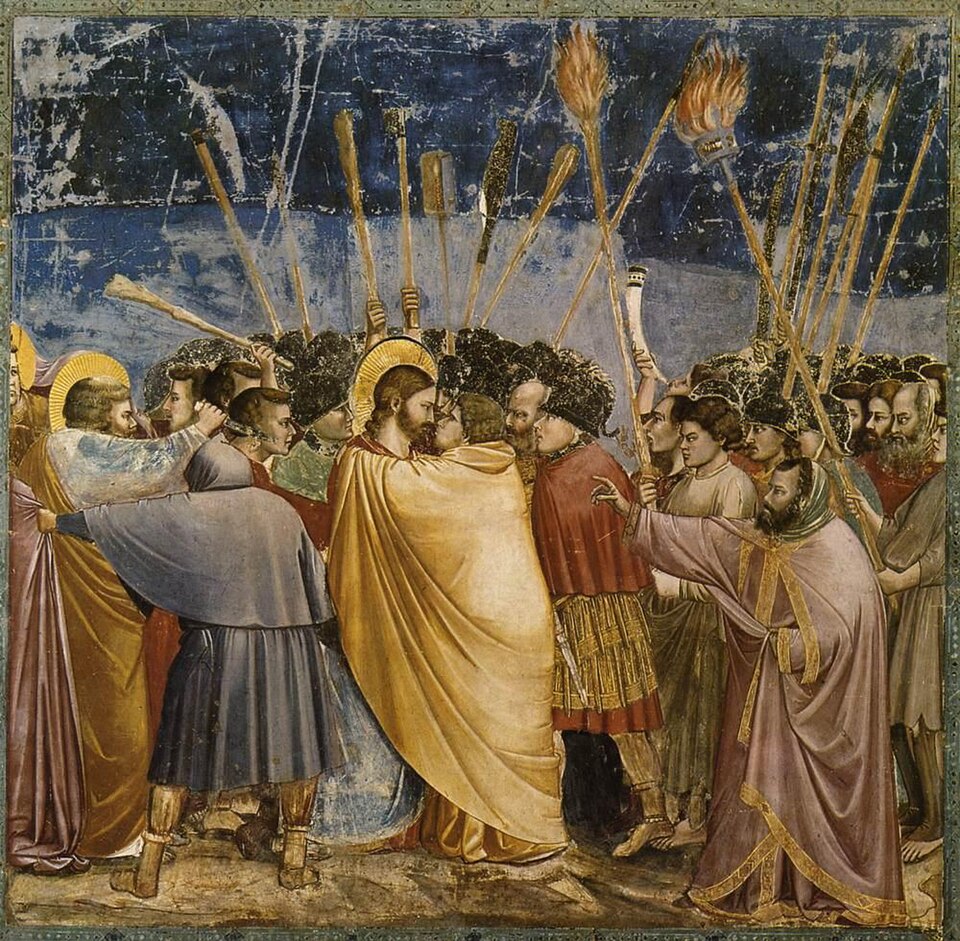
Numbered with the Twelve, keeper of the common purse, and the man who sold his teacher for the price of a slave — “and they covenanted with him for thirty pieces of silver.” The New Testament preserves two accounts of his end (the hanging of Matthew 27; the fall in the field of Acts 1) and one verdict, spoken in the upper-room prayer: he “by transgression fell, that he might go to his own place.” Papias, within living memory, added a third, grimmer tradition of his swelling and death. The first community’s first act was to fill the office he vacated — the archive’s first entry among the adversaries is, soberly, an apostle.
Also listed in non-christian witnesses.
Common questions
When did Judas Iscariot die?
Judas Iscariot is dated d. AD 30 in the archive, which places Judas Iscariot in the Apostolic Age (AD 4–70).
Which early sources mention Judas Iscariot?
Judas Iscariot is named in 3 primary-source passages catalogued here, drawn from Matthew the Evangelist, Luke and Papias of Hierapolis. Every passage is quoted from a named public-domain translation, earliest first.
Where was Judas Iscariot from?
The archive associates Judas Iscariot with Kerioth(?), Jerusalem. The sources record more than one location, so the places are listed in the order the record moves through them.
Who were Judas Iscariot’s contemporaries?
The archive links Judas Iscariot to 2 other figures, including Matthias the Apostle and Simon Peter. Each connection is drawn from a source that places them together, not from inference.
Scripture record
Primary-source mentions (3)
Every passage below is quoted from a named public-domain translation, earliest first.
Matthew 27:5
c. AD 50And he cast down the pieces of silver in the temple, and departed, and went and hanged himself.Matthew the Evangelist · read ↗
Acts 1:18
c. AD 85Now this man purchased a field with the reward of iniquity; and falling headlong, he burst asunder in the midst, and all his bowels gushed out.Luke · read ↗
Papias, Fragment 3 (via Apollinaris of Laodicea)
c. AD 110Judas walked about in this world a sad example of impiety; for his body having swollen to such an extent that he could not pass where a chariot could pass easily, he was crushed by the chariot, so that his bowels gushed out.Papias of Hierapolis · Fragment 3 · source text
Connected in the archive
People
Events in this lifetime
Place
Places served
The 10 places the sources put Judas Iscariot, in the order the record moves through them. This is what the sources attest, not a reconstructed route. Every stop here is marked with the company: the source places this figure’s company there rather than naming the figure at it.
- 1GalileeWith him through the towns of Galileewith the companyMark 1:39; Matthew 4:23
- 2NazarethCame into his own country, and his disciples followed himwith the companyMark 6:1
- 3CapernaumThe house at Capernaum, where he taught the Twelvewith the companyMark 9:33
- 4BethsaidaWithdrew there with the Twelve; the five thousand fedwith the companyLuke 9:10
- 5TyreWithdrew into its borders; the disciples came to himwith the companyMark 7:24; Matthew 15:23
- 6SidonReturned by Sidon to the sea of Galileewith the companyMark 7:31
- 7Caesarea PhilippiOn the road he asked the disciples who men said he waswith the companyMark 8:27
- 8JerichoWent out of Jericho with his discipleswith the companyMark 10:46
- 9BethanyLodged there with the Twelve through Passion weekwith the companyMark 11:11–12
- 10JerusalemEntered the temple with the Twelve; the upper roomwith the companyMark 11:11; 14:17