Event · AD 30 · Jerusalem — Gethsemane, the praetorium, Golgotha, the garden tomb, the upper room
Crucifixion, Resurrection and Pentecost, AD 30–33
Crucifixion, Resurrection & Pentecost
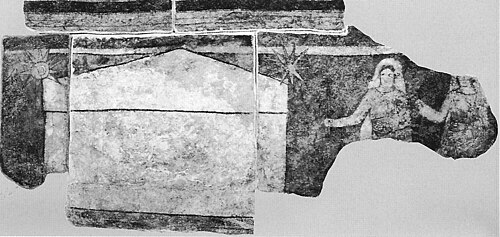
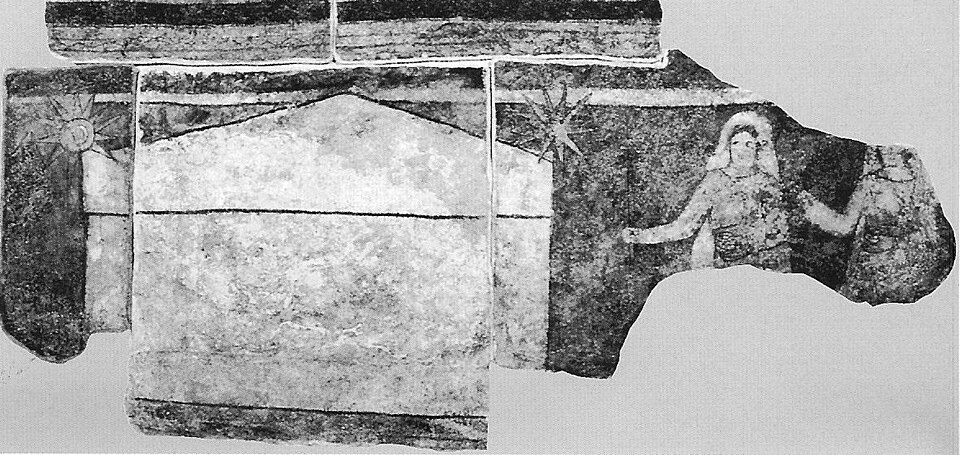
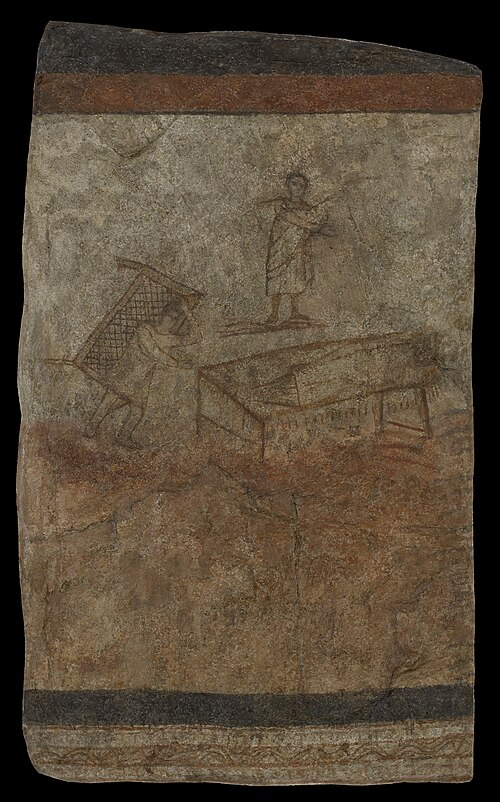
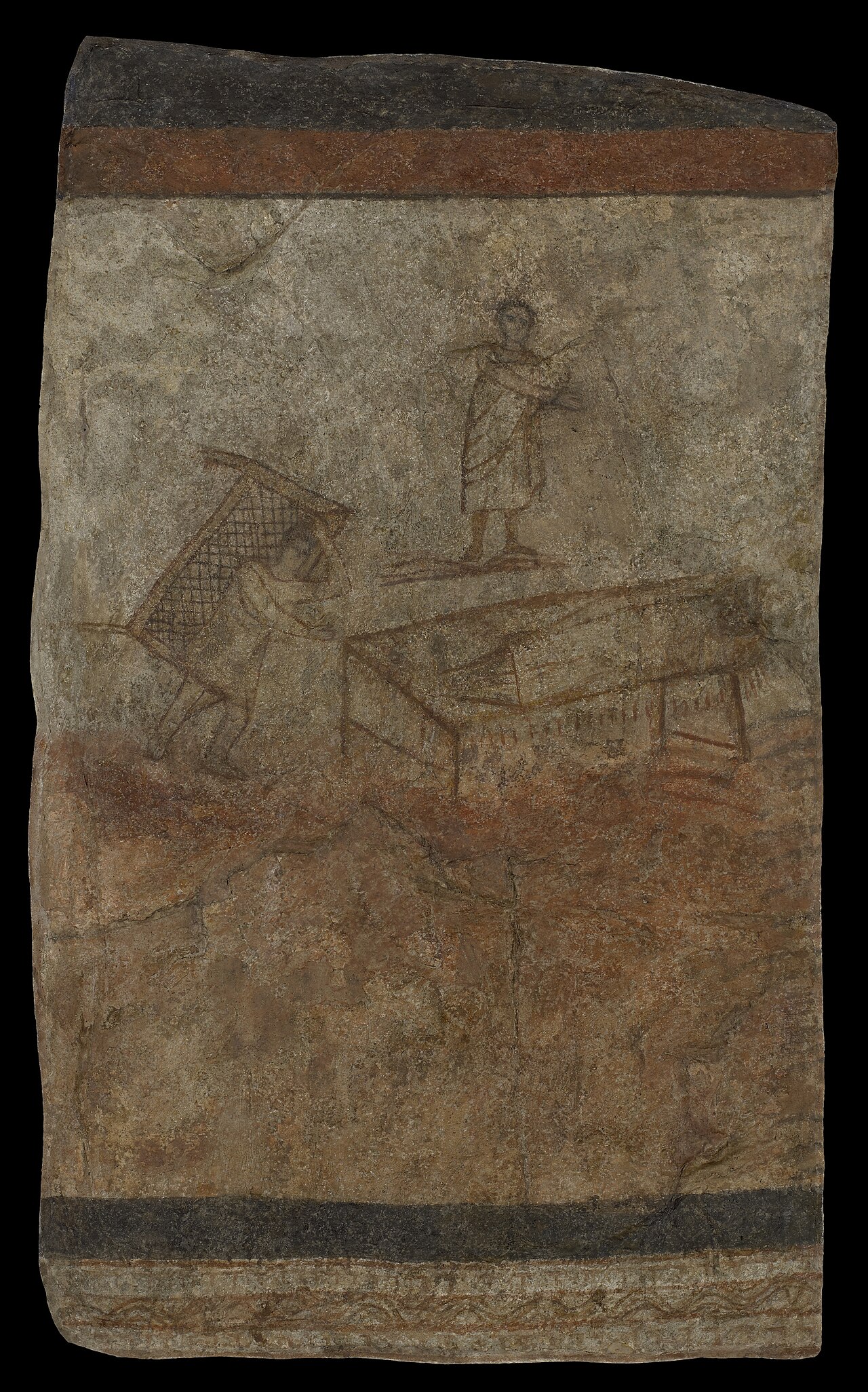


**This is the event the archive is organised around, and the only one whose date it declines to fix.** Every figure in the prosopography is dated against it — before, during, or after — and the five eras run outward from it. The record itself gives a range rather than a year: a Passover under Pontius Pilate, prefect of Judaea from AD 26 to 36, in the high-priesthood of Caiaphas. Luke sets the beginning of the preaching in the fifteenth year of Tiberius, which is AD 28 or 29. The traditional reckoning is AD 30 or 33, and the archive files the event at 30 without asserting that against 33.
**What the four accounts agree on.** Jesus was arrested at night in a garden outside the city after a supper with the Twelve, examined before the high priest and then before the Roman prefect, condemned on a charge that Pilate posted over him as *King of the Jews*, and crucified outside the walls between two others, at the Passover, with women of his Galilean following watching from a distance. He was buried the same evening in a new tomb belonging to Joseph of Arimathea, a member of the council. On the first day of the week the tomb was found empty by women, Mary Magdalene first among them in every list. Fifty days later, at Pentecost, the same followers began preaching publicly in Jerusalem — and that is the point at which the church becomes a thing with members whose names can be written down.
**Where they differ, the archive keeps the difference.** The order of the trials, the wording of the inscription, the identity of the women at the tomb and the sequence of the appearances vary between the four Gospels, and none of the variants is harmonised here. Matthew, Mark and Luke place the crucifixion on the day after the Passover meal; John places it on the day of preparation, as the lambs were killed. The archive records the two datings and does not choose.
**The earliest written account is not a Gospel.** Paul, writing to Corinth about AD 55 — within twenty-five years of the event, and two decades before Mark — quotes a formula he says he received and passed on: that Christ died, was buried, rose on the third day, and was seen. He then names the witnesses, and adds that most of the five hundred were still alive as he wrote. It is the shortest distance between this archive and the event it turns on.
**Outside the church, four things are attested.** That the execution happened under Tiberius by sentence of Pilate (Tacitus, writing about AD 116, who calls him *procurator* — a title of his own century rather than Pilate’s, which is one of the reasons the passage is judged authentic rather than interpolated). That Pilate held the office at all (a dedication stone from Caesarea, found in 1961). That the movement did not stop (Pliny, interrogating Christians in Bithynia about AD 112, finds them singing to Christ *as to a god*). And that crucifixion was carried out as the Gospels describe it — an iron nail through the heel bone of a first-century man from a Jerusalem tomb, excavated in 1968, remains the only physical evidence of the practice ever recovered.
**What is not evidence, and is often offered as such.** The darkness at the sixth hour appears in a chain of citation — Julius Africanus reporting that Thallus explained it as an eclipse — in which nothing survives of Thallus himself; the archive records the chain and marks the loss. The Shroud of Turin is not admitted: its documented history begins in the fourteenth century, outside the archive’s AD 500 attestation horizon. The *Acts of Pilate* is held in the library as an apocryphal text of about the fourth century, and is the source of the traditional names Dysmas, Gestas and Procla — which is why those figures carry it as their basis and not as their proof.
The sources for this event
Every source the record rests on, with what it says and what it cannot carry.
1 Corinthians 15:3–8
c. AD 55For I delivered unto you first of all that which I also received, how that Christ died for our sins according to the scriptures; and that he was buried, and that he rose again the third day according to the scriptures: and that he was seen of Cephas, then of the twelve: after that, he was seen of above five hundred brethren at once; of whom the greater part remain unto this present, but some are fallen asleep.
Mark 15:24–39
c. AD 70And when they had crucified him, they parted his garments, casting lots upon them, what every man should take. And it was the third hour when they crucified him. And the superscription of his accusation was written over, THE KING OF THE JEWS. … And when the sixth hour was come, there was darkness over the whole land until the ninth hour. … And when the centurion, which stood over against him, saw that he so cried out, and gave up the ghost, he said, Truly this man was the Son of God.
Mark 16:1–6
c. AD 70And when the sabbath was past, Mary Magdalene, and Mary the mother of James, and Salome, had bought sweet spices, that they might come and anoint him. … And entering into the sepulchre, they saw a young man sitting on the right side, clothed in a long white garment; and they were affrighted. And he saith unto them, Be not affrighted: Ye seek Jesus of Nazareth, which was crucified: he is risen; he is not here: behold the place where they laid him.
Matthew 27:11–37
c. AD 85And Jesus stood before the governor: and the governor asked him, saying, Art thou the King of the Jews? … When Pilate saw that he could prevail nothing, but that rather a tumult was made, he took water, and washed his hands before the multitude, saying, I am innocent of the blood of this just person: see ye to it. … And set up over his head his accusation written, THIS IS JESUS THE KING OF THE JEWS.
Luke 23:44–56
c. AD 85And there was a darkness over all the earth until the ninth hour. … And, behold, there was a man named Joseph, a counsellor; and he was a good man, and a just: (the same had not consented to the counsel and deed of them:) he was of Arimathaea, a city of the Jews: who also himself waited for the kingdom of God. This man went unto Pilate, and begged the body of Jesus. And he took it down, and wrapped it in linen, and laid it in a sepulchre that was hewn in stone, wherein never man before was laid.
John 19:19–22
c. AD 95And Pilate wrote a title, and put it on the cross. And the writing was, JESUS OF NAZARETH THE KING OF THE JEWS. … And it was written in Hebrew, and Greek, and Latin. Then said the chief priests of the Jews to Pilate, Write not, The King of the Jews; but that he said, I am King of the Jews. Pilate answered, What I have written I have written.
John 20:11–18
c. AD 95But Mary stood without at the sepulchre weeping … Jesus saith unto her, Mary. She turned herself, and saith unto him, Rabboni; which is to say, Master. … Mary Magdalene came and told the disciples that she had seen the Lord, and that he had spoken these things unto her.
Acts 2:1–4, 2:22–24
c. AD 85And when the day of Pentecost was fully come, they were all with one accord in one place. And suddenly there came a sound from heaven as of a rushing mighty wind, and it filled all the house where they were sitting. … Ye men of Israel, hear these words; Jesus of Nazareth … him, being delivered by the determinate counsel and foreknowledge of God, ye have taken, and by wicked hands have crucified and slain: whom God hath raised up, having loosed the pains of death.
Tacitus, Annals XV.44
c. AD 116Christus, from whom the name had its origin, suffered the extreme penalty during the reign of Tiberius at the hands of one of our procurators, Pontius Pilatus, and a most mischievous superstition, thus checked for the moment, again broke out not only in Judaea, the first source of the evil, but even in Rome.
Tacitus, *Annals* — held in this library. English: Alfred John Church & William Jackson Brodribb (1876), public domain.
Read the source text →Josephus, Antiquities XVIII.63–64
c. AD 94[Josephus reports the crucifixion under Pilate at the accusation of the leading men, and that **those who had loved him did not abandon him**. The transmitted text calls him the Christ and states the resurrection as fact — wording generally judged to be later Christian interpolation into an authentic notice.]
Josephus, *Antiquities of the Jews* — held in this library. English: William Whiston (1737), public domain. The passage as transmitted contains Christian phrasing that Josephus, a practising Jew, is unlikely to have written; the archive records it with that caveat rather than either dismissing or repairing it.
Read the source text →Pliny the Younger to Trajan, Letters X.96
c. AD 112[Pliny, imperial legate of Bithynia-Pontus about AD 112, reports that those he interrogated met before dawn and **“sang in alternate verses a hymn to Christ, as to a god”**, and bound themselves by oath against theft, adultery and breach of faith.]
Pliny and Trajan on the Christians — held in this library. Public-domain English translation.
Read the source text →The heel bone of Yehohanan ben Hagkol
c. AD 1968[A first-century ossuary from a Jerusalem tomb held the bones of a young man with **an iron nail still driven through his heel bone**, bent at the tip where it had struck a knot in the wood. He had been given ordinary burial in a family tomb, which is the point: the Gospels’ account of a crucified man buried before nightfall in a rock-cut tomb describes something the archaeology shows happening.]
Object. Excavated by Vassilios Tzaferis for the Israel Department of Antiquities; the remains of a man crucified in the first century AD. The only physical evidence of Roman crucifixion ever recovered.
The Pilate stone
c. AD 1961[[DIS AUGUSTI]S TIBERIEVM / [PO]NTIVS PILATVS / [PRAEF]ECTVS IVDA[EA]E. **Pilate’s existence had been doubted** on the ground that no inscription named him; this one names him, and gives his title as *praefectus* rather than the *procurator* Tacitus uses.]
Object. A block reused as a step in the theatre at Caesarea, bearing Pilate’s name and office. Now in the Israel Museum, Jerusalem.
Justin Martyr, First Apology 35, 48
c. AD 150[Justin, writing to Antoninus Pius about AD 155, tells the emperor that the details of the crucifixion can be checked: **“And that these things did happen, you can ascertain from the Acts of Pontius Pilate.”** Whether such a record existed in the imperial archives is unknown; that a Christian invited an emperor to look is itself the claim.]
Justin Martyr, *First Apology* — held in this library. English: Marcus Dods & George Reith (1867), public domain.
Read the source text →Figures in this event (22)
- Jesus of Nazareth
- Pontius Pilate
- Joseph Caiaphas
- Annas (Ananus I)
- Judas Iscariot
- Barabbas
- Simon of Cyrene
- Dismas (the Penitent Thief)
- The Centurion at the Cross
- Joseph of Arimathea
- Nicodemus the Pharisee
- Mary Magdalene
- Mary, the Mother of Jesus
- Mary, mother of James and Joses
- Salome the Myrrh-bearer
- Clopas (Cleopas?)
- Simon Peter
- John the Apostle
- Thomas the Apostle
- James, son of Zebedee
- Matthias the Apostle
- Pontius Pilate's Wife (Procula)
Scholarship
- The Death of the MessiahRaymond E. Brown, 1994Two volumes on the passion narratives from Gethsemane to the grave, treating the four accounts separately rather than harmonising them.
- Pontius Pilate: Portraits of a Roman GovernorWarren Carter, 2003On the prefect as the Gospels present him and as the Roman record does.
- Jesus and the EyewitnessesRichard Bauckham, 2006, 2nd edn 2017Argues the Gospels transmit named eyewitness testimony; the standard modern statement of that case, and contested.
- The Crucifixion of Jesus: A Forensic InquiryFrederick T. Zugibe, 2005On the physical evidence, including the Givʿat ha-Mivtar remains.