The Apostolic Age · AD 4–70
Jesus of Nazareth
b. c. 4 BC (before the death of Herod); crucified at Jerusalem c. AD 30–33 · The Christ · Head of the Church · Bethlehem → Nazareth → Galilee → Jerusalem
The Apostolic Age
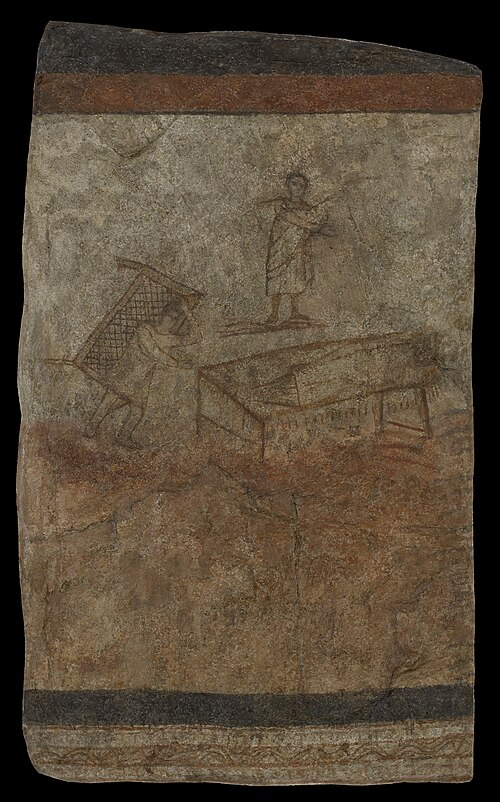
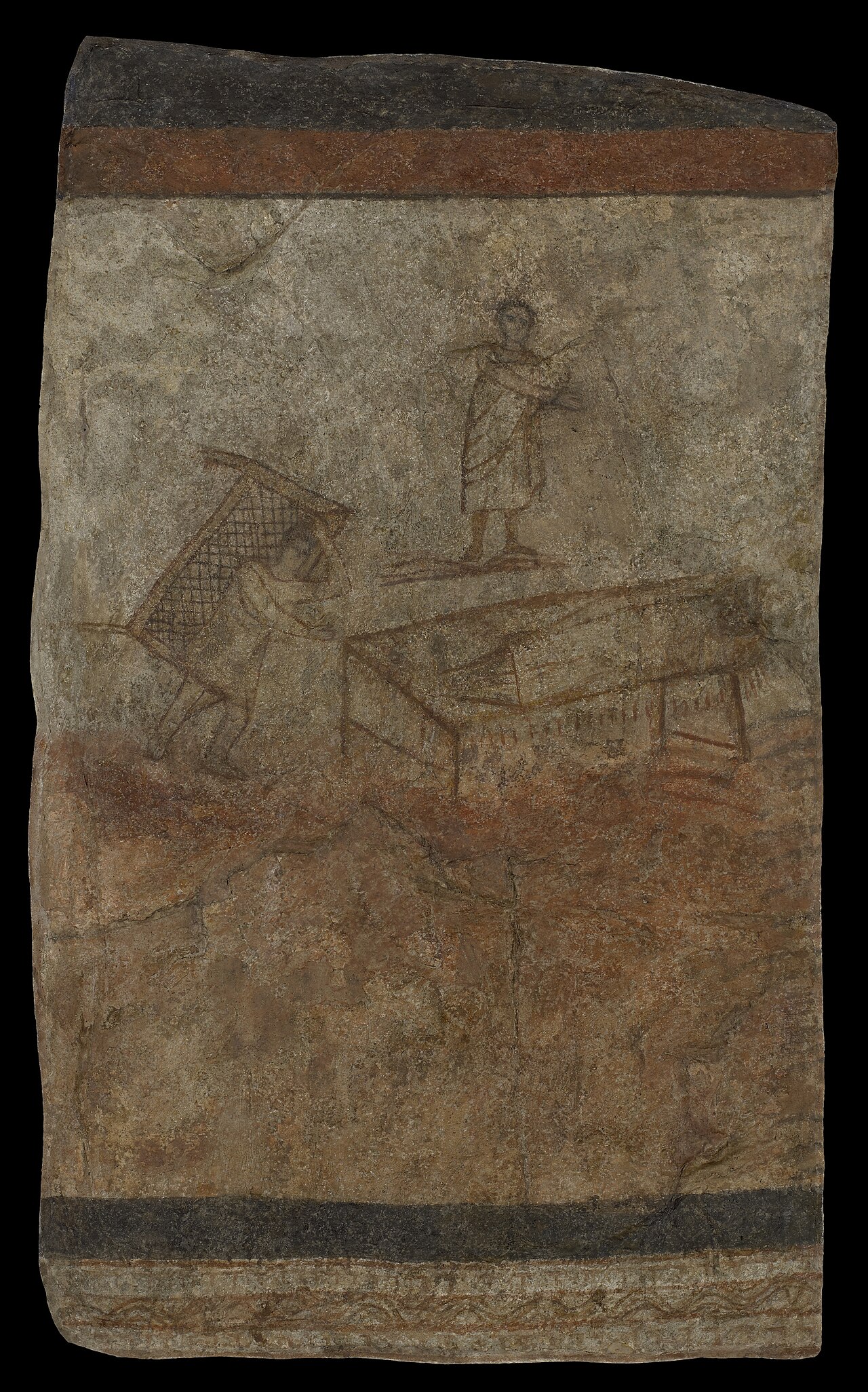


.jpg)


Who Jesus of Nazareth was
This archive is a prosopography of the church, and for most of its life it deliberately held no record for its head — the reasoning being that one does not enumerate the Lord among the members. That record now exists, and its purpose is narrow and stated: **to gather in one place the historical and archaeological evidence that Jesus of Nazareth lived, was executed under Pontius Pilate, and was worshipped as God by people within living memory of it.** The theology is the church’s; what is assembled here is the evidence.
**The written non-Christian testimony.** Five pagan and Jewish writers of the first two centuries refer to him, none of them friendly. **Tacitus**, writing about AD 116 of Nero’s persecution, names “Christus, from whom the name had its origin” and states that he “suffered the extreme penalty during the reign of Tiberius at the hands of one of our procurators, Pontius Pilatus” — a Roman senator, using Roman records, confirming the execution, the executioner and the reign. **Josephus** twice: the disputed *Testimonium* at *Antiquities* XVIII.63–64, and — accepted as authentic by nearly all scholars — the notice at XX.200 of the stoning of James “the brother of Jesus who was called Christ”. **Pliny the Younger**, about AD 112, reports to Trajan that the Christians of Bithynia “sang in alternate verses a hymn to Christ, as to a god”. **Suetonius** records Claudius expelling the Jews from Rome over disturbances instigated by “Chrestus”. **Mara bar Serapion**, a Syriac Stoic writing perhaps in the AD 70s, asks what the Jews gained by executing “their wise king”. **Lucian of Samosata** mocks the Christians for worshipping “the man who was crucified in Palestine”. And the **Babylonian Talmud** at *Sanhedrin* 43a records an execution notice with a charge of sorcery and leading Israel astray.
**And the hostile testimony is the strongest kind available.** **Celsus**, writing about AD 177 the first systematic pagan attack on Christianity, does not argue that Jesus never lived. He argues that he was a bastard, a labourer, and a magician who learned his tricks in Egypt — which concedes the existence, the trade, the reputation for wonders and the crucifixion in order to attack them. Origen’s reply preserves him, and the archive holds it.
**The archaeology.** Four objects bear directly on the case, and none of them is a relic.
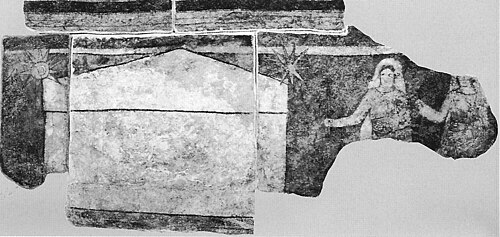
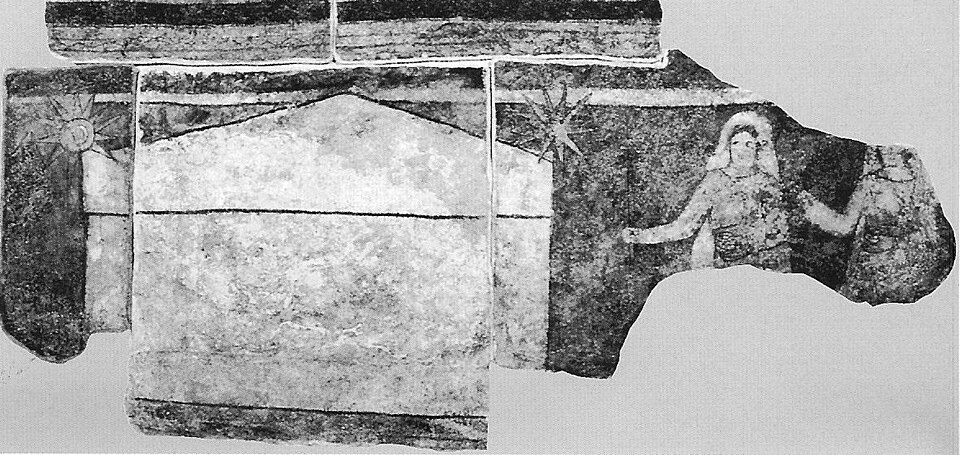
The **Megiddo Mosaic**, from the floor of a Christian prayer hall at Kfar Othnay, about **AD 230** — the earliest known archaeological mention of Jesus and the earliest inscription calling him God: *“The god-loving Akeptous has offered the table to God Jesus Christ as a memorial.”* It also names a centurion, a craftsman and five women.
The **Alexamenos graffito** from the Palatine, second or third century — a pagan scratching a mockery of a man worshipping a crucified figure. Hostile, contemporary, and evidence that crucifixion-worship was a known and derisible thing in Rome.
The **heel bone of Yehohanan ben Hagkol**, found in a tomb at Givʿat ha-Mivtar in 1968 with an iron nail still through it — the first physical proof that Roman crucifixion was practised as the Gospels describe it, in Jerusalem, in the first century, and that a crucified man could receive an honourable burial.
The **Pilate stone**, turned up at Caesarea in 1961 reading [PO]NTIVS PILATVS [PRAEF]ECTVS IVDA[EA]E — which settled the historicity of the man who signed the sentence, after a long period in which it had been doubted for want of evidence.
**What this record does not do.** It does not argue from the Gospels here; the scriptural attestation is being built out separately, book by book. It does not present the disputed items as settled — the *Testimonium* is interpolated, the James ossuary is contested, and both are marked. And it does not treat the absence of a first-century inscription naming him as remarkable: no Galilean labourer of any kind is attested that way, and the same argument once dismissed Pontius Pilate.
Common questions
When did Jesus live?
Jesus of Nazareth is dated b. c. 4 BC (before the death of Herod); crucified at Jerusalem c. AD 30–33 in the archive, which places Jesus in the Apostolic Age (AD 4–70). The dating is traditional and approximate; the archive marks it as uncertain rather than fixing a year the sources do not give.
Which early sources mention Jesus?
Jesus of Nazareth is named in 79 primary-source passages catalogued here, drawn from Old Testament, Pontius Pilate, New Testament and —. Every passage is quoted from a named public-domain translation, earliest first.
Where was Jesus from?
The archive associates Jesus of Nazareth with Bethlehem, Nazareth, Galilee, Jerusalem. The sources record more than one location, so the places are listed in the order the record moves through them.
Who were Jesus’ contemporaries?
The archive links Jesus of Nazareth to 31 other figures, including Mary, the Mother of Jesus, Joseph the Carpenter, John the Baptist and Simon Peter. Each connection is drawn from a source that places them together, not from inference.
Scripture record
Primary-source mentions (79)
Every passage below is quoted from a named public-domain translation, earliest first.
Genesis
c. AD 1[The seed of the woman who shall bruise the serpent’s head (3:15); Melchizedek, priest and king of Salem (14:18); the ram provided in Isaac’s place on Moriah (22); the sceptre that shall not depart from Judah, and Shiloh (49:10).]Old Testament · Genesis 3:15 — the seed of the woman who shall bruise the serpent’s head · read ↗
Old Testament attestation. This archive records the Christological reading the church has held of this book — what it takes to point to Christ — and marks it as reading rather than as the book’s plain subject. Interlinear Hebrew with parsing at the linked verse. The archive links the interlinear at the locus itself — Genesis 3:15 — rather than at chapter 1.
Exodus
c. AD 1[The passover lamb without blemish, whose bones are not broken (12); the manna from heaven; the rock at Horeb struck to give water; the mercy seat and the blood upon it.]Old Testament · Exodus 12:46 — the passover lamb, whose bones are not broken · read ↗
Old Testament attestation. This archive records the Christological reading the church has held of this book — what it takes to point to Christ — and marks it as reading rather than as the book’s plain subject. Interlinear Hebrew with parsing at the linked verse. The archive links the interlinear at the locus itself — Exodus 12:46 — rather than at chapter 1.
Leviticus
c. AD 1[The whole sacrificial system — the sin offering, the scapegoat and the Day of Atonement (16) — read by Hebrews as the shadow of one priest and one offering.]Old Testament · Leviticus 16:21 — the scapegoat and the Day of Atonement · read ↗
Old Testament attestation. This archive records the Christological reading the church has held of this book — what it takes to point to Christ — and marks it as reading rather than as the book’s plain subject. Interlinear Hebrew with parsing at the linked verse. The archive links the interlinear at the locus itself — Leviticus 16:21 — rather than at chapter 1.
Numbers
c. AD 1[The brazen serpent lifted up (21:9), which Christ applies to himself at John 3:14; and Balaam’s Star out of Jacob (24:17).]Old Testament · Numbers 21:9 — the serpent lifted up in the wilderness · read ↗
Old Testament attestation. This archive records the Christological reading the church has held of this book — what it takes to point to Christ — and marks it as reading rather than as the book’s plain subject. Interlinear Hebrew with parsing at the linked verse. The archive links the interlinear at the locus itself — Numbers 21:9 — rather than at chapter 1.
Deuteronomy
c. AD 1[“A Prophet from the midst of thee, like unto me” (18:15), cited of Christ by Peter at Acts 3:22 and Stephen at Acts 7:37; and “cursed is every one that hangeth on a tree” (21:23), which Paul applies at Galatians 3:13.]Old Testament · Deuteronomy 18:15 — the prophet like unto Moses · read ↗
Old Testament attestation. This archive records the Christological reading the church has held of this book — what it takes to point to Christ — and marks it as reading rather than as the book’s plain subject. Interlinear Hebrew with parsing at the linked verse. The archive links the interlinear at the locus itself — Deuteronomy 18:15 — rather than at chapter 1.
Joshua
c. AD 1[The captain of the host of the LORD with the drawn sword, who receives worship (5:13–15); and the name itself — Yehoshua, of which Jesus is the Greek.]Old Testament · Joshua 5:13 — the captain of the host of the LORD · read ↗
Old Testament attestation. This archive records the Christological reading the church has held of this book — what it takes to point to Christ — and marks it as reading rather than as the book’s plain subject. Interlinear Hebrew with parsing at the linked verse. The archive links the interlinear at the locus itself — Joshua 5:13 — rather than at chapter 1.
Judges
c. AD 1[The Angel of the LORD who appears to Gideon and to Manoah’s wife, is called God, receives sacrifice, and whose name is Wonderful (13:18).]Old Testament · Judges 13:18 — the angel whose name is Wonderful · read ↗
Old Testament attestation. This archive records the Christological reading the church has held of this book — what it takes to point to Christ — and marks it as reading rather than as the book’s plain subject. Interlinear Hebrew with parsing at the linked verse. The archive links the interlinear at the locus itself — Judges 13:18 — rather than at chapter 1.
Ruth
c. AD 1[The kinsman-redeemer, the go’el who buys back what is lost; and the genealogy that ends in David and so in Matthew 1.]Old Testament · Ruth 4:14 — the kinsman-redeemer · read ↗
Old Testament attestation. This archive records the Christological reading the church has held of this book — what it takes to point to Christ — and marks it as reading rather than as the book’s plain subject. Interlinear Hebrew with parsing at the linked verse. The archive links the interlinear at the locus itself — Ruth 4:14 — rather than at chapter 1.
1 Samuel
c. AD 1[The rejected shepherd anointed king while another still reigns; Hannah’s song, which Mary’s Magnificat follows closely.]Old Testament · 1 Samuel 2:10 — Hannah’s song and the LORD’s anointed · read ↗
Old Testament attestation. This archive records the Christological reading the church has held of this book — what it takes to point to Christ — and marks it as reading rather than as the book’s plain subject. Interlinear Hebrew with parsing at the linked verse. The archive links the interlinear at the locus itself — 1 Samuel 2:10 — rather than at chapter 1.
2 Samuel
c. AD 1[The covenant with David — “I will establish the throne of his kingdom for ever” (7:13) — the promise the angel repeats to Mary at Luke 1:32.]Old Testament · 2 Samuel 7:13 — the throne established for ever · read ↗
Old Testament attestation. This archive records the Christological reading the church has held of this book — what it takes to point to Christ — and marks it as reading rather than as the book’s plain subject. Interlinear Hebrew with parsing at the linked verse. The archive links the interlinear at the locus itself — 2 Samuel 7:13 — rather than at chapter 1.
1 Kings
c. AD 1[Solomon’s temple and his wisdom, which Christ claims to exceed (“a greater than Solomon is here”); and the widow of Zarephath, whom he cites at Luke 4.]Old Testament · 1 Kings 17:9 — the widow of Zarephath, whom Christ cites at Luke 4 · read ↗
Old Testament attestation. This archive records the Christological reading the church has held of this book — what it takes to point to Christ — and marks it as reading rather than as the book’s plain subject. Interlinear Hebrew with parsing at the linked verse. The archive links the interlinear at the locus itself — 1 Kings 17:9 — rather than at chapter 1.
2 Kings
c. AD 1[Elisha’s multiplication of loaves and cleansing of Naaman — both signs Christ repeats and names.]Old Testament · 2 Kings 5:14 — Naaman cleansed, the sign Christ names at Luke 4 · read ↗
Old Testament attestation. This archive records the Christological reading the church has held of this book — what it takes to point to Christ — and marks it as reading rather than as the book’s plain subject. Interlinear Hebrew with parsing at the linked verse. The archive links the interlinear at the locus itself — 2 Kings 5:14 — rather than at chapter 1.
1 Chronicles
c. AD 1[The Davidic line traced in full, and the covenant restated (17:11–14).]Old Testament · 1 Chronicles 17:11 — the seed after David, whose kingdom is established · read ↗
Old Testament attestation. This archive records the Christological reading the church has held of this book — what it takes to point to Christ — and marks it as reading rather than as the book’s plain subject. Interlinear Hebrew with parsing at the linked verse. The archive links the interlinear at the locus itself — 1 Chronicles 17:11 — rather than at chapter 1.
2 Chronicles
c. AD 1[The temple’s glory and its destruction — and the martyrdom of Zechariah son of Jehoiada (24:21), which bears on Christ’s words at Matthew 23:35.]Old Testament · 2 Chronicles 24:21 — Zechariah stoned in the court, named at Matthew 23:35 · read ↗
Old Testament attestation. This archive records the Christological reading the church has held of this book — what it takes to point to Christ — and marks it as reading rather than as the book’s plain subject. Interlinear Hebrew with parsing at the linked verse. The archive links the interlinear at the locus itself — 2 Chronicles 24:21 — rather than at chapter 1.
Ezra
c. AD 1[The return and the second temple, the building Christ walked in and said would be destroyed.]Old Testament · Ezra 6:15 — the second temple finished — the building Christ walked in · read ↗
Old Testament attestation. This archive records the Christological reading the church has held of this book — what it takes to point to Christ — and marks it as reading rather than as the book’s plain subject. Interlinear Hebrew with parsing at the linked verse. The archive links the interlinear at the locus itself — Ezra 6:15 — rather than at chapter 1.
Nehemiah
c. AD 1[The rebuilding of Jerusalem, from which Daniel’s seventy weeks are reckoned.]Old Testament · Nehemiah 2:8 — the decree to rebuild Jerusalem, from which the seventy weeks are reckoned · read ↗
Old Testament attestation. This archive records the Christological reading the church has held of this book — what it takes to point to Christ — and marks it as reading rather than as the book’s plain subject. Interlinear Hebrew with parsing at the linked verse. The archive links the interlinear at the locus itself — Nehemiah 2:8 — rather than at chapter 1.
Esther
c. AD 1[The intercessor who goes uninvited before the king at the risk of death, that a condemned people may live.]Old Testament · Esther 4:16 — the intercessor who goes before the king at risk of death · read ↗
Old Testament attestation. This archive records the Christological reading the church has held of this book — what it takes to point to Christ — and marks it as reading rather than as the book’s plain subject. Interlinear Hebrew with parsing at the linked verse. The archive links the interlinear at the locus itself — Esther 4:16 — rather than at chapter 1.
Job
c. AD 1[“I know that my redeemer liveth” (19:25); the daysman who might lay his hand upon both (9:33); and the answer from the whirlwind.]Old Testament · Job 19:25 — I know that my redeemer liveth · read ↗
Old Testament attestation. This archive records the Christological reading the church has held of this book — what it takes to point to Christ — and marks it as reading rather than as the book’s plain subject. Interlinear Hebrew with parsing at the linked verse. The archive links the interlinear at the locus itself — Job 19:25 — rather than at chapter 1.
Psalms
c. AD 1[The most quoted book in the New Testament of Christ: “Thou art my Son” (2:7); “they pierced my hands and my feet” and “My God, my God, why hast thou forsaken me” (22); “thou wilt not leave my soul in hell” (16:10); “sit thou at my right hand” (110:1); “the stone which the builders refused” (118:22); “they gave me also gall for my meat” (69:21).]Old Testament · Psalms 2:7 — Thou art my Son · read ↗
Old Testament attestation. This archive records the Christological reading the church has held of this book — what it takes to point to Christ — and marks it as reading rather than as the book’s plain subject. Interlinear Hebrew with parsing at the linked verse. The archive links the interlinear at the locus itself — Psalms 2:7 — rather than at chapter 1.
Proverbs
c. AD 1[**“Who hath ascended up into heaven, or descended? … what is his name, and what is his son’s name, if thou canst tell?” (30:4)** — a question about a Son put in the Old Testament and left unanswered. And Wisdom, who was set up from everlasting, before the earth was (8:22–31).]Old Testament · Proverbs 30:4 — Who hath ascended, and what is his son’s name? · read ↗
Old Testament attestation. This archive records the Christological reading the church has held of this book — what it takes to point to Christ — and marks it as reading rather than as the book’s plain subject. Interlinear Hebrew with parsing at the linked verse. The archive links the interlinear at the locus itself — Proverbs 30:4 — rather than at chapter 1.
Ecclesiastes
c. AD 1[All is vanity under the sun — the exhaustion of every good the New Testament answers with one who is not under it.]Old Testament · Ecclesiastes 1:2 — vanity of vanities — the exhaustion the New Testament answers · read ↗
Old Testament attestation. This archive records the Christological reading the church has held of this book — what it takes to point to Christ — and marks it as reading rather than as the book’s plain subject. Interlinear Hebrew with parsing at the linked verse. The archive links the interlinear at the locus itself — Ecclesiastes 1:2 — rather than at chapter 1.
Song of Solomon
c. AD 1[The bridegroom and the bride, the figure Christ takes for himself and Paul applies to the church at Ephesians 5.]Old Testament · Song of Solomon 2:16 — the bridegroom and the bride, applied to the church at Ephesians 5 · read ↗
Old Testament attestation. This archive records the Christological reading the church has held of this book — what it takes to point to Christ — and marks it as reading rather than as the book’s plain subject. Interlinear Hebrew with parsing at the linked verse. The archive links the interlinear at the locus itself — Song of Solomon 2:16 — rather than at chapter 1.
Isaiah
c. AD 1[Immanuel, born of a virgin (7:14); the child called The mighty God, The everlasting Father (9:6); the rod out of the stem of Jesse (11); and the Suffering Servant of 52:13–53:12 — despised, wounded for our transgressions, silent before his accusers, numbered with the transgressors, and with the rich in his death.]Old Testament · Isaiah 7:14 — a virgin shall conceive · read ↗
Old Testament attestation. This archive records the Christological reading the church has held of this book — what it takes to point to Christ — and marks it as reading rather than as the book’s plain subject. Interlinear Hebrew with parsing at the linked verse. The archive links the interlinear at the locus itself — Isaiah 7:14 — rather than at chapter 1.
Jeremiah
c. AD 1[The Branch of righteousness, THE LORD OUR RIGHTEOUSNESS (23:5–6); and the new covenant, not according to the covenant made with the fathers (31:31), which Hebrews quotes entire.]Old Testament · Jeremiah 23:5 — a righteous Branch raised unto David · read ↗
Old Testament attestation. This archive records the Christological reading the church has held of this book — what it takes to point to Christ — and marks it as reading rather than as the book’s plain subject. Interlinear Hebrew with parsing at the linked verse. The archive links the interlinear at the locus itself — Jeremiah 23:5 — rather than at chapter 1.
Lamentations
c. AD 1[The city desolate and the man of sorrows sitting in her ruin — “is it nothing to you, all ye that pass by?” (1:12).]Old Testament · Lamentations 1:12 — is it nothing to you, all ye that pass by · read ↗
Old Testament attestation. This archive records the Christological reading the church has held of this book — what it takes to point to Christ — and marks it as reading rather than as the book’s plain subject. Interlinear Hebrew with parsing at the linked verse. The archive links the interlinear at the locus itself — Lamentations 1:12 — rather than at chapter 1.
Ezekiel
c. AD 1[The Good Shepherd who seeks the lost and judges the false shepherds (34); and the dry bones raised.]Old Testament · Ezekiel 34:23 — one shepherd set over the flock · read ↗
Old Testament attestation. This archive records the Christological reading the church has held of this book — what it takes to point to Christ — and marks it as reading rather than as the book’s plain subject. Interlinear Hebrew with parsing at the linked verse. The archive links the interlinear at the locus itself — Ezekiel 34:23 — rather than at chapter 1.
Daniel
c. AD 1[**“One like the Son of man”** brought before the Ancient of Days and given a kingdom that shall not pass away (7:13–14) — the title Christ uses of himself more than any other; the stone that breaks the image (2); and the seventy weeks, in which “Messiah shall be cut off, but not for himself” (9:26).]Old Testament · Daniel 7:13 — one like the Son of man coming with the clouds · read ↗
Old Testament attestation. This archive records the Christological reading the church has held of this book — what it takes to point to Christ — and marks it as reading rather than as the book’s plain subject. Interlinear Hebrew with parsing at the linked verse. The archive links the interlinear at the locus itself — Daniel 7:13 — rather than at chapter 1.
Hosea
c. AD 1[“Out of Egypt have I called my son” (11:1), applied at Matthew 2:15; and “after two days … in the third day he will raise us up” (6:2).]Old Testament · Hosea 11:1 — out of Egypt have I called my son · read ↗
Old Testament attestation. This archive records the Christological reading the church has held of this book — what it takes to point to Christ — and marks it as reading rather than as the book’s plain subject. Interlinear Hebrew with parsing at the linked verse. The archive links the interlinear at the locus itself — Hosea 11:1 — rather than at chapter 1.
Joel
c. AD 1[The outpouring of the Spirit on all flesh (2:28), which Peter says is fulfilled at Pentecost — and the darkening of the sun and moon.]Old Testament · Joel 2:28 — I will pour out my spirit upon all flesh · read ↗
Old Testament attestation. This archive records the Christological reading the church has held of this book — what it takes to point to Christ — and marks it as reading rather than as the book’s plain subject. Interlinear Hebrew with parsing at the linked verse. The archive links the interlinear at the locus itself — Joel 2:28 — rather than at chapter 1.
Amos
c. AD 1[“I will cause the sun to go down at noon, and I will darken the earth in the clear day” (8:9) — read by the Fathers of the darkness at the crucifixion.]Old Testament · Amos 8:9 — the sun going down at noon · read ↗
Old Testament attestation. This archive records the Christological reading the church has held of this book — what it takes to point to Christ — and marks it as reading rather than as the book’s plain subject. Interlinear Hebrew with parsing at the linked verse. The archive links the interlinear at the locus itself — Amos 8:9 — rather than at chapter 1.
Obadiah
c. AD 1[The day of the LORD upon the nations, and deliverance upon mount Zion.]Old Testament · Obadiah 1:17 — upon mount Zion shall be deliverance · read ↗
Old Testament attestation. This archive records the Christological reading the church has held of this book — what it takes to point to Christ — and marks it as reading rather than as the book’s plain subject. Interlinear Hebrew with parsing at the linked verse. The archive links the interlinear at the locus itself — Obadiah 1:17 — rather than at chapter 1.
Jonah
c. AD 1[Three days and three nights in the belly of the fish — the one sign Christ says he will give (Matthew 12:39–40).]Old Testament · Jonah 1:17 — three days and three nights — the one sign Christ says he will give · read ↗
Old Testament attestation. This archive records the Christological reading the church has held of this book — what it takes to point to Christ — and marks it as reading rather than as the book’s plain subject. Interlinear Hebrew with parsing at the linked verse. The archive links the interlinear at the locus itself — Jonah 1:17 — rather than at chapter 1.
Micah
c. AD 1[**“Bethlehem Ephratah … out of thee shall he come forth unto me that is to be ruler in Israel; whose goings forth have been from of old, from everlasting”** (5:2) — the verse the chief priests quote to Herod at Matthew 2:6.]Old Testament · Micah 5:2 — Bethlehem Ephratah, out of thee shall he come forth · read ↗
Old Testament attestation. This archive records the Christological reading the church has held of this book — what it takes to point to Christ — and marks it as reading rather than as the book’s plain subject. Interlinear Hebrew with parsing at the linked verse. The archive links the interlinear at the locus itself — Micah 5:2 — rather than at chapter 1.
Nahum
c. AD 1[“The feet of him that bringeth good tidings” (1:15), the phrase Paul takes up at Romans 10:15.]Old Testament · Nahum 1:15 — the feet of him that bringeth good tidings · read ↗
Old Testament attestation. This archive records the Christological reading the church has held of this book — what it takes to point to Christ — and marks it as reading rather than as the book’s plain subject. Interlinear Hebrew with parsing at the linked verse. The archive links the interlinear at the locus itself — Nahum 1:15 — rather than at chapter 1.
Habakkuk
c. AD 1[“The just shall live by his faith” (2:4) — quoted three times in the New Testament.]Old Testament · Habakkuk 2:4 — the just shall live by his faith · read ↗
Old Testament attestation. This archive records the Christological reading the church has held of this book — what it takes to point to Christ — and marks it as reading rather than as the book’s plain subject. Interlinear Hebrew with parsing at the linked verse. The archive links the interlinear at the locus itself — Habakkuk 2:4 — rather than at chapter 1.
Zephaniah
c. AD 1[The King of Israel in the midst of her, and the remnant saved.]Old Testament · Zephaniah 3:15 — the King of Israel in the midst of thee · read ↗
Old Testament attestation. This archive records the Christological reading the church has held of this book — what it takes to point to Christ — and marks it as reading rather than as the book’s plain subject. Interlinear Hebrew with parsing at the linked verse. The archive links the interlinear at the locus itself — Zephaniah 3:15 — rather than at chapter 1.
Haggai
c. AD 1[“The glory of this latter house shall be greater than of the former” (2:9) — said of the temple Christ entered.]Old Testament · Haggai 2:9 — the glory of this latter house · read ↗
Old Testament attestation. This archive records the Christological reading the church has held of this book — what it takes to point to Christ — and marks it as reading rather than as the book’s plain subject. Interlinear Hebrew with parsing at the linked verse. The archive links the interlinear at the locus itself — Haggai 2:9 — rather than at chapter 1.
Zechariah
c. AD 1[**“Thirty pieces of silver … cast it unto the potter” (11:12–13)**; “thy King cometh unto thee … lowly, and riding upon an ass” (9:9); “they shall look upon me whom they have pierced” (12:10); “smite the shepherd, and the sheep shall be scattered” (13:7); and the BRANCH who shall build the temple and be a priest upon his throne (6:12–13).]Old Testament · Zechariah 11:12 — thirty pieces of silver · read ↗
Old Testament attestation. This archive records the Christological reading the church has held of this book — what it takes to point to Christ — and marks it as reading rather than as the book’s plain subject. Interlinear Hebrew with parsing at the linked verse. The archive links the interlinear at the locus itself — Zechariah 11:12 — rather than at chapter 1.
Malachi
c. AD 1[The messenger sent before his face (3:1), applied to John the Baptist; and the Sun of righteousness arising with healing in his wings (4:2).]Old Testament · Malachi 3:1 — the messenger before his face · read ↗
Old Testament attestation. This archive records the Christological reading the church has held of this book — what it takes to point to Christ — and marks it as reading rather than as the book’s plain subject. Interlinear Hebrew with parsing at the linked verse. The archive links the interlinear at the locus itself — Malachi 3:1 — rather than at chapter 1.
The Pilate stone
c. AD 36[A limestone block reading, in part, [PO]NTIVS PILATVS [PRAEF]ECTVS IVDA[EA]E — Pontius Pilate, prefect of Judaea. **Its relevance here is methodological.** Pilate is named by Tacitus, by Josephus, by Philo and by all four Gospels, and his historicity was nevertheless doubted for want of physical evidence until a building block turned up in 1961. The archive cites it wherever an argument from silence is offered about a first-century provincial figure, because in his case that argument was made and was wrong.]Pontius Pilate · Dedicatory inscription, Caesarea Maritima (found 1961)
Object. Found reused in the theatre at Caesarea Maritima in 1961; now in the Israel Museum. Also cited on this archive’s record for Pilate.
Matthew
c. AD 60[The genealogy from Abraham; the virgin birth; the magi; Egypt; the Sermon on the Mount; the passion, and the Great Commission. Written to show Jesus as the promised King of the Jews.]New Testament · Matthew 1:1 — the genealogy of Jesus Christ, son of David, son of Abraham · read ↗
New Testament attestation. Interlinear Greek with parsing at the linked verse. The archive links the interlinear at the locus itself — Matthew 1:1 — rather than at chapter 1.
Mark
c. AD 60[The earliest Gospel, and the plainest: the Son of God announced in the first verse and confessed by a Roman centurion in the last hours. The passion occupies a third of the book.]New Testament · Mark 1:1 — the Son of God announced in the first verse · read ↗
New Testament attestation. Interlinear Greek with parsing at the linked verse. The archive links the interlinear at the locus itself — Mark 1:1 — rather than at chapter 1.
Luke
c. AD 60[The physician’s ordered account, anchored to the imperial calendar — Augustus, Quirinius, Tiberius, Pilate, Lysanias — and the only Gospel to give the infancy from Elizabeth and Zacharias onward.]New Testament · Luke 3:1 — the imperial calendar — Tiberius, Pilate, Lysanias · read ↗
New Testament attestation. Interlinear Greek with parsing at the linked verse. The archive links the interlinear at the locus itself — Luke 3:1 — rather than at chapter 1.
John
c. AD 60[The Word who was with God and was God, made flesh; seven signs, seven “I am” sayings, and the explicit purpose: “that ye might believe that Jesus is the Christ, the Son of God.”]New Testament · John 1:1 — in the beginning was the Word · read ↗
New Testament attestation. Interlinear Greek with parsing at the linked verse. The archive links the interlinear at the locus itself — John 1:1 — rather than at chapter 1.
Acts
c. AD 60[The ascension, and thereafter the church’s own testimony — every apostolic sermon in the book is about him, and the risen Christ speaks on the Damascus road.]New Testament · Acts 1:9 — the ascension, from which the church’s own testimony begins · read ↗
New Testament attestation. Interlinear Greek with parsing at the linked verse. The archive links the interlinear at the locus itself — Acts 1:9 — rather than at chapter 1.
Romans
c. AD 60[Declared the Son of God by the resurrection from the dead (1:4); the second Adam; propitiation through faith in his blood.]New Testament · Romans 1:4 — declared the Son of God by the resurrection · read ↗
New Testament attestation. Interlinear Greek with parsing at the linked verse. The archive links the interlinear at the locus itself — Romans 1:4 — rather than at chapter 1.
1 Corinthians
c. AD 60[**The earliest written account of the resurrection** — the tradition Paul “received” and delivered, naming Cephas, the twelve, above five hundred brethren at once, James, and himself (15:3–8), written within about twenty-five years of the events.]New Testament · 1 Corinthians 15:3 — the earliest creed: died, buried, raised, seen · read ↗
New Testament attestation. Interlinear Greek with parsing at the linked verse. The archive links the interlinear at the locus itself — 1 Corinthians 15:3 — rather than at chapter 1.
2 Corinthians
c. AD 60[He who knew no sin made sin for us; the treasure in earthen vessels; the light of the glory of God in his face.]New Testament · 2 Corinthians 5:21 — made sin for us, who knew no sin · read ↗
New Testament attestation. Interlinear Greek with parsing at the linked verse. The archive links the interlinear at the locus itself — 2 Corinthians 5:21 — rather than at chapter 1.
Galatians
c. AD 60[Made under the law to redeem them that were under the law; “made a curse for us”; and Paul’s account of meeting James the Lord’s brother.]New Testament · Galatians 4:4 — made under the law, to redeem them under the law · read ↗
New Testament attestation. Interlinear Greek with parsing at the linked verse. The archive links the interlinear at the locus itself — Galatians 4:4 — rather than at chapter 1.
Ephesians
c. AD 60[The head of the body; the mystery hid from ages; the bridegroom of the church.]New Testament · Ephesians 1:22 — head over all things to the church · read ↗
New Testament attestation. Interlinear Greek with parsing at the linked verse. The archive links the interlinear at the locus itself — Ephesians 1:22 — rather than at chapter 1.
Philippians
c. AD 60[The hymn of 2:5–11 — in the form of God, made of no reputation, obedient unto the death of the cross, and given the name at which every knee shall bow. Widely held to be a pre-Pauline hymn, and so older than the letter.]New Testament · Philippians 2:5 — the hymn: in the form of God, obedient unto death · read ↗
New Testament attestation. Interlinear Greek with parsing at the linked verse. The archive links the interlinear at the locus itself — Philippians 2:5 — rather than at chapter 1.
Colossians
c. AD 60[The image of the invisible God, firstborn of every creature, by whom all things were created and in whom all fulness dwells.]New Testament · Colossians 1:15 — the image of the invisible God · read ↗
New Testament attestation. Interlinear Greek with parsing at the linked verse. The archive links the interlinear at the locus itself — Colossians 1:15 — rather than at chapter 1.
1 Thessalonians
c. AD 60[Possibly the earliest surviving Christian writing — and it already assumes the death, resurrection and return as common knowledge.]New Testament · 1 Thessalonians 4:14 — if we believe that Jesus died and rose again · read ↗
New Testament attestation. Interlinear Greek with parsing at the linked verse. The archive links the interlinear at the locus itself — 1 Thessalonians 4:14 — rather than at chapter 1.
2 Thessalonians
c. AD 60[The revelation of the Lord Jesus from heaven, and the man of sin whom he destroys.]New Testament · 2 Thessalonians 1:7 — the revelation of the Lord Jesus from heaven · read ↗
New Testament attestation. Interlinear Greek with parsing at the linked verse. The archive links the interlinear at the locus itself — 2 Thessalonians 1:7 — rather than at chapter 1.
1 Timothy
c. AD 60[“God was manifest in the flesh” (3:16); the one mediator, the man Christ Jesus; and his witness before Pontius Pilate (6:13).]New Testament · 1 Timothy 3:16 — God was manifest in the flesh · read ↗
New Testament attestation. Interlinear Greek with parsing at the linked verse. The archive links the interlinear at the locus itself — 1 Timothy 3:16 — rather than at chapter 1.
2 Timothy
c. AD 60[Of the seed of David, raised from the dead — and the charge to hold the form of sound words.]New Testament · 2 Timothy 2:8 — of the seed of David, raised from the dead · read ↗
New Testament attestation. Interlinear Greek with parsing at the linked verse. The archive links the interlinear at the locus itself — 2 Timothy 2:8 — rather than at chapter 1.
Titus
c. AD 60[“The great God and our Saviour Jesus Christ” (2:13), one of the plainest ascriptions of deity in the epistles.]New Testament · Titus 2:13 — the great God and our Saviour Jesus Christ · read ↗
New Testament attestation. Interlinear Greek with parsing at the linked verse. The archive links the interlinear at the locus itself — Titus 2:13 — rather than at chapter 1.
Philemon
c. AD 60[The shortest Pauline letter, and the only one whose whole argument is a substitution: put it on my account.]New Testament · Philemon 1:18 — put that on mine account — the letter whose argument is substitution · read ↗
New Testament attestation. Interlinear Greek with parsing at the linked verse. The archive links the interlinear at the locus itself — Philemon 1:18 — rather than at chapter 1.
Hebrews
c. AD 60[The most sustained argument about him in Scripture — the express image of God’s person, greater than angels, Moses and Aaron; a priest after the order of Melchizedek; one sacrifice once offered.]New Testament · Hebrews 1:3 — the express image of his person · read ↗
New Testament attestation. Interlinear Greek with parsing at the linked verse. The archive links the interlinear at the locus itself — Hebrews 1:3 — rather than at chapter 1.
James
c. AD 60[Written by the Lord’s brother, who calls himself only “a servant of the Lord Jesus Christ” — a claim of restraint that is itself testimony.]New Testament · James 1:1 — a servant of God and of the Lord Jesus Christ · read ↗
New Testament attestation. Interlinear Greek with parsing at the linked verse. The archive links the interlinear at the locus itself — James 1:1 — rather than at chapter 1.
1 Peter
c. AD 60[A lamb without blemish, foreordained before the foundation of the world; who bore our sins in his own body on the tree; written by a man who says he was a witness of the sufferings.]New Testament · 1 Peter 1:19 — a lamb without blemish and without spot · read ↗
New Testament attestation. Interlinear Greek with parsing at the linked verse. The archive links the interlinear at the locus itself — 1 Peter 1:19 — rather than at chapter 1.
2 Peter
c. AD 60[“We were eyewitnesses of his majesty” on the holy mount — an explicit appeal to having been present (1:16–18).]New Testament · 2 Peter 1:16 — we were eyewitnesses of his majesty · read ↗
New Testament attestation. Interlinear Greek with parsing at the linked verse. The archive links the interlinear at the locus itself — 2 Peter 1:16 — rather than at chapter 1.
1 John
c. AD 60[“That which we have heard, which we have seen with our eyes … and our hands have handled” (1:1) — the most physical claim of contact in the New Testament.]New Testament · 1 John 1:1 — that which our hands have handled, of the Word of life · read ↗
New Testament attestation. Interlinear Greek with parsing at the linked verse. The archive links the interlinear at the locus itself — 1 John 1:1 — rather than at chapter 1.
2 John
c. AD 60[The test of the true teacher: whether he confesses that Jesus Christ is come in the flesh.]New Testament · 2 John 1:7 — who confess not that Jesus Christ is come in the flesh · read ↗
New Testament attestation. Interlinear Greek with parsing at the linked verse. The archive links the interlinear at the locus itself — 2 John 1:7 — rather than at chapter 1.
3 John
c. AD 60[The letter of hospitality — those who go forth “for his name’s sake”.]New Testament · 3 John 1:7 — they went forth for his name’s sake · read ↗
New Testament attestation. Interlinear Greek with parsing at the linked verse. The archive links the interlinear at the locus itself — 3 John 1:7 — rather than at chapter 1.
Jude
c. AD 60[Written by another brother of the Lord, contending for the faith once delivered.]New Testament · Jude 1:3 — the faith once delivered unto the saints · read ↗
New Testament attestation. Interlinear Greek with parsing at the linked verse. The archive links the interlinear at the locus itself — Jude 1:3 — rather than at chapter 1.
Revelation
c. AD 60[The Alpha and Omega, the Lamb slain, the Lion of the tribe of Judah, the Faithful Witness, the Word of God, the Root and Offspring of David, and the Bright and Morning Star.]New Testament · Revelation 1:8 — I am Alpha and Omega · read ↗
New Testament attestation. Interlinear Greek with parsing at the linked verse. The archive links the interlinear at the locus itself — Revelation 1:8 — rather than at chapter 1.
The heel bone of Yehohanan ben Hagkol
c. AD 70[A first-century ossuary from a Jerusalem tomb held the bones of a young man with **an iron nail still driven through his heel bone**, bent at the tip where it had struck a knot in the wood. It does not concern Jesus. It establishes three things the Gospel accounts require: that Roman crucifixion in first-century Jerusalem used nails through the extremities and not only ropes; that a crucified man could be **taken down and given an ordinary family burial** in a rock-cut tomb with an inscribed ossuary; and that a victim’s name could be recorded and remembered. For a long period each of those was doubted.]— · Ossuary, tomb 1, Givʿat ha-Mivtar, Jerusalem (excavated 1968)
Object. Excavated by Vassilios Tzaferis for the Israel Department of Antiquities in 1968; the remains of a man crucified in the first century AD, with an iron nail through the right calcaneum. Published in *Israel Exploration Journal*.
Mara bar Serapion, Letter to his son
c. AD 73[A Syriac Stoic writing to his son from Roman captivity asks what the Jews gained by putting **“their wise king”** to death, and answers that their kingdom was taken away in that very hour — setting the execution beside the killing of Socrates by the Athenians and of Pythagoras by the Samians. He never names Jesus and is not a Christian; if the early dating holds, this is among the earliest non-Christian references of any kind. The dating is disputed and the archive says so.]Mara bar Serapion · Letter to Serapion (British Library Add. MS 14658)
Not held in this library. A Syriac letter, dated variously from shortly after AD 73 to the third century; edited and translated by William Cureton, *Spicilegium Syriacum* (London, 1855), public domain.
Josephus, Antiquities XVIII.63–64
c. AD 94Now there was about this time Jesus, a wise man … he drew over to him both many of the Jews and many of the Gentiles. … And when Pilate, at the suggestion of the principal men amongst us, had condemned him to the cross, those that loved him at the first did not forsake him. [**The passage is interpolated and the archive says so.** The phrases confessing him as the Christ and reporting the resurrection cannot stand in a Jewish writer who remained a Jew, and are generally taken as Christian additions to the text. What is widely accepted is that Josephus wrote *something* here about Jesus, Pilate and the condemnation — the passage sits in every manuscript, in a context that reads coherently around it, and Arabic and Syriac recensions preserve less-Christianised forms. The archive presents it as a witness with a known defect rather than either quoting it whole or discarding it.]Flavius Josephus · Antiquities XVIII.iii.3 (the Testimonium Flavianum) · source text
Josephus, *Antiquities of the Jews* — held in this library. English: William Whiston (1737), public domain.
Josephus, Antiquities XX.200
c. AD 94[Josephus records that the high priest Ananus assembled the sanhedrin and brought before it “the brother of Jesus, who was called Christ, whose name was James”, and had him stoned. **This notice is accepted as authentic by nearly all scholars**, including those who reject the Testimonium entirely: it is incidental, it identifies Jesus in order to identify James rather than the reverse, and “who was called Christ” is the wording of a man who does not accept the title. Origen and Eusebius both cite it. The archive holds James the Just and Ananus II as figures, and this is their shared attestation.]Flavius Josephus · Antiquities XX.ix.1 · source text
Josephus, *Antiquities of the Jews* — held in this library. English: William Whiston (1737), public domain.
Suetonius, Claudius 25.4; Nero 16
c. AD 110[Suetonius records that Claudius **expelled the Jews from Rome** because they were continually making disturbances at the instigation of **“Chrestus”** — an expulsion Acts 18:2 independently reflects when it has Aquila and Priscilla arrive at Corinth from Italy for that reason. He separately records Nero punishing the Christians. Whether “Chrestus” is a misspelling of Christus, a common slave name, or a different agitator is disputed, and the archive records the dispute rather than settling it.]Suetonius · De Vita Caesarum, Divus Claudius 25.4; Nero 16
Not held in this library. Suetonius, *The Lives of the Twelve Caesars*, written c. AD 121; English translations by Alexander Thomson (1796) and J. C. Rolfe (Loeb, 1914) are in the public domain.
Pliny the Younger to Trajan, Letters X.96
c. AD 112[Pliny, imperial legate of Bithynia-Pontus about AD 112, reports interrogating Christians and finding that they met before dawn and **“sang in alternate verses a hymn to Christ, as to a god”**, binding themselves by oath to commit no crime. Written by a provincial governor to an emperor, in a document neither intended nor able to flatter the sect — and evidence that within eighty years of the crucifixion, in a province far from Judaea, Christ was the object of worship in ordinary weekly practice.]Pliny the Younger · Letters X.96 · source text
Pliny and Trajan on the Christians — held in this library. Public-domain English translation.
Tacitus, Annals XV.44
c. AD 116Nero fastened the guilt and inflicted the most exquisite tortures on a class hated for their abominations, called Christians by the populace. **Christus, from whom the name had its origin, suffered the extreme penalty during the reign of Tiberius at the hands of one of our procurators, Pontius Pilatus**, and a most mischievous superstition, thus checked for the moment, again broke out not only in Judaea, the first source of the evil, but even in Rome. [A Roman senator and consular historian, writing about AD 116 with access to official records, and no motive to oblige. He supplies the name, the execution, the executioner and the reign, and calls the movement a pernicious superstition while doing it. This is the single most-cited non-Christian attestation.]Tacitus · Annals XV.44 · source text
Tacitus, *Annals* — held in this library. English: Alfred John Church & William Jackson Brodribb (1876), public domain.
Lucian of Samosata, The Death of Peregrinus
c. AD 165[Lucian, a professional satirist with no stake in the question, mocks the Christians as credulous people who revere **“the man who was crucified in Palestine”** because he introduced their novel rites, and notes that they despise death and hold their possessions in common. Contemptuous, incidental, and therefore useful: he is not arguing a case, he is describing a group he finds ridiculous.]Lucian of Samosata · De Morte Peregrini 11–13
Not held in this library. Written c. AD 165; English translation by H. W. Fowler & F. G. Fowler, *The Works of Lucian of Samosata* (Oxford, 1905), public domain.
Celsus, via Origen, Against Celsus
c. AD 177[Celsus wrote the first systematic pagan attack on Christianity, about AD 177, and it is preserved because Origen answered it line by line. **The significant thing is what he does not say.** He does not argue that Jesus never existed. He argues that his birth was illegitimate, that he worked as a labourer in Egypt and there learned magical arts, that his miracles were sorcery, and that he was crucified as a criminal — every one of which concedes the man in order to attack him. A hostile witness conceding the existence, the trade, the reputation for wonders and the execution is stronger evidence than a friendly one asserting them.]Celsus · Contra Celsum I–II · source text
Origen, *Against Celsus* — held in this library. Celsus’s own work is lost and survives only in Origen’s quotations of it.
The Alexamenos graffito
c. AD 200[A crude scratching on a wall of the imperial pages’ quarters showing a figure raising a hand to a crucified man with an ass’s head, captioned in Greek “Alexamenos worships his god”. **Hostile evidence, and better for it.** It establishes that within two centuries, in Rome itself, worshipping a crucified man was a known practice specific enough to be mocked, and specific enough that the mocker expected his readers to recognise it. The insult only works if the crucifixion is common knowledge.]Anonymous · Graffito, Domus Gelotiana, Palatine Hill, Rome
Object. Second or third century; now in the Palatine Museum. The archive holds Alexamenos as a figure.
Julius Africanus, Chronography, on Thallus and Phlegon
c. AD 220[Africanus, writing about AD 221, discusses the darkness at the crucifixion and reports that **Thallus** had explained it as an eclipse of the sun — which Africanus rejects as impossible, the crucifixion falling at Passover full moon, when a solar eclipse cannot occur. **Phlegon** of Tralles is cited by Africanus and by Origen for a darkness and an earthquake in the reign of Tiberius. Both authors are lost; both survive only as quotations, and the fragments are short and contested. The archive records them as reported testimony at second hand, and the darkness is treated in full on the crucifixion record.]Julius Africanus · Chronography, fragment 18 (preserved by George Syncellus)
Not held in this library — the archive holds Africanus’s *Letters*, which are a different work. The *Chronography* survives only in fragments quoted by later chroniclers, chiefly George Syncellus; English in Ante-Nicene Fathers 6, public domain.
The Megiddo Mosaic (Kfar Othnay)
c. AD 230“The god-loving Akeptous has offered the table to God Jesus Christ as a memorial.” [**The earliest known archaeological mention of Jesus, and the earliest inscription identifying him as God** — about AD 230, a century before Christianity was legalised, on the floor of what is reckoned the earliest monument in Israel dedicated to Christian worship. It bears directly on a real historical argument: that the first Christians revered Jesus as a teacher and only later came to think him divine. A private donor in a rural settlement beside a Roman camp, addressing him as God on a floor meant to be walked on, is evidence against that. A second inscription credits a centurion, **Gaianus**, with funding the work, the craftsman **Brutius** with laying it, and asks the reader to remember **Primilla, Cyriaca, Dorothea and Chreste** — five women named on the earliest Christian floor known.]Akeptous · Greek dedicatory inscription, floor of the Christian prayer hall, Kfar Othnay
Object. Discovered by the Israel Antiquities Authority during salvage excavation on the grounds of Megiddo Prison, 2003–2005; lifted in 2024 in ten pieces and exhibited at the Museum of the Bible, Washington DC, 15 September 2024 – 6 July 2025, then returned to Israel. About 4.87 × 9.75 m.
Connected in the archive
People
- Mary, the Mother of Jesus
- Joseph the Carpenter
- John the Baptist
- Simon Peter
- John the Apostle
- James the Just
- Jude, the Brother of the Lord
- Paul of Tarsus
- Pontius Pilate
- Joseph Caiaphas
- Annas (Ananus I)
- Herod Antipas
- Mary Magdalene
- Nathanael of Cana
- Nicodemus the Pharisee
- Joseph of Arimathea
- Barabbas
- Jairus
- Bartimaeus
- Alexamenos
- Herod the Great
- Zacharias the Priest
- Akeptous
- Gaianus, also called Porphyrius
- Brutius
- Primilla
- Cyriaca (Kuriake)
- Dorothea
- Chreste
- Simeon the God-Receiver
- Anna the Prophetess
Events in this lifetime
The Crucifixion
Place
Places served
The 16 places the sources put Jesus, in the order the record moves through them. This is what the sources attest, not a reconstructed route.
- 1BethlehemBorn there in the days of HerodMatthew 2:1; Luke 2:4-7
- 2EgyptTaken there as a child to escape HerodMatthew 2:13-15
- 3NazarethBrought up there; rejected in the synagogueLuke 2:39-40; 4:16-30
- 4CanaThe first sign, water into wineJohn 2:1-11
- 5CapernaumSettled there and taught in the synagogue; called his own cityMatthew 4:13; Mark 2:1
- 6SycharThe woman at the wellJohn 4:5-6
- 7NainRaised the widow’s sonLuke 7:11-17
- 8BethsaidaHealed a blind man thereMark 8:22-26
- 9ChorazinNamed among the towns rebuked for unbelief, so ministry there is impliedMatthew 11:21
- 10TyreWithdrew to its region; the Syrophoenician womanMark 7:24-30
- 11SidonReturned through Sidon to the Sea of GalileeMark 7:31
- 12Caesarea PhilippiPeter’s confession in its villagesMatthew 16:13; Mark 8:27
- 13JerichoHealed Bartimaeus; called ZacchaeusMark 10:46-52; Luke 19:1-10
- 14BethanyRaised Lazarus; anointed at tableJohn 11:1-45; Mark 14:3
- 15JerusalemWent up for the feasts and taught in the templeJohn 2:13; Mark 11:15-18
- 16GolgothaCrucified outside the cityMark 15:22; John 19:17