The Apostolic Age · AD 4–70
Paul of Tarsus
Also known as Saul of Tarsus
c. 5 – c. 64/67 · Apostle to the Gentiles · Tarsus → Rome
The Apostolic Age
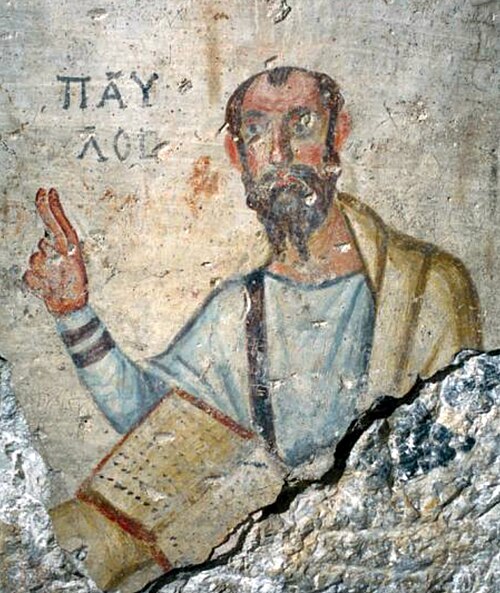
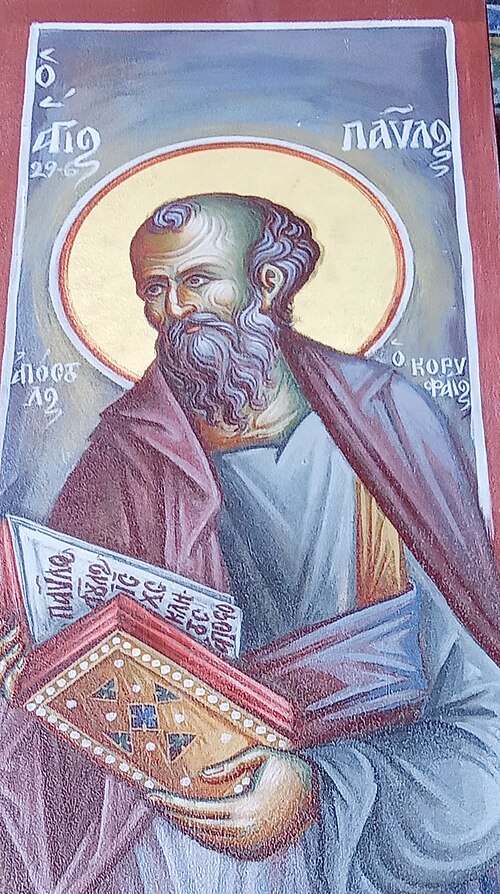
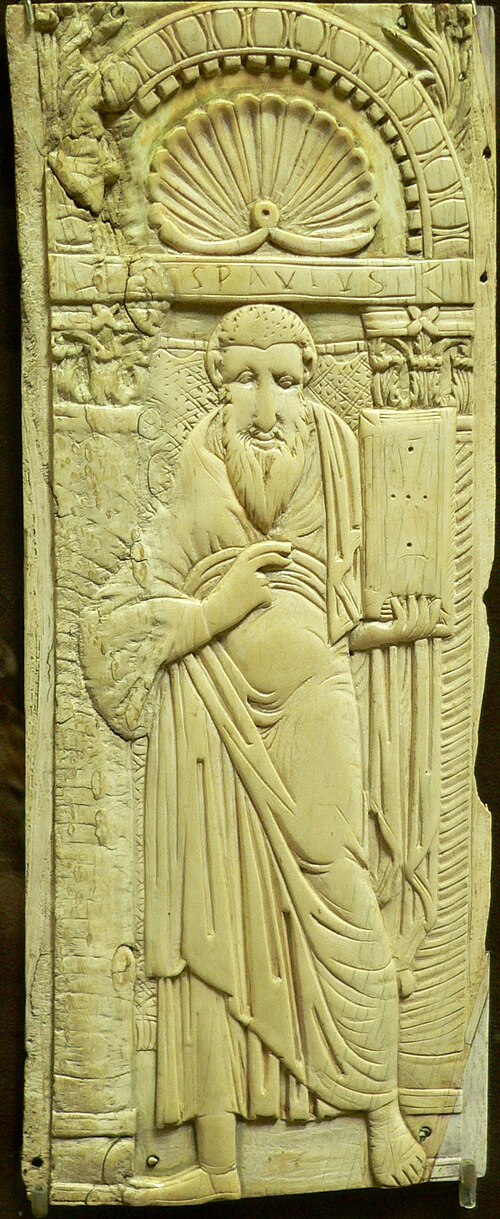
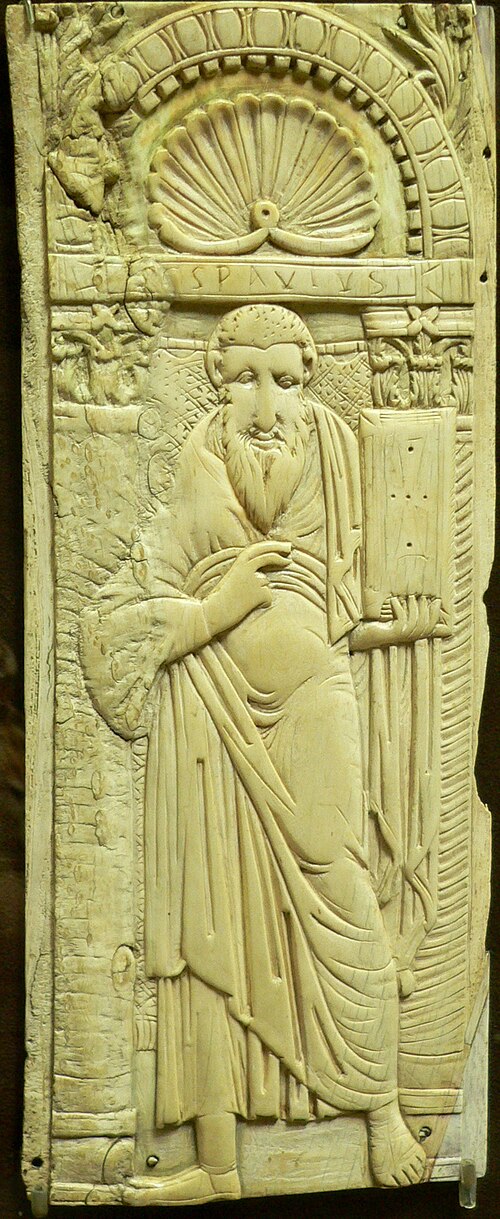
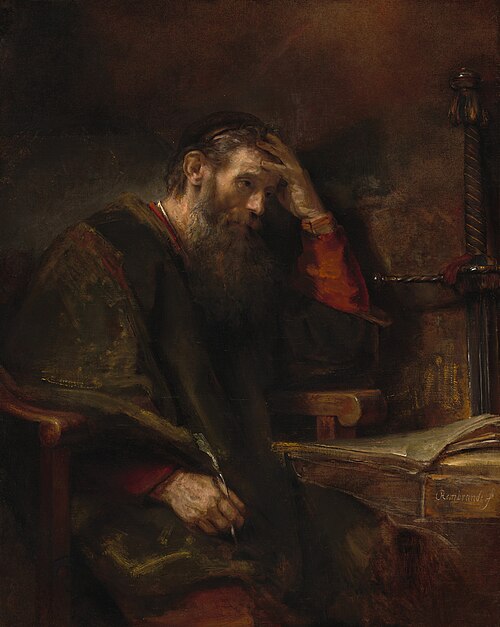
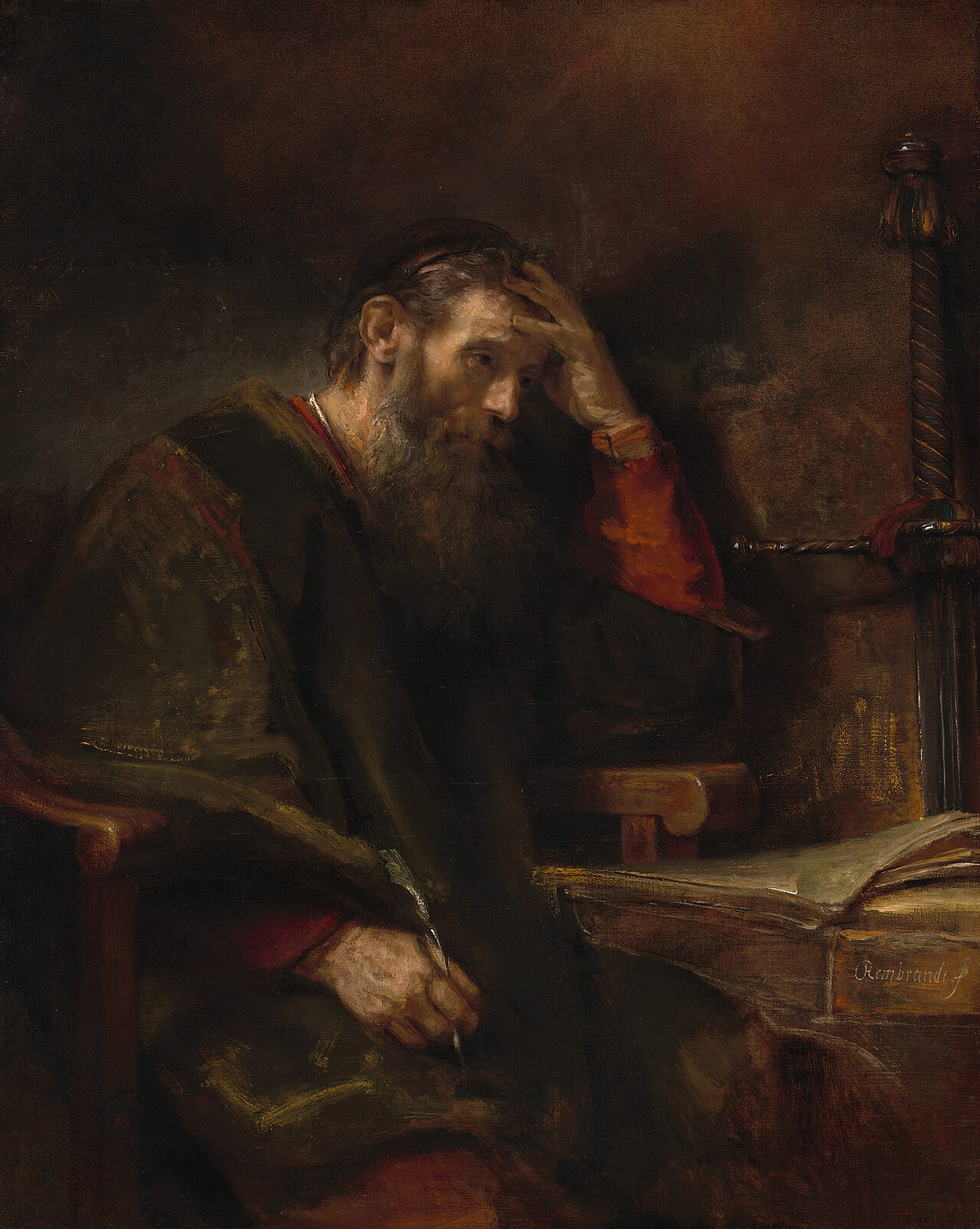
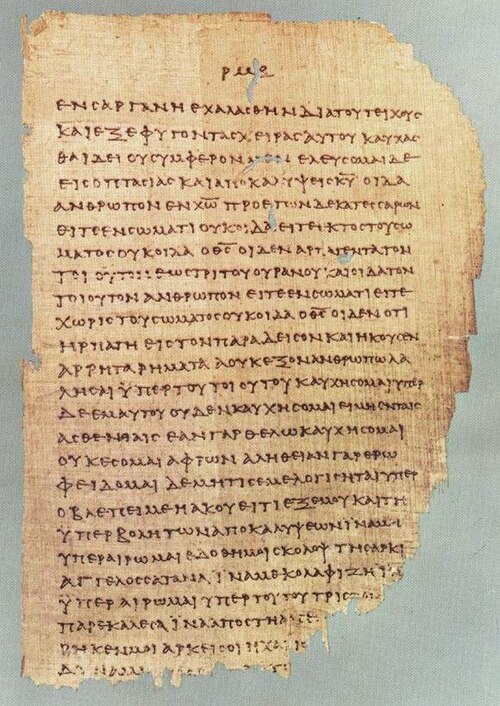
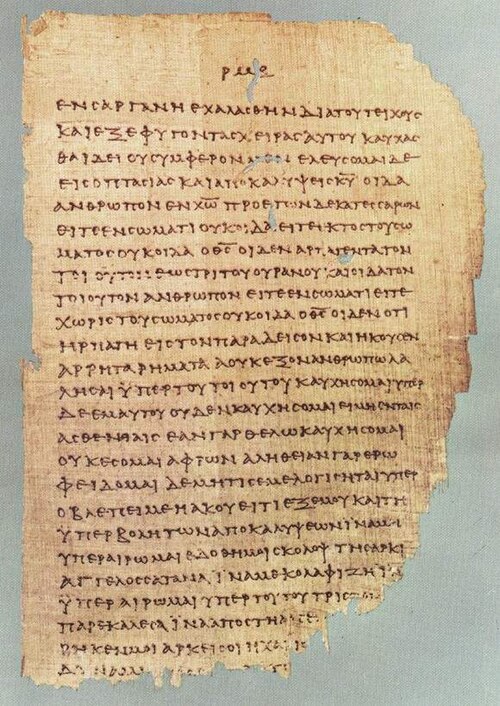


%2C_c._1657.jpg)

Who Paul of Tarsus was
A Pharisee trained under Gamaliel and a persecutor of the church, Saul was overturned on the Damascus road around 33–36 and spent the next three decades planting churches across Cyprus, Asia Minor, Macedonia, and Greece in three great missionary journeys. His letters — dashed off to fractious congregations from Corinth, Ephesus, and prison — are the earliest surviving Christian documents, older than the written Gospels; thirteen bear his name. Arrested in Jerusalem, he appealed to Caesar as a Roman citizen and reached Rome in chains around 60. Tradition, already fixed by Clement of Rome in the 90s, holds he was beheaded on the Ostian Way under Nero.
Common questions
When did Paul live?
Paul of Tarsus is dated c. 5 – c. 64/67 in the archive, which places Paul in the Apostolic Age (AD 4–70). The dating is traditional and approximate; the archive marks it as uncertain rather than fixing a year the sources do not give.
What did Paul write?
Paul of Tarsus has 14 catalogued writings in the archive: Epistle to the Romans, Epistle to the Philippians, Second Epistle to Timothy and First Epistle to the Thessalonians, and 10 more.
Which early sources mention Paul?
Paul of Tarsus is named in 5 primary-source passages catalogued here, drawn from Clement of Rome, Ignatius of Antioch, Polycarp of Smyrna and The presbyter of Asia. Every passage is quoted from a named public-domain translation, earliest first.
Where was Paul from?
The archive associates Paul of Tarsus with Tarsus, Rome. The sources record more than one location, so the places are listed in the order the record moves through them.
Writings (14)
Epistle to the Romans
c. 57For I am persuaded, that neither death, nor life, nor angels… nor any other creature, shall be able to separate us from the love of God, which is in Christ Jesus our Lord.Read the full text ↗
Epistle to the Philippians
c. 62For to me to live is Christ, and to die is gain.Read the full text ↗
Second Epistle to Timothy
c. 64–67I have fought a good fight, I have finished my course, I have kept the faith.Read the full text ↗
First Epistle to the Thessalonians
c. 50 — the earliest surviving Christian documentFor the Lord himself shall descend from heaven with a shout, with the voice of the archangel, and with the trump of God: and the dead in Christ shall rise first.Read the full text ↗
Second Epistle to the Thessalonians
c. 51Therefore, brethren, stand fast, and hold the traditions which ye have been taught, whether by word, or our epistle.Read the full text ↗
Epistle to the Galatians
c. 48–55 (trad. datings vary)I am crucified with Christ: nevertheless I live; yet not I, but Christ liveth in me.Read the full text ↗
First Epistle to the Corinthians
c. 55, from EphesusCharity suffereth long, and is kind; charity envieth not; charity vaunteth not itself, is not puffed up.Read the full text ↗
Second Epistle to the Corinthians
c. 56, from MacedoniaMy grace is sufficient for thee: for my strength is made perfect in weakness.Read the full text ↗
Epistle to the Ephesians
c. 62, from the Roman imprisonmentFor by grace are ye saved through faith; and that not of yourselves: it is the gift of God.Read the full text ↗
Epistle to the Colossians
c. 62, from the Roman imprisonmentWho is the image of the invisible God, the firstborn of every creature.Read the full text ↗
Epistle to Philemon
c. 62, carried by OnesimusIf thou count me therefore a partner, receive him as myself.Read the full text ↗
First Epistle to Timothy
c. 63–65This is a faithful saying, and worthy of all acceptation, that Christ Jesus came into the world to save sinners; of whom I am chief.Read the full text ↗
Epistle to Titus
c. 63–65For the grace of God that bringeth salvation hath appeared to all men.Read the full text ↗
Epistle to the Hebrews (traditional Eastern ascription)
c. 63–67 (authorship anciently debated — see the Author of Hebrews)God, who at sundry times and in divers manners spake in time past unto the fathers by the prophets, hath in these last days spoken unto us by his Son.Read the full text ↗
Primary-source mentions (5)
Every passage below is quoted from a named public-domain translation, earliest first.
1 Clement 5
c. AD 96Paul… when he had borne his testimony before the rulers, so departed from the world and went unto the holy place, having been found a notable pattern of patient endurance.Clement of Rome · 5 · source text
To the Romans 4.3
c. AD 108I do not enjoin you, as Peter and Paul did. They were apostles, I am a convict.Ignatius of Antioch · 4 · source text
To the Philippians 3
c. AD 135For neither I, nor any other such one, can come up to the wisdom of the blessed and glorified Paul, who… taught the word of truth accurately and stedfastly.Polycarp of Smyrna · 3 · source text
Acts of Paul and Thecla 3 (the earliest physical description)
c. AD 160A man small of stature, with bald head and crooked legs, in a good state of body, with eyebrows meeting and nose somewhat hooked, full of friendliness; for now he appeared like a man, and now he had the face of an angel.The presbyter of Asia · Acts of Paul and Thecla 3 · source text
Muratorian Fragment (the census of his letters)
c. AD 170The blessed apostle Paul himself, following the example of his predecessor John, writes by name to only seven churches.The Muratorian canonist · Muratorian Fragment · source text
Connected in the archive
Luke was his traveling companion and chronicler; met Peter and James in Jerusalem; Barnabas introduced him to the apostles
People
- Luke the Evangelist
- Simon Peter
- James the Just
- Barnabas of Cyprus
- Stephen the Protomartyr
- Ananias of Damascus
- Elymas (Bar-Jesus)
- Gamaliel the Elder
- Demetrius the Silversmith
- Simeon called Niger
- Lucius of Cyrene
- Antonius Felix
- Lois
- Lydia of Thyatira
- Porcius Festus
- Epaphras
- Euodia of Philippi
- Jason of Thessalonica
- Syntyche of Philippi
- Aristarchus of Thessalonica
- Gaius of Macedonia
- Titius Justus
- Crispus of Corinth
- Damaris of Athens
- Epaphroditus
- Gaius of Derbe
- Gallio (Lucius Junius Gallio Annaeanus)
- Seneca the Younger
- Silas (Silvanus)
- Sopater son of Pyrrhus (Sosipater)
- Sosthenes of Corinth
- The Author of Hebrews
- Trophimus of Ephesus
- Achaicus of Corinth
- Alexander the Coppersmith
- Carpus of Troas
- Erastus of Corinth
- Hermogenes
- Jesus called Justus
- Phoebe of Cenchreae
- Phygelus
- Stephanas of Corinth
- The Mother of Rufus
- Aquila of Pontus
- Demas
- Eunice
- Eutychus of Troas
- Prisca (Priscilla)
- Tychicus
- Emperor Nero
- John Mark
- Mnason of Cyprus
- Philemon of Colossae
- Crescens
- Agabus the Prophet
- Epaenetus
- Andronicus
- Junia
- Herodion
- Linus of Rome
- Tertius the Scribe
- Apollos of Alexandria
- Onesimus
- Thecla of Iconium
- Herod Agrippa II
- Dionysius the Areopagite
- Titus of Crete
- Timothy of Lystra
- Clement of Rome
- Chloe of Corinth
- Onesiphorus of Ephesus
- Drusilla
- Bernice
- Claudius Lysias
- Tertullus
- Ananias son of Nedebaeus
- Jesus of Nazareth
- Sergius Paulus
- Philetus
Events in this lifetime
- AD 30 · Crucifixion, Resurrection and Pentecost, AD 30–33
- AD 44 · Persecution under Herod Agrippa I, AD 44
- AD 49 · The Council of Jerusalem, AD 49
- AD 57 · Paul writes Romans, AD 57
- AD 62 · James the Just stoned, AD 62
- AD 64 · The Great Fire and Nero’s persecution, AD 64
Place
Places served
The 24 places the sources put Paul, in the order the record moves through them. This is what the sources attest, not a reconstructed route.
- 1TarsusA Jew of Tarsus in Cilicia, citizen of no mean cityActs 21:39; 22:3
- 2DamascusBlinded on the road; baptised in the cityActs 9:1-19
- 3JerusalemBrought to the apostles by BarnabasActs 9:26-28
- 4AntiochTaught a year with Barnabas; sent out from thereActs 11:25-26; 13:1-3
- 5SalamisPreached in the synagogues of SalamisActs 13:5
- 6PaphosWithstood Bar-Jesus before the proconsul Sergius PaulusActs 13:6-12
- 7PergaLanded in Pamphylia, where John Mark left themActs 13:13
- 8Antioch in PisidiaPreached in the synagogue, then turned to the GentilesActs 13:14-50
- 9IconiumStayed a long time, then fled a plotActs 14:1-6
- 10LystraTaken for a god, then stoned and left for deadActs 14:8-19
- 11DerbePreached there and made many disciplesActs 14:20-21
- 12TroasThe vision of the man of MacedoniaActs 16:8-10
- 13PhilippiLydia baptised; imprisoned and freed by earthquakeActs 16:12-40
- 14ThessalonicaReasoned three sabbaths in the synagogueActs 17:1-9
- 15BereaThe Bereans searched the scriptures dailyActs 17:10-14
- 16AthensSpoke at the Areopagus of the unknown godActs 17:15-34
- 17CorinthStayed eighteen months; tried before GallioActs 18:1-18
- 18EphesusTaught two years; the silversmiths riotedActs 19:1-41
- 19MiletusCalled the Ephesian elders and took his leaveActs 20:17-38
- 20PtolemaisSaluted the brethren and stayed a dayActs 21:7
- 21Caesarea MaritimaHeld two years under Felix and Festus; appealed to CaesarActs 23:33 – 25:12
- 22MaltaShipwrecked and wintered on the islandActs 27:39 – 28:11
- 23PuteoliLanded in Italy and stayed seven daysActs 28:13-14
- 24RomeTwo years under guard in his own hired houseActs 28:16-31