The Apostolic Age · AD 4–70
The Author of Hebrews
epistle c. AD 63–67 (trad. dating) · Anonymous author · Theologian of the priesthood of Christ · Unknown (Italy connections; Alexandrian schooling?)
The Apostolic Age

Who The Author of Hebrews was
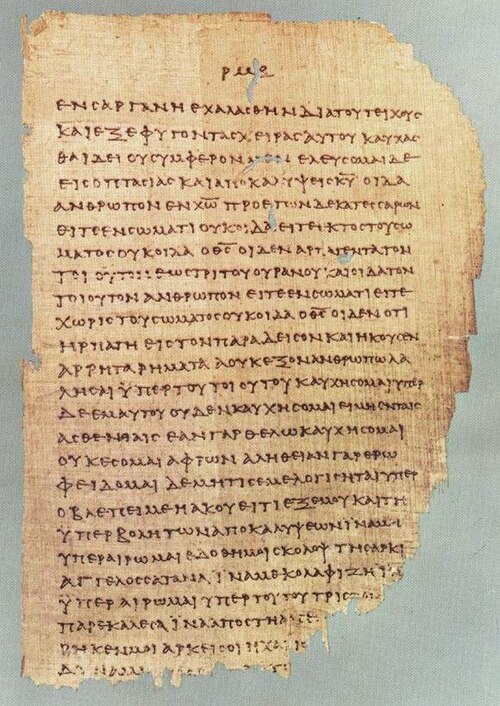
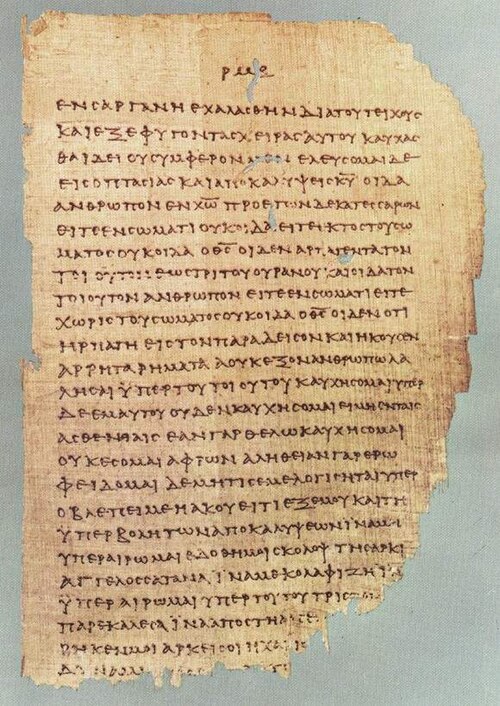
The greatest anonymous writer of the New Testament: a master of periodic Greek and the Septuagint who argues Christ’s high priesthood “after the order of Melchisedec,” writing to Jewish believers tempted back toward the temple — and writing, on the traditional dating, while the sacrifices still burned (“there are priests that offer gifts according to the law,” present tense). He knows Timothy (“our brother Timothy is set at liberty”) and sends greetings from “they of Italy.” The East received the letter as Paul’s; Rome, which quoted it first (1 Clement, c. 96), long knew it was not. Origen’s verdict stands over the whole question.
Common questions
When did The Author live?
The Author of Hebrews is dated epistle c. AD 63–67 (trad. dating) in the archive, which places The Author in the Apostolic Age (AD 4–70). The dating is traditional and approximate; the archive marks it as uncertain rather than fixing a year the sources do not give.
What did The Author write?
The Author of Hebrews has 1 catalogued writing in the archive: The Epistle to the Hebrews.
Which early sources mention The Author?
The Author of Hebrews is named in 3 primary-source passages catalogued here, drawn from Clement of Rome, Tertullian of Carthage and Origen. Every passage is quoted from a named public-domain translation, earliest first.
Where was The Author from?
The archive associates The Author of Hebrews with Unknown (Italy connections; Alexandrian schooling?).
Writings (1)
The Epistle to the Hebrews
c. 63–67 (trad.)God, who at sundry times and in divers manners spake in time past unto the fathers by the prophets, hath in these last days spoken unto us by his Son…Read the full text ↗
Scripture record
Primary-source mentions (3)
Every passage below is quoted from a named public-domain translation, earliest first.
1 Clement 36 (earliest quotation of Hebrews)
c. AD 96…who being the brightness of his majesty is so much greater than angels, as he hath inherited a more excellent name.Clement of Rome · 36 · source text
On Modesty 20 (the epistle given to Barnabas)
c. AD 210For there is extant withal an Epistle to the Hebrews under the name of Barnabas.Tertullian of Carthage · On Modesty 20
Tertullian's De Pudicitia, written at Carthage c. AD 217–222 in his Montanist years; chapter 20 assigns the Epistle to the Hebrews to Barnabas — the earliest surviving ascription of its authorship to anyone. Critical text: Eligius Dekkers, Corpus Christianorum Series Latina 2 (1954). English translation by S. Thelwall, Ante-Nicene Fathers, vol. 4 (1885), public domain.
Eusebius, Ecclesiastical History VI.25 (quoting Origen)
c. AD 240But who wrote the epistle, in truth God knows. The account that has reached us is twofold: some say Clement, who became bishop of Rome, wrote it; others, that it was Luke.Origen · VI.25 · source text
Names proposed by later tradition
Paul the Apostle
The tradition of Alexandria (Pantaenus, Clement) and the medieval East and West; the Greek style told against it even in antiquity.
Barnabas of Cyprus
Tertullian’s attribution (De pudicitia 20) — a Levite ‘son of encouragement’ suits the letter’s priestly ‘word of exhortation.’
Luke
Reported by Origen as one current account, as translator or author; Clement of Alexandria thought Luke translated Paul’s Hebrew.
Clement of Rome
The other account Origen reports; 1 Clement’s heavy use of Hebrews explains the guess.
Apollos
Luther’s proposal, followed by many moderns: an Alexandrian Jew, ‘eloquent and mighty in the scriptures.’
Priscilla (with Aquila)
Harnack’s conjecture (1900), explaining the vanished name by the author’s sex; unprovable but scholarly.
Connected in the archive
People
Events in this lifetime
- AD 30 · Crucifixion, Resurrection and Pentecost, AD 30–33
- AD 44 · Persecution under Herod Agrippa I, AD 44
- AD 49 · The Council of Jerusalem, AD 49
- AD 57 · Paul writes Romans, AD 57
- AD 62 · James the Just stoned, AD 62
- AD 64 · The Great Fire and Nero’s persecution, AD 64