The Nicene Age · AD 313–400
Nino of Georgia
c. 296 – c. 340 · Enlightener of Georgia (Iberia) · Cappadocia → Iberia (Georgia)
The Nicene Age
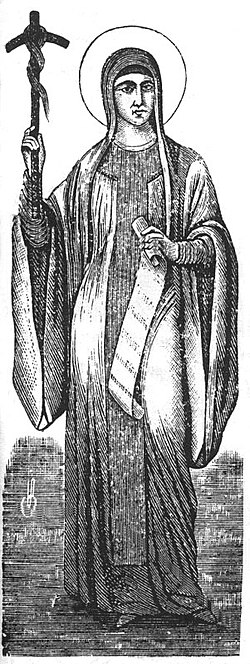
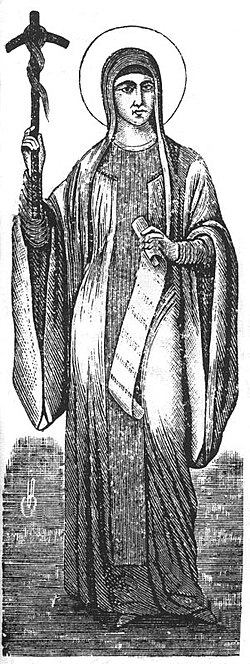

Who Nino of Georgia was
A Christian woman — by tradition a captive or a wandering ascetic from Cappadocia — whose preaching and healings converted the kingdom of Iberia (eastern Georgia) in the 320s–330s, making it, after Armenia, among the first nations to embrace Christianity as a state faith. The queen Nana and then king Mirian III were won over, the latter (like Constantine) after a sign in a moment of terror; Mirian sent to Constantine for clergy to build the church. Georgia venerates Nino as “Equal to the Apostles,” its founding evangelist — a rare instance of a woman remembered as the apostle of a nation.
Common questions
When did Nino live?
Nino of Georgia is dated c. 296 – c. 340 in the archive, which places Nino in the Nicene Age (AD 313–400). The dating is traditional and approximate; the archive marks it as uncertain rather than fixing a year the sources do not give.
Which early sources mention Nino?
Nino of Georgia is named in 2 primary-source passages catalogued here, drawn from Rufinus of Aquileia and Socrates Scholasticus (from Rufinus). Every passage is quoted from a named public-domain translation, earliest first.
Where was Nino from?
The archive associates Nino of Georgia with Cappadocia, Iberia (Georgia). The sources record more than one location, so the places are listed in the order the record moves through them.
Who were Nino’s contemporaries?
The archive links Nino of Georgia to 5 other figures, including Gregory the Illuminator, Helena Augusta, Constantine the Great and Queen Nana of Iberia. Each connection is drawn from a source that places them together, not from inference.
Primary-source mentions (2)
Every passage below is quoted from a named public-domain translation, earliest first.
Church History X.11 (Rufinus's original: the captive woman who healed the queen)
c. AD 402It was a captive woman who showed them the faith of Christ. (working translation)Rufinus of Aquileia · Church History X.11 · source text
Ecclesiastical History I.20 (Rufinus/Socrates)
c. AD 439A certain captive woman… by her faith and the miracles she wrought converted the Iberians; and the king, guided by her, built a church and sent an embassy to Constantine, asking that priests be sent.Socrates Scholasticus (from Rufinus) · I.20 · source text
Connected in the archive
People
- Gregory the Illuminator
- Helena Augusta
- Constantine the Great
- Queen Nana of Iberia
- King Mirian III of Iberia
Events in this lifetime
- AD 272 · Aurelian awards the Antioch church, AD 272
- AD 301 · Hripsime and her company, AD 301
- AD 303 · The Great Persecution begins, AD 303
- AD 303 · The search of the church at Cirta, AD 303
- AD 306 · The Council of Elvira, AD 306
- AD 311 · Galerius’ edict of Serdica, AD 311
- AD 313 · The Edict of Milan, AD 313
- AD 314 · The Council of Arles, AD 314
- AD 320 · Silvanus tried before Zenophilus, AD 320
- AD 325 · The Council of Nicaea, AD 325
- AD 339 · The persecution of Shapur II, AD 339
Place
Places served
The 2 places the sources put Nino, in the order the record moves through them. This is what the sources attest, not a reconstructed route.
- 1Cappadociaprovince only
- 2Iberiaprovince only