The Nicene Age · AD 313–400 · External witness
Constantine the Great
Also known as Flavius Valerius Constantinus
c. 272 – 337 · Roman Emperor · Convener of Nicaea · Naissus → Constantinople
External witness
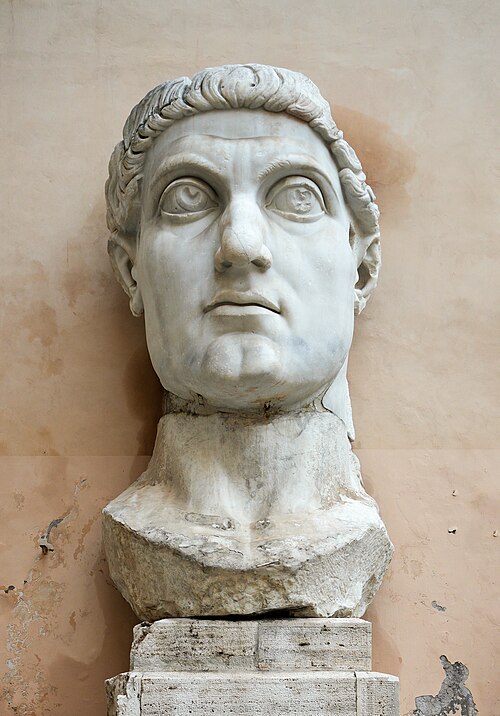
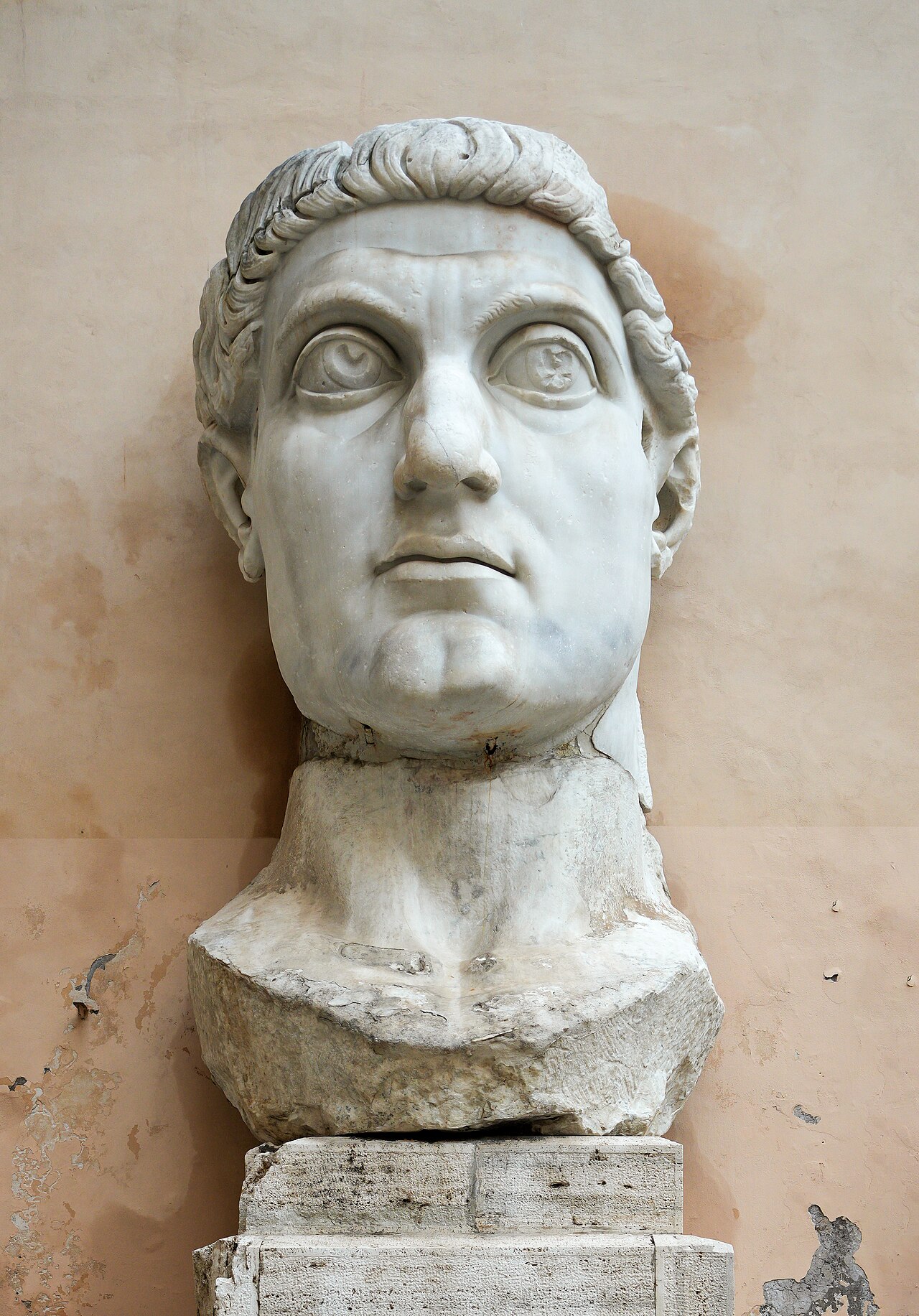
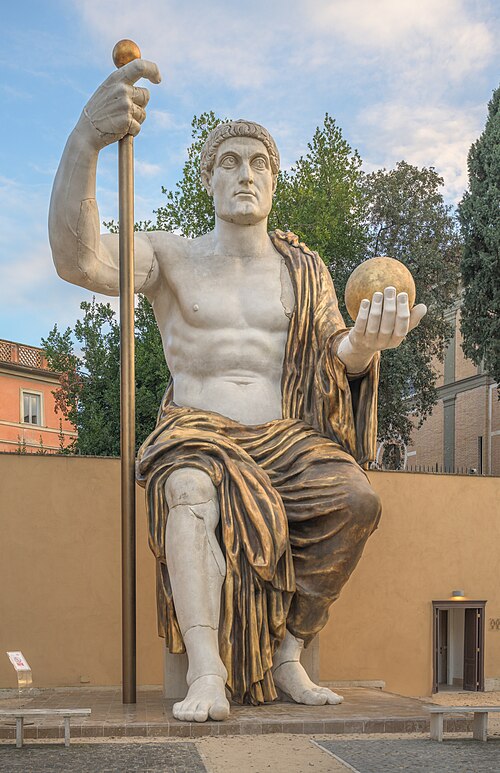
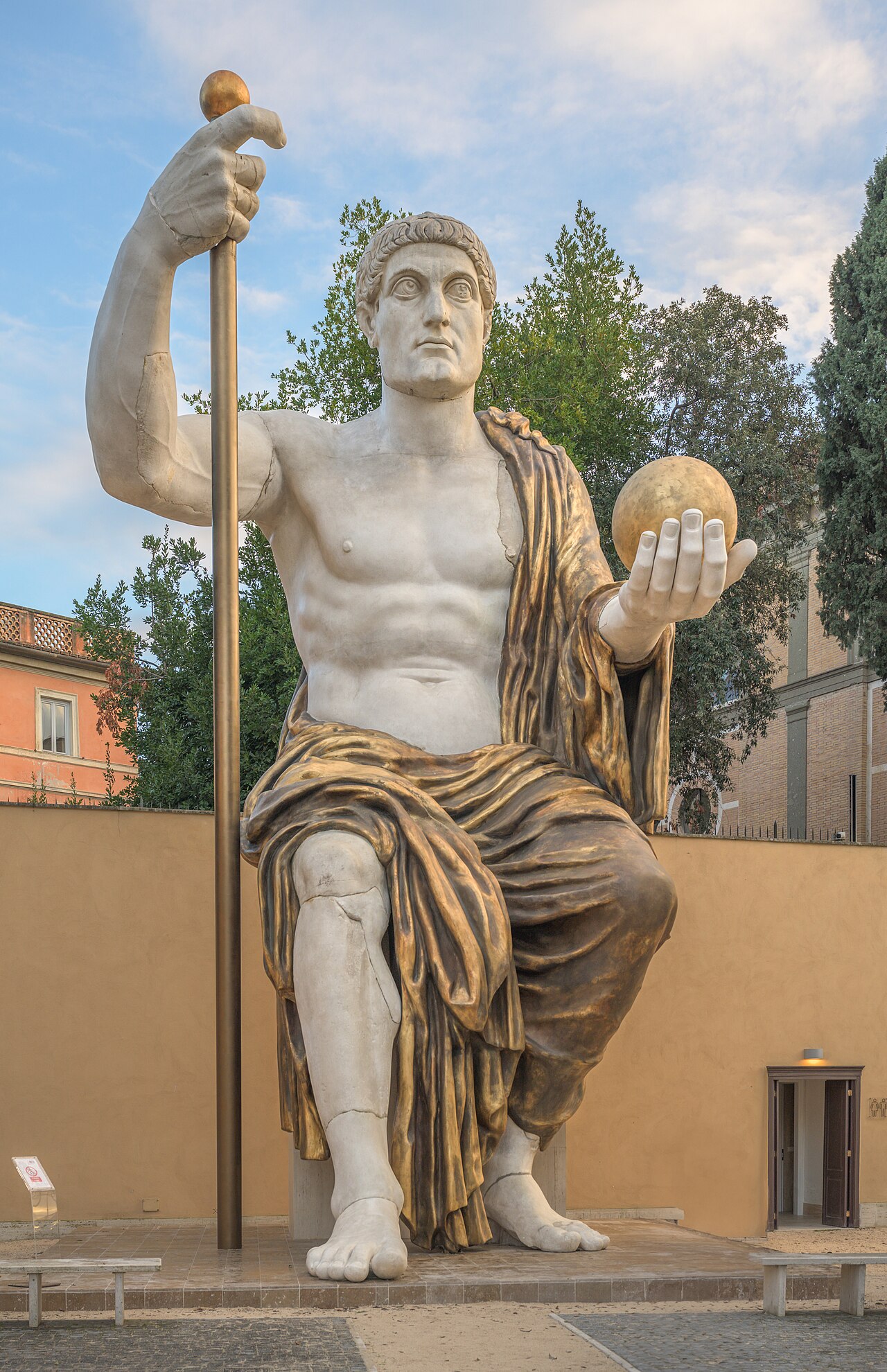
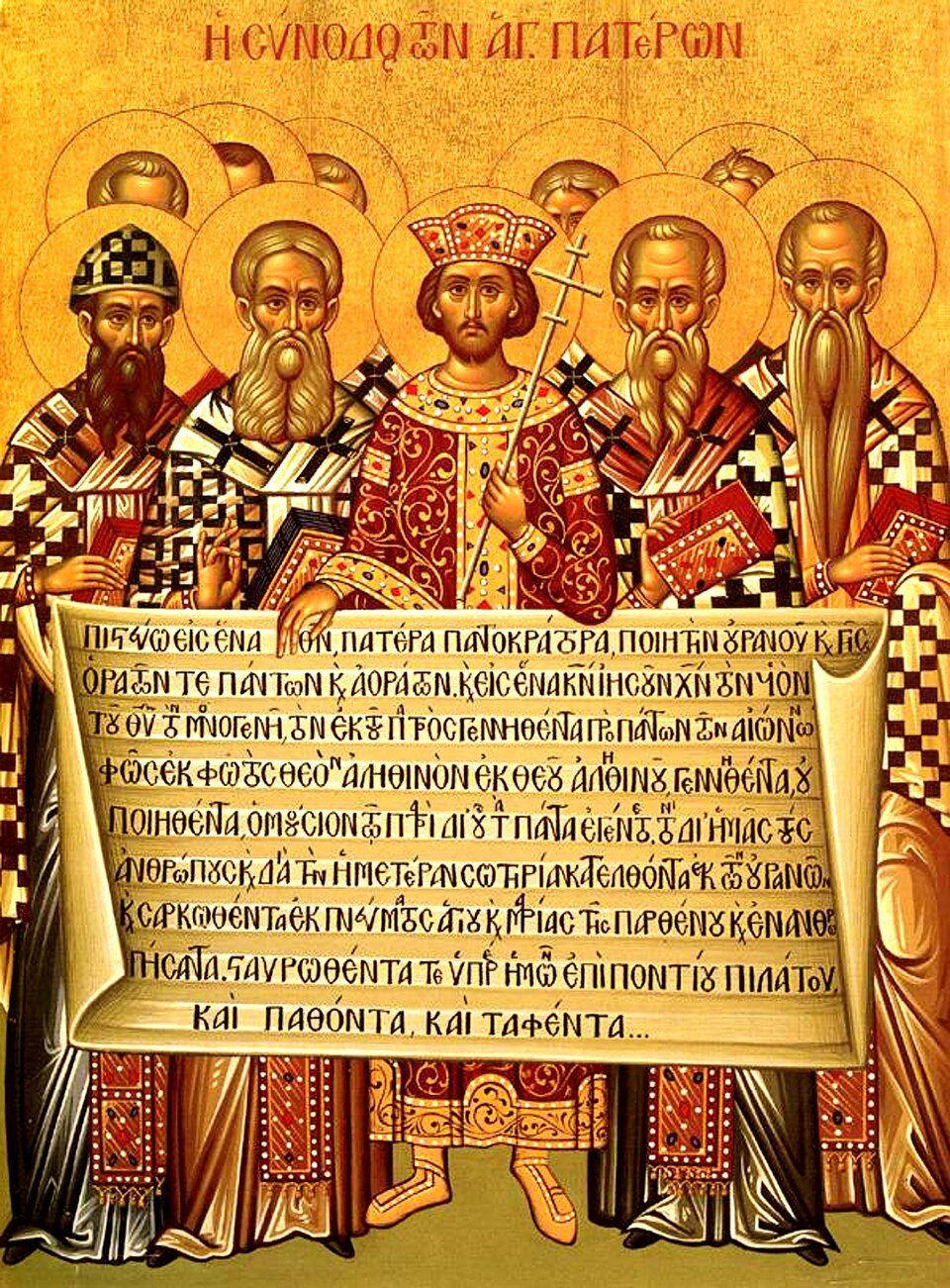
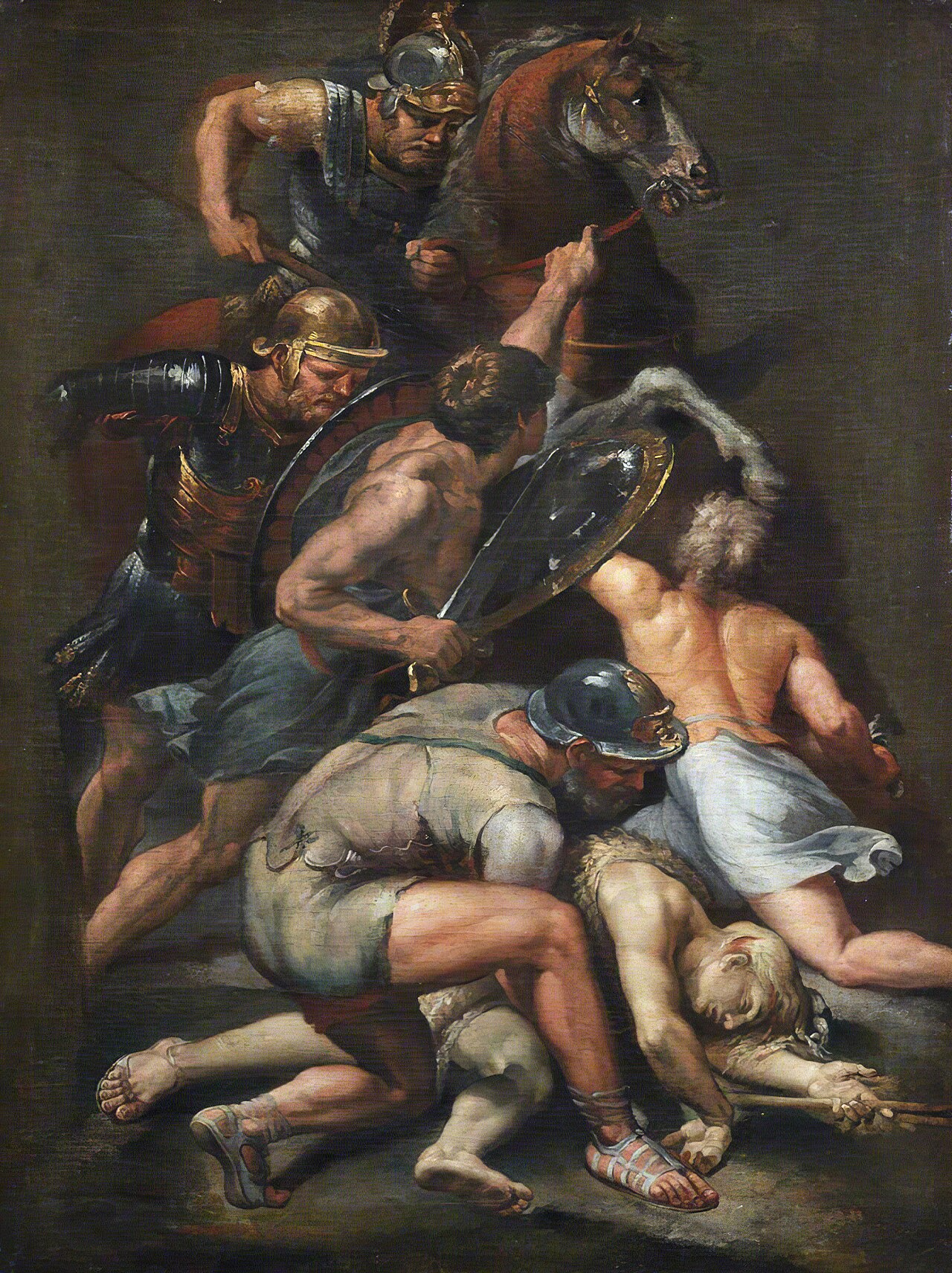


_c1650_by_Lazzaro_Baldi_after_Giulio_Romano_at_the_University_of_Edinburgh.jpg)

Who Constantine the Great was
Proclaimed emperor by his father’s troops at York in 306, Constantine marched on Rome in 312 under a sign he attributed to the God of the Christians and won the Milvian Bridge. With Licinius he issued the Edict of Milan in 313, ending the persecutions and restoring church property; alone after 324, he poured the empire’s resources into basilicas, biblical manuscripts, and clergy, founded Constantinople, and summoned the first ecumenical council to Nicaea in 325 to settle the Arian question — presiding, unbaptized, in gold and purple. His letters and his Oration to the Assembly of the Saints survive. Baptized on his deathbed in 337, he was buried amid memorials of the twelve apostles; the church he legalized has argued about him ever since.
Also listed in non-christian witnesses and roman emperors.
Common questions
When did Constantine live?
Constantine the Great is dated c. 272 – 337 in the archive, which places Constantine in the Nicene Age (AD 313–400). The dating is traditional and approximate; the archive marks it as uncertain rather than fixing a year the sources do not give.
What did Constantine write?
Constantine the Great has 2 catalogued writings in the archive: The Edict of Milan (with Licinius; text in Lactantius) and Letter to the churches after Nicaea.
Which early sources mention Constantine?
Constantine the Great is named in 4 primary-source passages catalogued here, drawn from Lactantius, Eusebius of Caesarea, Emperor Julian and The anonymous chronicler. Every passage is quoted from a named public-domain translation, earliest first.
Where was Constantine from?
The archive associates Constantine the Great with Naissus, Constantinople. The sources record more than one location, so the places are listed in the order the record moves through them.
Writings (2)
The Edict of Milan (with Licinius; text in Lactantius)
313We thought it fit to commend these things most fully to your care, that you might know that we have given to those Christians free and unrestricted opportunity of religious worship… each one may have the free opportunity to worship as he pleases.Read the interlinear source text →
Letter to the churches after Nicaea
325That which has commended itself to the judgment of three hundred bishops cannot be other than the doctrine of God; seeing that the Holy Spirit dwelling in the minds of so many dignified persons has effectually enlightened them respecting the Divine will.Read the interlinear source text →
Primary-source mentions (4)
Every passage below is quoted from a named public-domain translation, earliest first.
On the Deaths of the Persecutors 44 (the sign received before the Milvian Bridge — the contemporary account)
c. AD 315Constantine was directed in a dream to cause the heavenly sign to be delineated on the shields of his soldiers, and so to proceed to battle.Lactantius · On the Deaths 44 · source text
The Life of Constantine
c. AD 325He said that about noon… he saw with his own eyes the trophy of a cross of light in the heavens, above the sun, and bearing the inscription, CONQUER BY THIS. At this sight he himself was struck with amazement, and his whole army also.Eusebius of Caesarea · source text
Julian, The Caesars (the pagan mockery: Constantine and Jesus at the banquet of the gods)
c. AD 361Origo Constantini Imperatoris (Anonymus Valesianus I — the neutral secular biography)
c. AD 390[A short secular life that records Constantine’s rise and reign without the theology — the plainest ancient account of either.]The anonymous chronicler · Origo Constantini Imperatoris
The Origo Constantini Imperatoris (Anonymus Valesianus I), a short secular life of Constantine written in Latin, probably in the later fourth century — valuable precisely because it is neither panegyric nor church history. Critical text: Theodor Mommsen, Monumenta Germaniae Historica, Auctores Antiquissimi IX, Chronica Minora I (1892). English translations: John C. Rolfe, Loeb Classical Library 331 (1939), and Jane Stevenson in Lieu and Montserrat, From Constantine to Julian (1996); neither is in the public domain.
Connected in the archive
Lactantius tutored his son; Eusebius sat at his right hand at Nicaea and wrote his life; his edicts freed the generation of Athanasius. (Typology note: though an emperor, he stands among the church figures as convener of Nicaea and deathbed-baptized convert; the persecutor-emperors remain among the external witnesses.)
People
- Lactantius
- Eusebius of Caesarea
- Athanasius of Alexandria
- Constantius I Chlorus
- Severus II
- Maximian Herculius
- Emperor Diocletian
- Emperor Galerius
- Emperor Maxentius
- Miltiades (Melchiades) of Rome
- Eborius of York
- Emperor Licinius
- Marcus of Calabria
- Helena Augusta
- King Tiridates III of Armenia
- Marinus of Arles
- Nicasius of Die
- Gregory the Illuminator
- Aristaces I of Armenia
- Agritius of Trier
- Macarius of Jerusalem
- Sylvester I of Rome
- Pope Mark
- Alexander of Constantinople
- Acesius the Novatianist
- Constantine II
- Juvencus
- Nino of Georgia
- Theophilus the Goth
- Eusebius of Nicomedia
- Caecilian of Carthage
- Donatus of Carthage
- Hosius of Cordova
- King Mirian III of Iberia
- Emperor Julian the Apostate
- Chrestus of Syracuse
Named alongside Constantine in the sources
These figures are placed with Constantine by the record — in a council roll, a martyr-act, a letter or a history — without Constantine naming them in return.
- Acratius
- Ambitausus
- Aristasius
- Avitianus
- Claudianus
- Crescens (subscriber at Arles)
- Cyriacus
- Dafnus
- Epictetus
- Eugenius the Roman legate
- Faustinus (subscriber at Arles)
- Fortunatus
- Gregory (first of the name at Arles)
- Gregory (second of the name at Arles)
- Hibernius
- Lampadius
- Liberius
- Merocles
- Natalis
- Orantalis
- Pardus
- Probatius
- Proterius
- Quintasius
- Surgentius
- Termatius
- Theodore
- Verus
- Victor
- Vitalis
- Vitus
- Vocius
- Domitius Zenophilus
- Shapur II
Events in this lifetime
- AD 272 · Aurelian awards the Antioch church, AD 272
- AD 301 · Hripsime and her company, AD 301
- AD 303 · The Great Persecution begins, AD 303
- AD 303 · The search of the church at Cirta, AD 303
- AD 306 · The Council of Elvira, AD 306
- AD 311 · Galerius’ edict of Serdica, AD 311
- AD 313 · The Edict of Milan, AD 313
- AD 314 · The Council of Arles, AD 314
- AD 320 · Silvanus tried before Zenophilus, AD 320
- AD 325 · The Council of Nicaea, AD 325
Place
Places served
The one place the sources put Constantine.