The Ante-Nicene Church · AD 180–313 · External witness
Emperor Diocletian
d. AD 311 (abdicated 305) · Roman Emperor (284–305) · Author of the Great Persecution · Nicomedia → Split
External witness
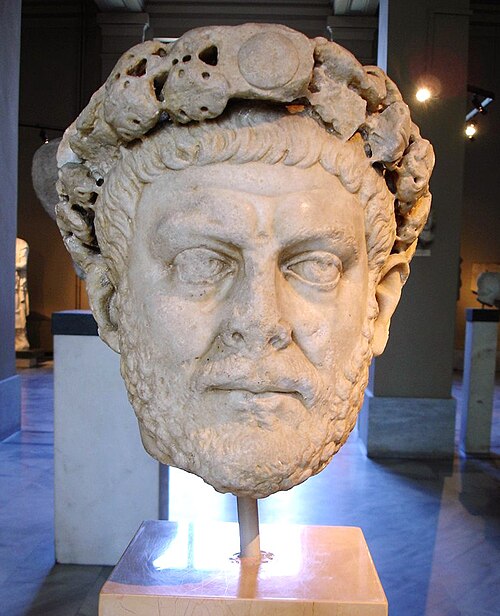
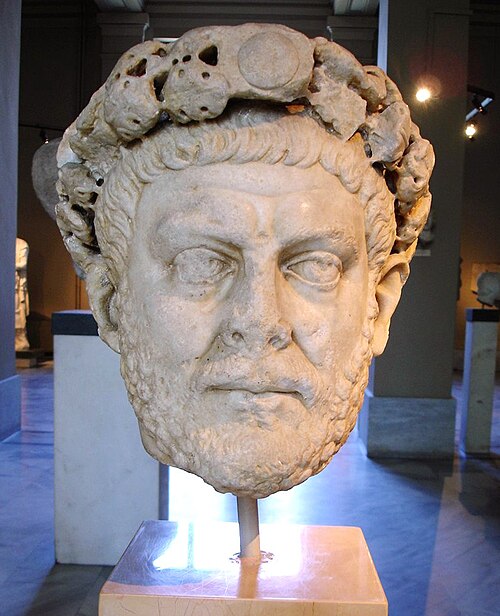
_-_Foto_G._Dall'Orto_28-5-2006.jpg)
Who Emperor Diocletian was
The reforming soldier-emperor who rebuilt the shattered empire on a new absolutist footing — and, in his last years, launched the longest and bloodiest of all the persecutions. From 303, prompted (Lactantius says) by his Caesar Galerius, four edicts ordered the churches razed, the scriptures burned, the clergy imprisoned, and finally every inhabitant to sacrifice on pain of death — the “Great Persecution” that produced the martyrs of this volume and, in its aftermath, the Donatist schism over the traditores who had handed over the books. He abdicated in 305 to grow cabbages at Split, living to see his life’s work of extirpating the church begin to fail. To Christian memory, the last and worst of the persecutors.
Also listed in non-christian witnesses and roman emperors.
Common questions
When did Emperor Diocletian die?
Emperor Diocletian is dated d. AD 311 (abdicated 305) in the archive, which places Emperor Diocletian in the Ante-Nicene Church (AD 180–313).
What did Emperor Diocletian write?
Emperor Diocletian has 1 catalogued writing in the archive: The four edicts of the Great Persecution (as reported).
Which early sources mention Emperor Diocletian?
Emperor Diocletian is named in 3 primary-source passages catalogued here, drawn from Lactantius, Eusebius of Caesarea and Jerome of Stridon. Every passage is quoted from a named public-domain translation, earliest first.
Where was Emperor Diocletian from?
The archive associates Emperor Diocletian with Nicomedia, Split. The sources record more than one location, so the places are listed in the order the record moves through them.
Writings (1)
The four edicts of the Great Persecution (as reported)
AD 303–304Royal edicts were published everywhere, commanding that the churches be levelled to the ground and the Scriptures destroyed by fire.Read the interlinear source text →
Primary-source mentions (3)
Every passage below is quoted from a named public-domain translation, earliest first.
On the Deaths of the Persecutors 12
c. AD 315A fit and auspicious day was sought for the accomplishment of this undertaking… and the festival of the god Terminus was chosen. On the morrow the edict appeared, by which it was ordered that the churches should be levelled to the ground and the Scriptures destroyed by fire.Lactantius · source text
Ecclesiastical History VIII.2 (the edicts: churches razed, scriptures burned)
c. AD 325Royal edicts were published everywhere, commanding that the churches be leveled to the ground and the Scriptures be destroyed by fire.Eusebius of Caesarea · Ecclesiastical History VIII.2 · source text
Chronicle of Jerome (the abdication and the end at Salona)
c. AD 380Connected in the archive
People
- Emperor Galerius
- Emperor Maximinus Daza
- Peter of Alexandria
- Agnes of Rome
- Constantine the Great
- Saint Maurice & the Theban Legion
- Saint Sebastian
- Maximilian of Tebessa
- Emeterius & Celedonius of Calahorra
- Alphaeus of Caesarea
- Anthimus of Nicomedia
- Cassian of Imola
- Dorotheus the Chamberlain
- Felix of Thibiuca
- Gorgonius of Nicomedia
- Phocas of Sinope
- Procopius of Scythopolis
- Zacchaeus of Caesarea
- Adauctus the Finance Minister
- Anastasia of Sirmium
- Crispina of Thagara
- Euphemia of Chalcedon
- Irenaeus of Sirmium
- Lucy of Syracuse
- Marcellinus of Rome
- Marcellinus the Presbyter
- Peter the Exorcist
- Romanus of Caesarea
- Timothy of Gaza
- Vincent of Saragossa
- Alban of Verulamium
- Anullinus, Proconsul of Africa
- Dacian, Governor of Hispania
- Constantius I Chlorus
- Quirinus of Siscia
- Maximian Herculius
- Sossianus Hierocles
- Munatius Felix
- Paul of Cirta
Events in this lifetime
- AD 250 · The Decian persecution, AD 250
- AD 251 · The Novatianist schism, AD 251
- AD 257 · The Valerian persecution, AD 257
- AD 260 · Gallienus’ edict of toleration, AD 260
- AD 268 · Antioch deposes Paul of Samosata, AD 268
- AD 272 · Aurelian awards the Antioch church, AD 272
- AD 301 · Hripsime and her company, AD 301
- AD 303 · The Great Persecution begins, AD 303
- AD 303 · The search of the church at Cirta, AD 303
- AD 306 · The Council of Elvira, AD 306
- AD 311 · Galerius’ edict of Serdica, AD 311
Place
Places served
The one place the sources put Emperor Diocletian.