The Nicene Age · AD 313–400
Lactantius
Also known as Lucius Caecilius Firmianus Lactantius
c. 250 – c. 325 · Rhetor · “The Christian Cicero” · Africa → Nicomedia → Trier
The Nicene Age
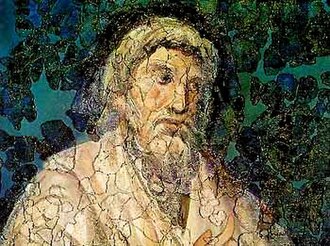
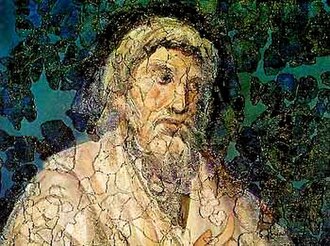
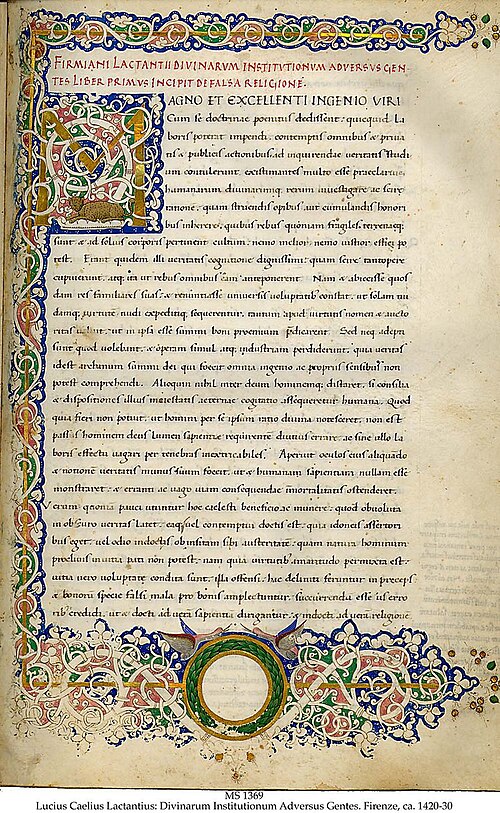
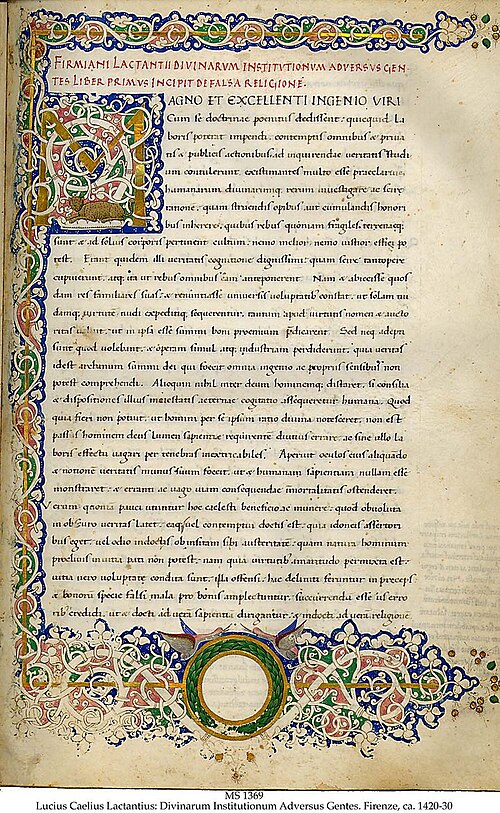
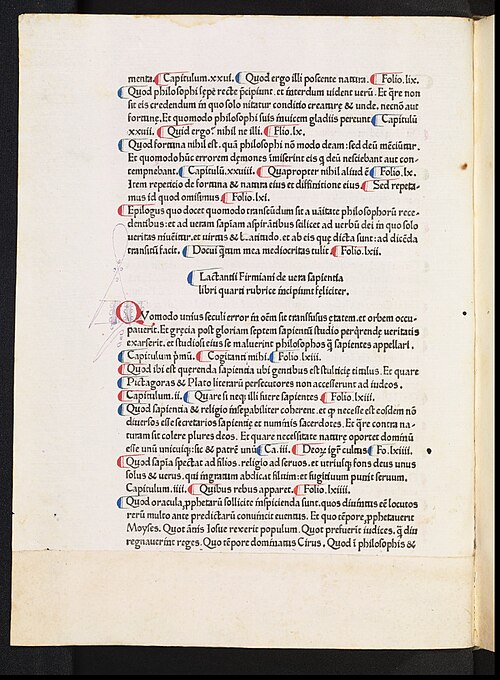
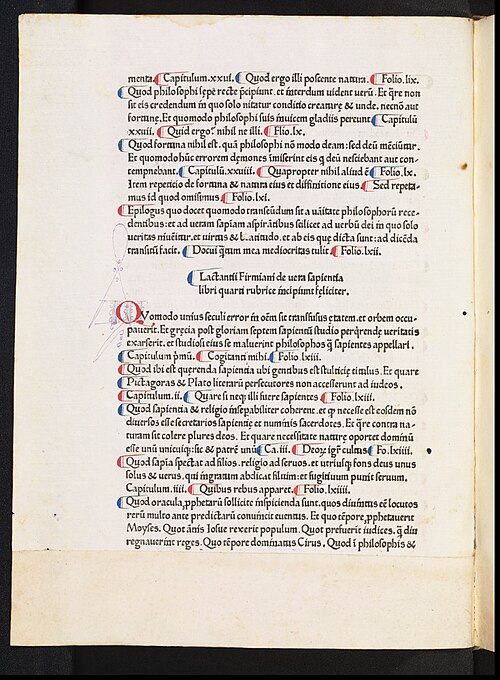
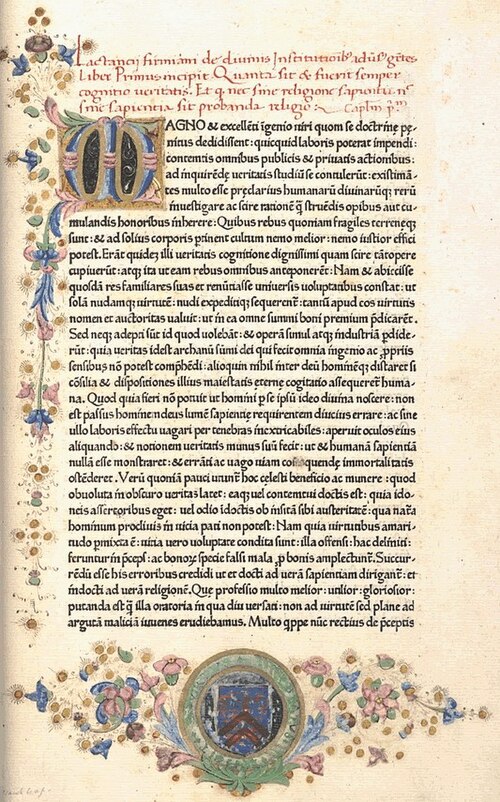
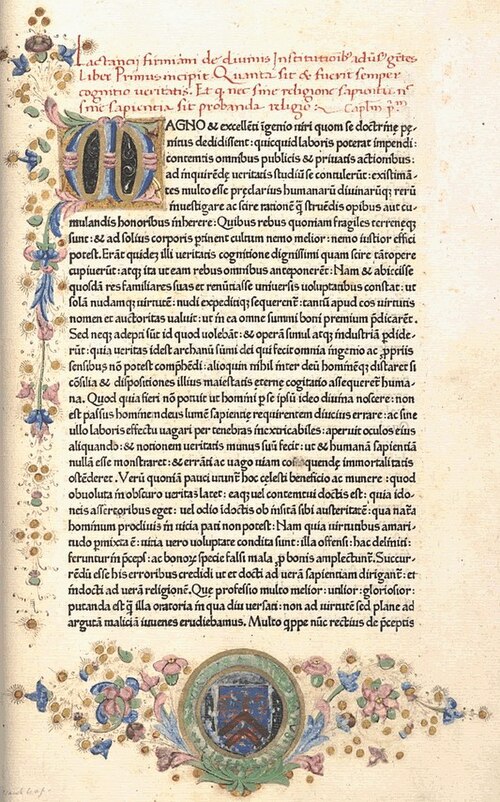
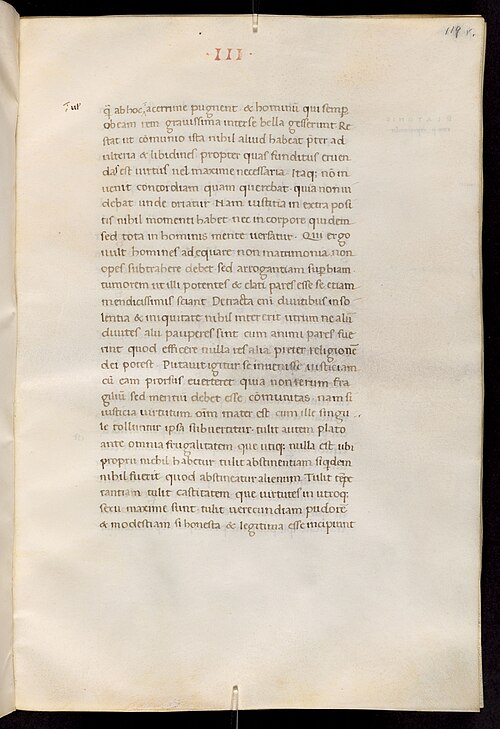
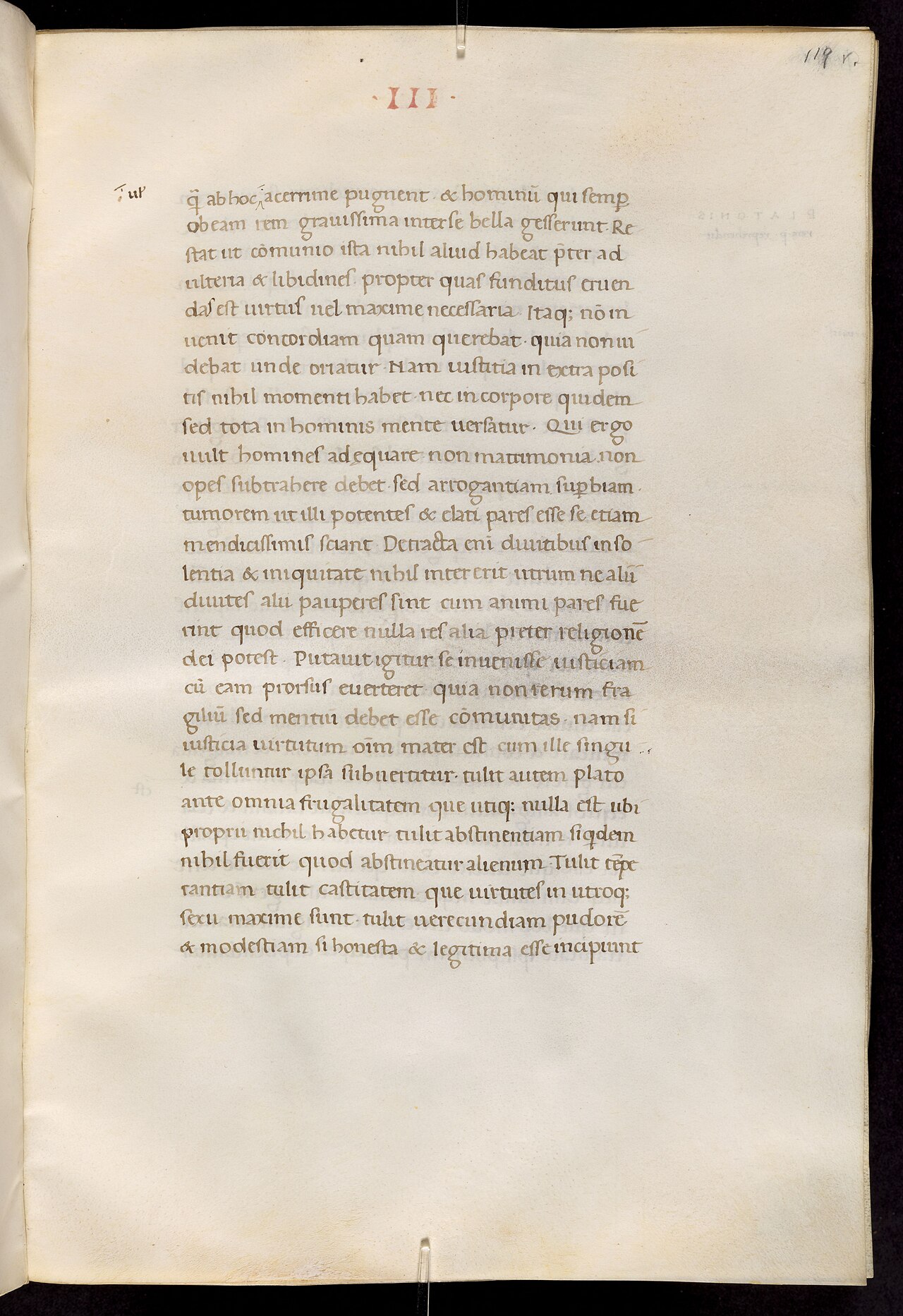


.jpg)
Who Lactantius was
An African pupil of the rhetorician Arnobius, Lactantius held the imperial chair of Latin rhetoric at Nicomedia — and was sitting in Diocletian’s capital when the Great Persecution was proclaimed in 303. He resigned or was dismissed, wrote through the terror, and lived to tutor Constantine’s son Crispus at Trier. His Divine Institutes, seven books in the smoothest Ciceronian Latin, are the first full presentation of Christianity to the Roman educated class — including antiquity’s most ringing argument that religion compelled is no religion at all. On the Deaths of the Persecutors, written after 313, is the eyewitness pamphlet through which we know the persecution’s inside politics, Constantine’s dream before the Milvian Bridge, and the text of the Edict of Milan.
Common questions
When did Lactantius live?
Lactantius is dated c. 250 – c. 325 in the archive, which places Lactantius in the Nicene Age (AD 313–400). The dating is traditional and approximate; the archive marks it as uncertain rather than fixing a year the sources do not give.
What did Lactantius write?
Lactantius has 2 catalogued writings in the archive: Divine Institutes and On the Deaths of the Persecutors.
Which early sources mention Lactantius?
Lactantius is named in 3 primary-source passages catalogued here, drawn from Lactantius and Jerome of Stridon. Every passage is quoted from a named public-domain translation, earliest first.
Where was Lactantius from?
The archive associates Lactantius with Africa, Nicomedia, Trier. The sources record more than one location, so the places are listed in the order the record moves through them.
Writings (2)
Divine Institutes
c. 304–313Religion is to be defended, not by putting to death, but by dying; not by cruelty, but by patient endurance… For nothing is so much a matter of free will as religion.Read the interlinear source text →
On the Deaths of the Persecutors
c. 315Constantine was directed in a dream to cause the heavenly sign to be delineated on the shields of his soldiers… He did as he had been commanded, and he marked on their shields the letter X, with a perpendicular line drawn through it and turned round thus at the top.Read the interlinear source text →
Primary-source mentions (3)
Every passage below is quoted from a named public-domain translation, earliest first.
The Divine Institutes
c. AD 315There is no occasion for violence and injury, for religion cannot be imposed by force; the matter must be carried on by words rather than by blows, that the will may be affected… Nothing is so much a matter of free will as religion.Lactantius · source text
Chronicle of Jerome (tutor of Crispus Caesar in Gaul)
c. AD 380On Illustrious Men 80 ('a river of Ciceronian eloquence')
c. AD 392Lactantius, a river of Ciceronian eloquence — would that he had been as able to affirm our doctrines as he was to destroy those of others!Jerome of Stridon · On Illustrious Men 80 · source text
Connected in the archive
Court scholar to Constantine and tutor of Crispus; witnessed the persecution Eusebius chronicled in the East
People
Events in this lifetime
- AD 250 · The Decian persecution, AD 250
- AD 251 · The Novatianist schism, AD 251
- AD 257 · The Valerian persecution, AD 257
- AD 260 · Gallienus’ edict of toleration, AD 260
- AD 268 · Antioch deposes Paul of Samosata, AD 268
- AD 272 · Aurelian awards the Antioch church, AD 272
- AD 301 · Hripsime and her company, AD 301
- AD 303 · The Great Persecution begins, AD 303
- AD 303 · The search of the church at Cirta, AD 303
- AD 306 · The Council of Elvira, AD 306
- AD 311 · Galerius’ edict of Serdica, AD 311
- AD 313 · The Edict of Milan, AD 313
- AD 314 · The Council of Arles, AD 314
- AD 320 · Silvanus tried before Zenophilus, AD 320
Place
Places served
The 3 places the sources put Lactantius, in the order the record moves through them. This is what the sources attest, not a reconstructed route.