Event · AD 381 · Aquileia, Italy — the church of the city
The Council of Aquileia, AD 381
The Council of Aquileia — Palladius and Secundianus deposed, the acts preserved as verbatim minutes
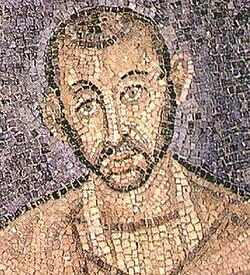
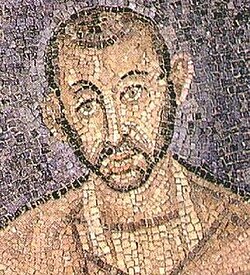
.jpg)
**Every other council in this archive is known through narrative. This one is known through its stenographers.**
On **3 September 381** about thirty-two western bishops — Italy, with deputies from Gaul, Africa and Illyricum — sat in the church at Aquileia under **Valerian**, its bishop, and heard **Ambrose of Milan** cross-examine two Homoian bishops from the Danube: **Palladius of Ratiaria** and **Secundianus of Singidunum**. The shorthand writers took it down, and **the *Gesta* preserve the exchange verbatim — the only such record from a fourth-century council.**
## What a council actually sounded like
**Ambrose's method was to make the defendant answer for someone else's words.** Arius's own letter to Alexander of Alexandria was read out proposition by proposition, and Palladius was required to condemn each one or defend it. He would not do either in the terms demanded — **he quoted scripture instead, and asked to answer "in simplicity"** — and the refusal is what convicted him.
**The votes are in the minutes, and they are short.** *Qui Arrium defendit Arrianus est* — “whoever defends Arius is an Arian”, from Valerian in the chair; and from Anemius, that whoever does not condemn the Arian heresies must necessarily be an Arian. **Nearly every bishop voting afterwards names the association with Arius as sufficient ground**, and the record notes the two who do not.
## Palladius's objection, which the minutes also preserve
**He said the court was rigged, and said it on the record.** Gratian had first summoned a general council; the summons was narrowed to the western bishops, and Palladius held that Ambrose had procured the change. *“You have contrived… that this should not be a full and General Council: in the absence of our Colleagues we cannot answer.”* **The archive prints the objection because the minutes do** — a defendant's charge that the tribunal was constituted against him, preserved by the tribunal.
**He was outnumbered on any count.** The attendance is given as thirty-two, thirty-three, or — counting the pair on trial — thirty-four to two, and the archive prints the range rather than a figure.
## ⚠ What the verbatim record does not contain
**It is one session, not the council.** Ambrose's own words imply earlier discussions of which no record was taken — *diu citra acta tractavimus* — so the transcript begins after the argument had already been had.
**And it stops mid-case.** The interrogation of Secundianus opens along the same lines and **the protocol ends abruptly after a few exchanges.** The archive states that rather than describing his condemnation as though it were minuted.
**The other side wrote its own account, and it survives too.** Palladius's reply — the Arian scholia on the council, edited by Gryson — is a counter-record, and it exists because a hostile hand copied it into the margins of a manuscript. **Two accounts of one meeting, one of them stenographic and one of them aggrieved**, and the archive holds the first and names the second.
The council also asked Gratian and Theodosius for a further council at Alexandria to end the schism at Antioch. **It did not get one.**
The sources for this event
Every source the record rests on, with what it says and what it cannot carry.
The Gesta of the Council of Aquileia
c. AD 381**“Qui Arrium defendit Arrianus est.”** [Valerian, in the chair — *whoever defends Arius is an Arian*; and Anemius, that whoever does not condemn the Arian heresies must necessarily be one. The session opens with the reading of the emperor's mandate; **Palladius objects that the council has been narrowed to the West and refuses to answer in the absence of the eastern bishops**; Ambrose has Arius's letter to Alexander read proposition by proposition and demands condemnation of each. **The value to the archive is the form, not only the content: this is how a fourth-century bishop was actually questioned**, sentence by sentence, with the refusals recorded as spoken.]
*The Gesta of the Council of Aquileia* — held in this library. Latin; critical edition M. Zelzer, CSEL 82/3 (1990). ⚠ **Verbatim minutes of one session**: Ambrose's own remarks imply earlier untranscribed discussion, and the protocol breaks off during the examination of Secundianus.
Read the source text →Ambrose of Milan, the letters written from and about Aquileia
c. AD 381[The council's own account of itself, sent to the emperors: **“No heretical bishops were found to be present except Palladius and Secundianus, men long notorious for their perfidy… although they were convicted of misrepresentation and made to admit it, they refused to listen to reason.”** The letters also carry the council's request for a further council at Alexandria to settle the Antiochene schism — which was not granted. ⚠ The archive notes what this pairing gives it: **the transcript and the press release, from the same meeting, by the same man.**]
*The Letters of Ambrose* — held in this library. English: H. de Romestin, NPNF 2nd ser. 10 (1896), public domain. ⚠ Ambrose drafted the council's letters as well as conducting its examination; **the prosecutor is also the reporter.**
Read the source text →The Arian scholia on the Council of Aquileia (Palladius’ reply)
c. AD 400[**The losing side's record of the same room.** Palladius answers the *Gesta* point by point, charges that the council was packed and its procedure a trap, and attacks Ambrose personally. ⚠ It survives by accident of transmission — copied into the margins of a manuscript by a reader who wanted it kept. **The archive names it because a verbatim transcript is only half of an adversarial proceeding**, and the other half exists.]
**Not held in this library.** Latin: R. Gryson, *Scolies ariennes sur le concile d'Aquilée*, Sources Chrétiennes 267 (1980). The condemned party's answer, preserved in the margins of a manuscript of Ambrose. No public-domain English.
Figures in this event (17)
- Ambrose of Milan
- Valerian
- Palladius of Ratiaria
- Secundianus of Singidunum
- Chromatius of Aquileia
- Emperor Gratian
- Constantius (first of the name at Aquileia)
- Constantius (second of the name at Aquileia)
- Domninus (bishop at Aquileia)
- Felix (second of the name at Aquileia)
- Januarius (bishop at Aquileia)
- Marcellus (bishop at Aquileia)
- Maximus (first of the name at Aquileia)
- Maximus (second of the name at Aquileia)
- Theodorus (bishop at Aquileia)
- Artemius
- Macedonius
Scholarship
- Ambrose of Milan: Church and Court in a Christian CapitalNeil B. McLynn, 1994The council read as a managed proceeding, with the Gesta analysed as a document Ambrose controlled.
- Scolies ariennes sur le concile d’Aquilée, Sources Chrétiennes 267Roger Gryson, 1980The Arian counter-record edited with the council's acts.
- Corpus Scriptorum Ecclesiasticorum Latinorum 82/3Michaela Zelzer, 1990The critical edition of the Gesta and of Ambrose's letters from the council.