Event · AD 381 · Constantinople
The Council of Constantinople, AD 381
The Council of Constantinople — the Spirit’s divinity affirmed
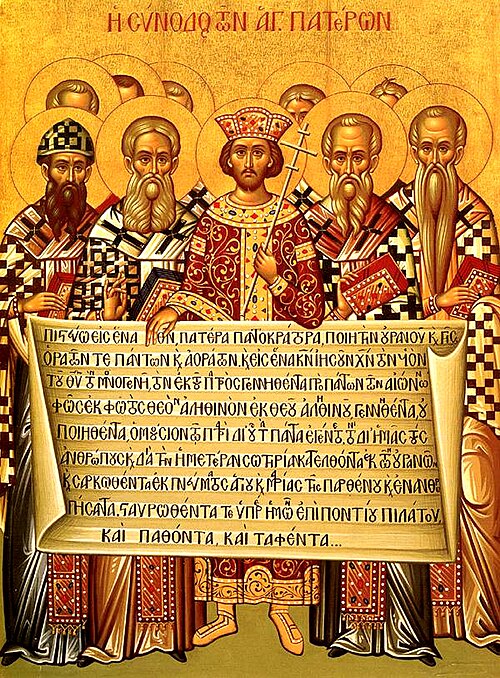
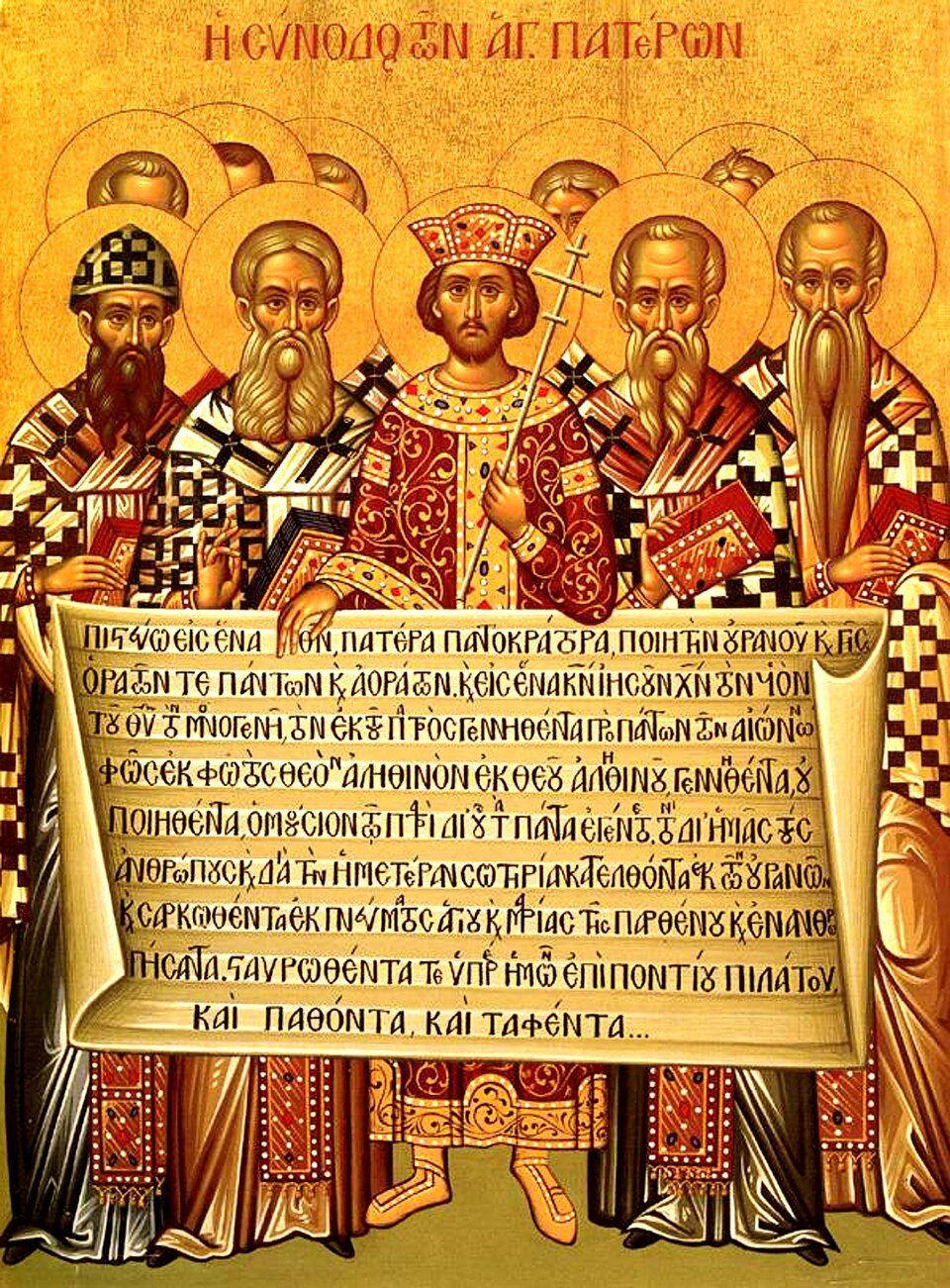

.jpg)
**The second ecumenical council, and the archive is careful about every word of that description.**
Theodosius summoned it in May 381. **About 150 bishops attended, all from the East** — Thrace, Asia Minor, Egypt and Syria — **and not one from the West**, with no papal legate and no Latin delegation. It completed the creed the church still recites, gave Constantinople precedence after Rome, and was called ecumenical only afterwards.
## Three presidents in three months
**Meletius of Antioch** presided and died during the session. **Gregory of Nazianzus** took the chair — and then **Timothy of Alexandria** arrived and challenged his appointment as an uncanonical translation from one see to another, the very rule **Ascholius of Thessalonica** had carried from **Damasus** as a Roman demand. Gregory resigned the see and the presidency. **Nectarius**, praetor of the city and **an unbaptised catechumen**, was baptised, consecrated and installed as president in a single stretch, and closed the council on 9 July. Theodosius ratified its decrees by edict on 30 July.
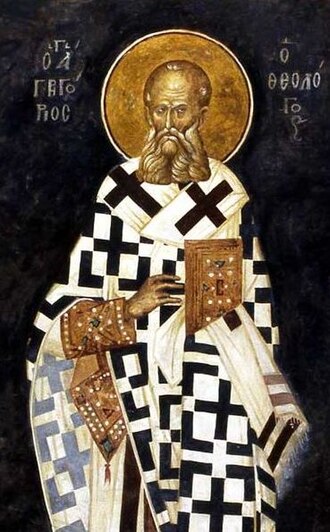
**Gregory’s own verdict on the council he chaired is preserved and it is not admiring** — he wrote of the bishops’ conduct with contempt, and the archive holds his orations. **A council whose most eloquent participant despised it** is a useful corrective to the way it is usually described.
## What survives, and what does not
**The doctrinal decisions are lost.** The council issued a *tomos* with anathemas; no copy survives. The **acts have almost entirely disappeared**, and the proceedings are known chiefly through Socrates, Sozomen and Theodoret — all held here, all writing sixty years later. **What the archive has of the council itself is the creed, the canons, and three later narratives.**
**The creed is the achievement**, and its addition is precise: against the Macedonians or Pneumatomachians — who allowed the Son and denied the Spirit — it confesses the Holy Spirit as Lord and giver of life, worshipped and glorified together with the Father and the Son. **Thirty-six Macedonian bishops came, refused the formula, and left.**
**The canons are the politics.** Canon 3 gives the bishop of Constantinople precedence of honour after the bishop of Rome, **because Constantinople is New Rome** — a rank argued from the city’s civil standing, not from an apostle. Others restrain Alexandria from acting outside its own diocese. ⚠ Three of the seven canons in the Greek manuscripts belong to a later synod of 382, and the archive says so rather than presenting seven.
## ⚠ How it became ecumenical
**Not by acclamation at the time.** The synodical letter of 382 already calls it ecumenical, but the council was little cited for decades, and **its authority in the West was settled only at Chalcedon in 451**, which set its creed beside the Nicene as a reliable witness and accepted its canons for the East. **The archive states the sequence** — an eastern council of 150, ratified by an emperor, canonised by a later council — rather than reading its later standing back into the room.
The sources for this event
Every source the record rests on, with what it says and what it cannot carry.
The Creed of Constantinople, and the canons
c. AD 381[The clause the council was called to add: **the Holy Spirit confessed as Lord and giver of life, worshipped and glorified together with the Father and the Son** — aimed at the Macedonians, who accepted the Son’s divinity and refused the Spirit’s, and **thirty-six of whom left rather than sign.** The canons are the other half: **canon 3 ranks Constantinople next after Rome “because it is New Rome”** — precedence argued from the city’s civil standing rather than from an apostolic foundation, which is the argument Rome would later resist. ⚠ The council’s own doctrinal *tomos* with its anathemas is **lost**.]
*The Creed of Nicaea (325)* — held in this library, with the revision of 381 recorded on the same text record. Public-domain English of the canons: H. R. Percival, NPNF 2nd ser. 14 (1900). ⚠ **Three of the seven canons in the Greek manuscripts are held to belong to the synod of 382**, not to this council.
Read the source text →Socrates Scholasticus, Ecclesiastical History V.8
c. AD 439[The narrative the archive depends on: **Meletius presiding and dying in session; Gregory succeeding and resigning; Nectarius, still unbaptised, baptised and consecrated to take the chair.** Socrates also records the Macedonian withdrawal. **He is one of three historians who between them are the council’s only account of itself**, and the archive names that dependency rather than writing as though minutes survived.]
Socrates, *Ecclesiastical History* — held in this library. English: A. C. Zenos, NPNF 2nd ser. 2 (1890), public domain. ⚠ Written c. 439 — **the acts being lost, the narrative sources are all two generations later.**
Read the source text →Sozomen, Ecclesiastical History VII.7–9
c. AD 443[Sozomen supplies the detail that makes Nectarius’s election believable and strange at once: **the praetor of the city, about to travel to Tarsus, called on Diodore of Tarsus to offer to carry letters — and was put forward as a candidate on the strength of his bearing.** ⚠ The story is told at second hand by a historian writing sixty years later, and the archive keeps it as reported, not as established.]
Sozomen, *Ecclesiastical History* — held in this library. English: C. D. Hartranft, NPNF 2nd ser. 2 (1890), public domain.
Read the source text →Gregory of Nazianzus, the Orations — his own account of the council he presided over
c. AD 383[**The participant’s verdict, and it is hostile.** Gregory took the chair, was challenged on the canon against translation, resigned the see of the capital and left — and his farewell address and later poems treat the assembly’s conduct with open contempt. **The archive prints it because a council’s own president despising it is evidence about how it looked from inside**, at a distance of nought years rather than sixty. ⚠ He is also the aggrieved party, and the record says so.]
*The Orations* — held in this library. English: C. G. Browne and J. E. Swallow, NPNF 2nd ser. 7 (1894), public domain for the selection that includes Oration 42.
Read the source text →Figures in this event (12)
- Emperor Theodosius I
- Meletius of Antioch
- Gregory of Nazianzus
- Nectarius of Constantinople
- Timothy of Alexandria
- Ascholius (Acholius) of Thessalonica
- Damasus I of Rome
- Gregory of Nyssa
- Amphilochius of Iconium
- Diodore of Tarsus
- Cyril of Jerusalem
- Macedonius of Constantinople
Scholarship
- Creeds, Councils and Controversies: Documents Illustrating the History of the Church AD 337–461J. Stevenson, rev. W. H. C. Frend, 1989The documents of 381 collected, with the canons and the imperial ratification.
- The Search for the Christian Doctrine of GodR. P. C. Hanson, 1988On what the creed of 381 added and why the Macedonian question forced it.
- Gregory of NazianzusJohn A. McGuckin, 2001The council from the inside, and the resignation, read from Gregory's own writings.