Event · AD 380 · Thessalonica — addressed to the people of Constantinople
The Edict of Thessalonica, AD 380
Edict of Thessalonica
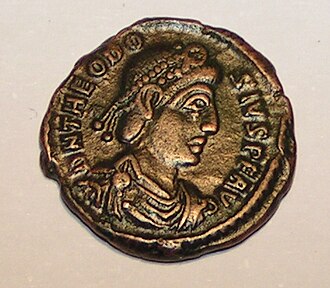
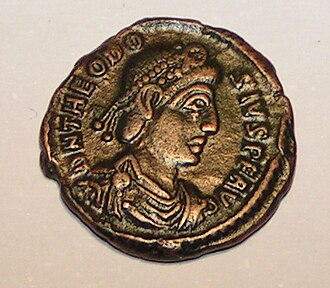
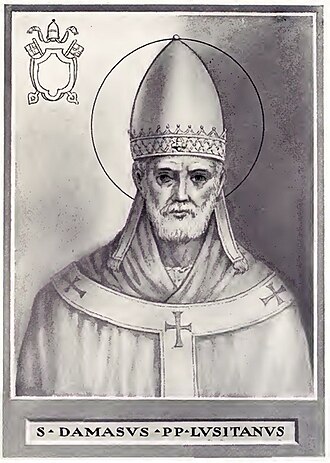
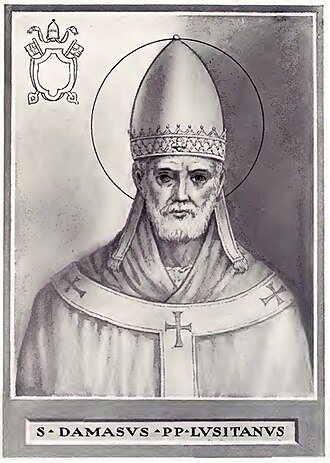


**A short law, and the archive holds its text.** *Cunctos populos*, issued 27 February 380 and preserved as *Codex Theodosianus* 16.1.2, is the point at which the empire stopped tolerating the church and began enforcing it.
## What it actually says
**It defines orthodoxy by naming two men.** Not by quoting the Nicene creed, but by pointing: the religion “which the divine apostle Peter delivered to the Romans”, as followed by **Damasus** of Rome and **Peter of Alexandria**, “a man of apostolic sanctity”. Those who hold it may take the name *Christiani catholici*; **the rest are adjudged demented and insane, their meeting-places may not be called churches**, and they are to be struck first by divine vengeance and then by imperial punishment.
**Naming bishops rather than a formula is the interesting choice**, and the archive says why it matters: a creed can be argued about, as sixty years had shown; a list of two names in communion cannot. It is the same administrative instinct the archive recorded under **Aurelian in 272**, who settled the Antioch church by asking who corresponded with Rome — now written into imperial law.
## Three things it was not
**It was not addressed to the empire.** The heading is *edictum ad populum urbis Constantinopolitanae* — an edict to the people of the capital, issued in the East by three emperors whose western colleague’s court had its own religious politics. **Its universal language and its local address are both in the text**, and the archive prints both rather than choosing.
**It did not create the Catholic church, and it did not abolish paganism.** It defines who may use a name and who may not hold a church building. The sacrifices were ended by later legislation, and the archive holds the pagan reaction as its own event four years later, when Symmachus petitions for the Altar of Victory.
**And it was not the work of a theologian.** Theodosius had been baptised weeks earlier at Thessalonica by **Ascholius**, while gravely ill in that city. **The emperor who legislated the faith had been a catechumen when the year began.**
## ⚠ Two cautions
**The translation problem is real.** The Latin is short and secure; the standard English is Clyde Pharr’s of 1952, **which is in copyright** — so the archive quotes the Latin and gives its own rendering beside it rather than borrowing one it cannot license.
**Enforcement is a separate question from enactment.** The law of 380 is one line of a long series; what changed on the ground is documented by the expulsions of Arian clergy from the capital’s churches over the following year, not by this text.
The sources for this event
Every source the record rests on, with what it says and what it cannot carry.
The Edict of Thessalonica (Cunctos populos), Codex Theodosianus 16.1.2
c. AD 380“**Cunctos populos, quos clementiae nostrae regit temperamentum, in tali volumus religione versari, quam divinum Petrum apostolum tradidisse Romanis** religio usque ad nunc ab ipso insinuata declarat **quamque pontificem Damasum sequi claret et Petrum Alexandriae episcopum virum apostolicae sanctitatis**…” [“It is our will that all the peoples governed by the temper of our clemency should hold that religion **which the divine apostle Peter handed down to the Romans** — the religion he introduced, as its practice to this day declares — **and which the pontiff Damasus plainly follows, and Peter bishop of Alexandria, a man of apostolic sanctity**: that is, that we believe in one deity of Father, Son and Holy Spirit, in equal majesty and holy Trinity.” The law then permits its adherents the name of **Catholic Christians**, and rules that the rest — **judged demented and insane** — shall bear the infamy of heresy, that their meeting-places shall not be called churches, and that they shall be struck first by divine vengeance and then by imperial retribution. ⚠ The heading is *edictum ad populum urbis Constantinopolitanae* — **an edict to the people of the capital**, in universal language.]
*The Edict of Thessalonica* — held in this library as its own text record. Latin from the Theodosian Code. ⚠ The standard English (C. Pharr, 1952) is **in copyright**; the rendering in brackets below is the archive’s own working translation of the Latin quoted.
Read the source text →Sozomen, Ecclesiastical History VII.4
c. AD 443[The circumstance the law does not mention: **Theodosius fell gravely ill at Thessalonica and was baptised there by Ascholius, the city’s bishop**, weeks before the edict was issued. The archive holds Ascholius as a figure — the same bishop who forwarded the relics of Sabbas the Goth to Basil eight years earlier, and who would carry Damasus’s demands to the Council of Constantinople the year after this. **One man stands at the Gothic frontier, the emperor’s sickbed and the council**, and the archive can show all three from its own records.]
Sozomen, *Ecclesiastical History* — held in this library. English: C. D. Hartranft, NPNF 2nd ser. 2 (1890), public domain.
Read the source text →Ambrose of Milan, on the death of Theodosius
c. AD 395[The church’s own summary of the reign the edict opened, spoken fifteen years later by the bishop who had made this emperor do public penance for Thessalonica’s other event — **the massacre of 390, which the archive holds separately.** The record keeps the two Thessalonicas apart deliberately: the city gives its name to the law that established the faith and to the atrocity that tested it.]
*On the Death of Theodosius* — held in this library. English: H. de Romestin, NPNF 2nd ser. 10 (1896), public domain. ⚠ A funeral oration: praise, delivered before the man’s body, by a bishop who had also once excommunicated him.
Read the source text →Figures in this event (5)
- Emperor Theodosius I
- Emperor Gratian
- Damasus I of Rome
- Ascholius (Acholius) of Thessalonica
- Peter II of Alexandria
Scholarship
- The Theodosian Code and Novels, and the Sirmondian ConstitutionsClyde Pharr, 1952The standard English translation of the Code, including 16.1.2 — in copyright, named here rather than quoted.
- Theodosius: The Empire at BayStephen Williams and Gerard Friell, 1994On the reign and on what the edict changed in practice.
- Christianity and the Rhetoric of EmpireAveril Cameron, 1991On the language of imperial religious legislation and its claims.