Event · AD 378 · The Arabian and Palestinian frontier · Alexandria
Queen Mavia’s revolt, AD 378
Queen Mavia’s revolt — the Tanukhid Saracens defeat Rome and demand a bishop as the price of peace
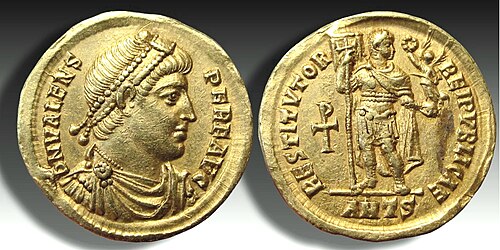
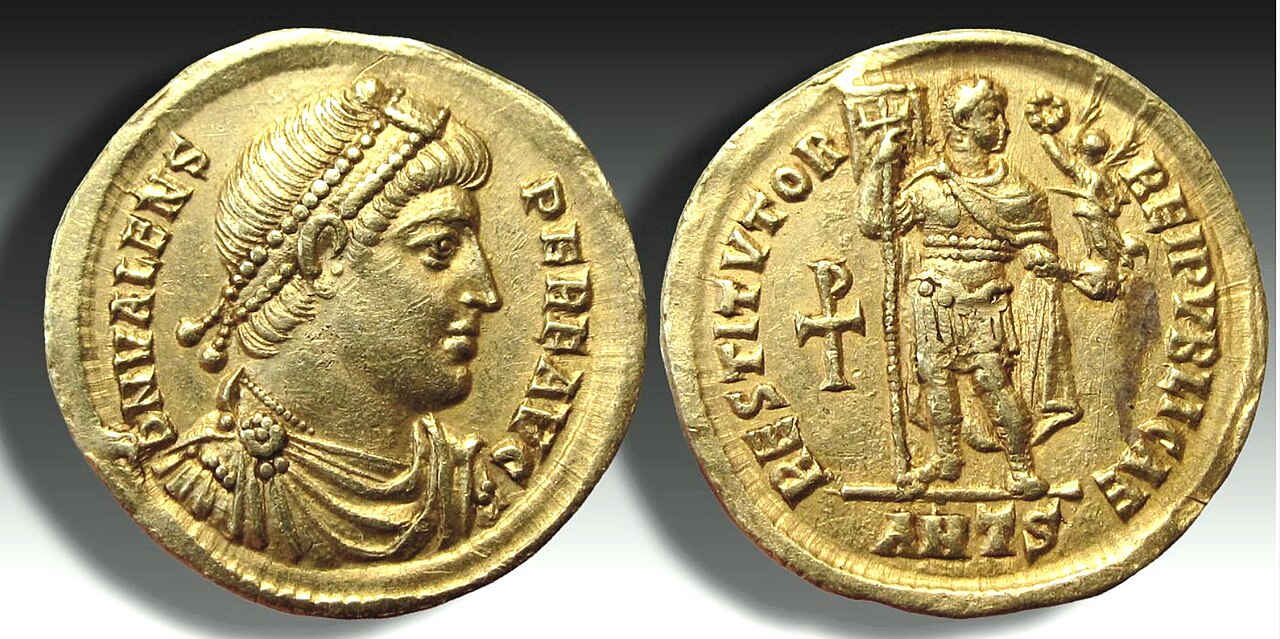

**The only case in the archive of a war settled by the appointment of a clergyman — and the demand came from the winning side.**
About 377 the Tanukhid queen **Mavia** took her federate people to war against Rome, beat the imperial army in the field, and then dictated terms. **What she asked for was a bishop**: the hermit **Moses**, an Arab by birth living in the desert. Rome agreed, and the church she brought her people into was of her choosing, not the emperor’s.
## Moses refuses the wrong hands
Brought to Alexandria to be consecrated, Moses found the see held by **Lucius**, the Arian imposed over Athanasius’s successor by the emperor Valens. **He refused to receive ordination from him** — telling him, in Socrates’ account, that his hands were not clean — and was consecrated instead by the Nicene bishops Lucius had driven into exile.
**Two refusals, then, made this event.** A queen who refused a Roman-chosen bishop, and a hermit who refused an Arian consecration. **The frontier settlement was more Nicene than the empire that granted it**, in the last year of Valens’s reign.
## Why the archive treats it as unusually well attested
**Four independent historians report it, and one of them is contemporary.** Rufinus wrote within a generation and knew the eastern church at first hand; Socrates, Sozomen and Theodoret follow, differing in detail. **For a frontier war on the Arabian limes that is exceptional coverage** — most such campaigns leave no ecclesiastical record at all, and this one is known because of what the treaty contained.
**And the sequel is dated.** Mavia’s forces are reported at Constantinople after the catastrophe at Adrianople in **August 378**, fighting for the empire that had lost to them a year before — a federate treaty working exactly as a federate treaty was supposed to.
## ⚠ Three cautions
**The chronology is soft.** The revolt is placed c. 377–378 and the sources do not agree closely; the archive gives the span rather than a campaign date.
**The historians are ecclesiastical.** They report the war because it produced a bishop, so the military narrative reaches the archive filtered through the interest that preserved it — and the size, course and casualties of the campaign are not recoverable from them.
**And her later career is unrecorded.** Mavia is attested in revolt, in treaty, and then not again; the archive holds her at that point and does not extend her story past the evidence.
The sources for this event
Every source the record rests on, with what it says and what it cannot carry.
Rufinus of Aquileia, Ecclesiastical History XI.6
c. AD 402[The earliest witness: **a queen of the Saracens makes war on Rome, prevails, and makes peace on the condition that a certain Moses, a monk of the desert, be given her people as bishop.** Rufinus is the reason the archive can call this contemporary rather than legendary — he is writing within a generation of the treaty, for readers who could remember it.]
Rufinus, *Ecclesiastical History* — held in this library. The continuation of Eusebius written c. AD 402, and **the earliest of the four accounts**; Rufinus had lived in the East. ⚠ A Latin churchman writing for a Latin readership about an Arabian frontier he did not see.
Read the source text →Socrates Scholasticus, Ecclesiastical History IV.36
c. AD 439[Socrates supplies the confrontation the record turns on: **Moses, brought to Alexandria for consecration, refuses to receive it from Lucius**, the Arian in possession of the see, and is ordained by the exiled Nicene bishops instead. He then goes to Mavia’s people and — on Socrates’ account — **keeps the peace between them and the Romans thereafter.** The bishop is both the price of the treaty and its guarantor.]
Socrates, *Ecclesiastical History* — held in this library. English: A. C. Zenos, NPNF 2nd ser. 2 (1890), public domain.
Read the source text →Sozomen, Ecclesiastical History VI.38
c. AD 443[Sozomen gives the war and the peace at greatest length, and adds the diplomatic seal the others omit: **the marriage of Mavia’s daughter to a Roman commander.** He also sets the episode inside his account of the Saracens’ conversion — which is why the archive keeps his framing separate from his facts.]
Sozomen, *Ecclesiastical History* — held in this library. English: C. D. Hartranft, NPNF 2nd ser. 2 (1890), public domain. ⚠ Sozomen is the fullest on the Saracens and the most interested in them; his ethnographic framing is his own.
Read the source text →Theodoret, Ecclesiastical History IV.23
c. AD 449[The fourth witness, and the one that makes the attestation unusual. **Four ecclesiastical historians, writing between c. 402 and c. 449 and not simply copying one another, all report a Saracen queen dictating an episcopal appointment to Rome.** ⚠ They differ in detail — the archive prints the agreement and does not harmonise the differences.]
Theodoret, *Ecclesiastical History* — held in this library. English: B. Jackson, NPNF 2nd ser. 3 (1892), public domain.
Read the source text →Figures in this event (4)
Scholarship
- Rome and the Arabs: A Prolegomenon to the Study of Byzantium and the ArabsIrfan Shahîd, 1984The standard treatment of Mavia, the Tanukhids and the federate treaty.
- Byzantium and the Arabs in the Fourth CenturyIrfan Shahîd, 1984The four historians set side by side, with the chronology of the revolt argued in full.
- The Roman Near East, 31 BC – AD 337Fergus Millar, 1993The frontier world the revolt happened on, and the limits of what its sources can support.