Event · AD 372 · Gothia, beyond the Danube — the river Musaeus
The martyrdom of Sabbas the Goth, AD 372
The martyrdom of Sabbas the Goth — the only account of a Gothic martyrdom written by Goths, sent to Cappadocia with the relics
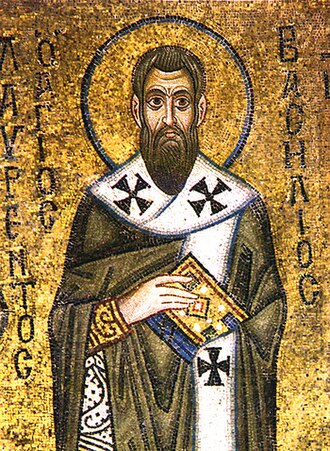
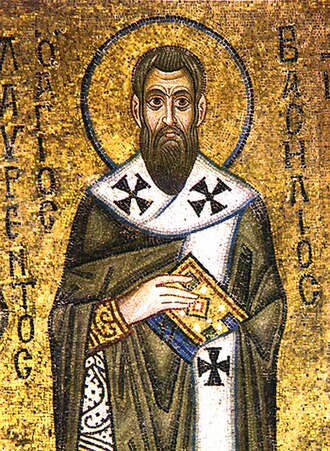

**A martyr act that is also a letter, written by the church that lost the man, within months of losing him.**
On **12 April 372**, beyond the Danube frontier, a Gothic layman named Sabbas was drowned in the river Musaeus for refusing to eat meat sacrificed to idols. The church in Gothia wrote to the churches of Cappadocia to tell them so, and sent the relics with the letter. **The archive holds that letter.**
## Why it is the most valuable martyr act in the collection
**It is not a Greek or Latin account of barbarians; it is the barbarians’ own account.** Almost every martyrdom the archive holds reaches it through an imperial church historian, a hagiographer, or a court record kept by the persecuting state. This one was written by the community that buried him, in the persecution’s own year, and it names the people involved on both sides: the presbyter **Sansalas**, the persecuting noble **Atharidus** son of Rothesteus, the Christian **Gouttica**, and the king **Athanaric**, whose persecution it was.
**And it records the neighbours refusing to persecute.** Twice the villagers tried to shield their Christian neighbours by swearing false oaths that there were no Christians among them — **and Sabbas refused to be covered by the lie**, standing up to say that he was one. The detail is what makes the document evidence rather than devotion: a Gothic village where pagans perjured themselves to protect Christians, and a Christian who would not let them.
## What it establishes about a church with no empire behind it
**A Gothic church with presbyters, a liturgical calendar and correspondents abroad.** Sabbas is drowned on the third day after Pascha; a presbyter is arrested with him; the community can compose a formal letter in Greek and send it, with relics, along a route that ran through the *dux* of Scythia to **Ascholius of Thessalonica** and on to **Basil** in Cappadocia.
**Basil answered, and the archive holds his answer.** He thanks the sender for honouring the land of his birth “with a martyr lately crowned in the barbarian country beyond the Danube” — a Cappadocian bishop receiving the bones of a Gothic peasant and treating the gift as an honour done to Cappadocia.
**The same church, in the same decade, was translating the Bible.** Ulfilas’s Gothic version — held here — was made for these people; Philostorgius says he left out the books of Kings, “lest they inflame a war-loving nation”. **A church that could translate scripture and write a martyr act in the same generation is a literate church, not a mission field**, and the archive says so.
## ⚠ Three cautions
**The transmission is hagiographic even though the text is not.** The letter survives whole inside Byzantine menologia from the tenth century onward, under 12 or 15 April; it reaches the archive through the collections, not from a fourth-century copy.
**No public-domain English exists.** Delehaye’s edition of 1912 is the critical Greek and Heather and Matthews (1991) the standard English, in copyright — so the archive quotes its own working translation and says which words are its own.
**And the persecution’s scale is unknown.** This is one martyrdom, richly documented, from a persecution whose extent the sources do not give. **The archive does not turn one letter into a body count.**
The sources for this event
Every source the record rests on, with what it says and what it cannot carry.
The Passion of St Sabbas the Goth — the letter of the church in Gothia to the churches of Cappadocia
c. AD 372“The Church of God that sojourns in Gothia to the Church of God that sojourns in Cappadocia… Sabas, a Goth by race, orthodox in faith, reverent and ready in all obedience… was drowned in the river Mousaios, in his thirty-eighth year, on the third day after the feast of Pascha.” [The letter names **Sansalas** the presbyter, arrested with him; **Atharidus** son of Rothesteus, who ordered the death; **Gouttica**; and the persecution of **Athanaric**. Its most telling passage is the one no hagiographer would invent: **twice the villagers swore false oaths that there were no Christians among them, to shield their neighbours — and Sabbas refused the protection and declared himself.**]
**Held in this library.** Greek. Critical text: H. Delehaye, ‘Saints de Thrace et de Mésie’, *Analecta Bollandiana* 31 (1912), pp. 216–21. English: P. Heather and J. Matthews, *The Goths in the Fourth Century* (1991), pp. 109–17 — **in copyright**; the rendering below is the archive’s working translation. ⚠ Preserved inside Byzantine menologia from the tenth century onward. **The archive formerly held this one letter as two separate text records; they were merged on 20 August 2026.**
Read the source text →Basil of Caesarea, Letters 155, 164 and 165
c. AD 374“Thou hast honored the land that bore thee with a martyr lately crowned in the barbarian country beyond the Danube — like a grateful husbandman sending the firstfruits home to them that reared him.” [The receipt at the other end of the journey, and the reason the archive can date and route the relics: **the bones of a Gothic layman travelled from beyond the frontier to Cappadocia and were acknowledged in writing by the most eminent bishop in the East.** The martyr act and the thank-you letter are both on these shelves, and together they document the whole transaction.]
*The Letters of Basil* — held in this library. English: B. Jackson, NPNF 2nd ser. 8 (1895), public domain. Letters 164 and 165 are Basil’s reply on receiving the relics; the correspondence with the *dux* of Scythia who forwarded them is Letter 155.
Read the source text →The Gothic Bible of Ulfilas
c. AD 380[The same decade, the same people, the same language: **a church across the Danube that had the scriptures in Gothic.** Philostorgius reports that Ulfilas omitted the books of Kings, lest they inflame a war-loving nation. **The relevance to this event is what it shows about literacy and organisation** — the community that wrote a formal letter to Cappadocia was a community with a written Bible in its own tongue. ⚠ The confessional difference between Ulfilas’s Homoian church and Sabbas’s is stated, not smoothed.]
*The Gothic Bible of Ulfilas* — held in this library. ⚠ Cited here for the context, not for the martyrdom: Ulfilas was a Homoian Arian and Sabbas’s community is described as orthodox, so the two belong to the same people and not necessarily to the same communion. The archive states that rather than merging them.
Read the source text →Sozomen, Ecclesiastical History VI
c. AD 443[The imperial-side frame for the same years: **a persecution of Christians among the Goths under Athanaric**, and the crossing of the Danube that followed within a few years. **The archive uses Sozomen for the setting and the Gothic letter for the event** — and notes what the comparison shows: the fullest account of a Gothic martyrdom is not in the Greek historians at all. ⚠ Sozomen never mentions Sabbas.]
Sozomen, *Ecclesiastical History* — held in this library. English: C. D. Hartranft, NPNF 2nd ser. 2 (1890), public domain. ⚠ Written c. AD 443 and from inside the empire; his interest is in the Goths’ Arianism and their settlement, not in this martyrdom, which he does not narrate.
Read the source text →Figures in this event (7)
- Sabbas the Goth
- Sansalas
- Atharidus
- Gouttica
- Athanaric
- Ascholius (Acholius) of Thessalonica
- Basil the Great
Scholarship
- The Goths in the Fourth CenturyPeter Heather and John Matthews, 1991Translated Texts for Historians 11. The Passion translated with commentary, alongside the other Gothic documents of the century.
- ‘Saints de Thrace et de Mésie’, Analecta Bollandiana 31Hippolyte Delehaye, 1912The critical edition of the Greek text of the letter.
- The GothsPeter Heather, 1996On Athanaric’s persecution, Gothic social structure and the frontier church.