The Nicene Age · AD 313–400
Eustathius of Antioch
c. 270 – c. 360 · Bishop of Antioch · Nicene confessor · Beroea → Antioch
The Nicene Age
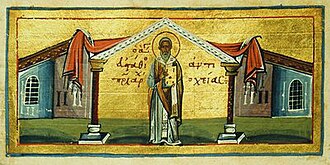

Who Eustathius of Antioch was
Bishop of Antioch and one of the leading anti-Arian voices at Nicaea, a confessor of the persecution who welcomed the assembled fathers with an opening address. Within a few years the ascendant Arian party engineered his deposition and exile on trumped-up charges (c. 330), and his loyal followers refused to accept any successor — beginning the Eustathian schism that would divide Antioch for over half a century. A staunch defender of the Nicene faith and of a “Word-man” Christology that stressed Christ’s full humanity, he was one of the first casualties of the Arian reaction.
Also listed in the bishops of Antioch.
Common questions
When did Eustathius live?
Eustathius of Antioch is dated c. 270 – c. 360 in the archive, which places Eustathius in the Nicene Age (AD 313–400). The dating is traditional and approximate; the archive marks it as uncertain rather than fixing a year the sources do not give.
What did Eustathius write?
Eustathius of Antioch has 2 catalogued writings in the archive: On the Witch of Endor, against Origen and Against the Arians, and the lost corpus. 1 of these is lost, known only from later citation.
Which early sources mention Eustathius?
Eustathius of Antioch is named in 3 primary-source passages catalogued here, drawn from Jerome of Stridon, Sozomen and Theodoret of Cyrus. Every passage is quoted from a named public-domain translation, earliest first.
Where was Eustathius from?
The archive associates Eustathius of Antioch with Beroea, Antioch. The sources record more than one location, so the places are listed in the order the record moves through them.
Writings (2)
On the Witch of Endor, against Origen
The one complete survivor of his shelf — transmitted bound to the very Origen homily it attacks[Not Samuel's soul, he argues, but a phantom shaped to deceive — and Origen's allegorism answered chapter by chapter]Read the interlinear source text →
Against the Arians, and the lost corpus
The Nicene confessor's polemics survive only as fragments and reputationHe composed many things against the doctrine of the Arians, which are eagerly read. (after Jerome, On Illustrious Men 85)Lost — known only from later citation.
Primary-source mentions (3)
Every passage below is quoted from a named public-domain translation, earliest first.
On Illustrious Men 85
c. AD 392He composed many things against the doctrine of the Arians, which are eagerly read.Jerome of Stridon · On Illustrious Men 85 · source text
Church History II.19 (the engineered deposition)
c. AD 445Ecclesiastical History I.23–24 (Theodoret)
c. AD 449Eustathius, that champion of piety… was driven from his see by the calumnies of the Arians, who feared his ability; and the people of Antioch, cleaving to him, were thenceforth divided.Theodoret of Cyrus · I.23–24 · source text
Connected in the archive
People
Events in this lifetime
- AD 301 · Hripsime and her company, AD 301
- AD 303 · The Great Persecution begins, AD 303
- AD 303 · The search of the church at Cirta, AD 303
- AD 306 · The Council of Elvira, AD 306
- AD 311 · Galerius’ edict of Serdica, AD 311
- AD 313 · The Edict of Milan, AD 313
- AD 314 · The Council of Arles, AD 314
- AD 320 · Silvanus tried before Zenophilus, AD 320
- AD 325 · The Council of Nicaea, AD 325
- AD 339 · The persecution of Shapur II, AD 339
- AD 343 · The Council of Serdica, AD 343
Place
Places served
The 2 places the sources put Eustathius, in the order the record moves through them. This is what the sources attest, not a reconstructed route.