The Nicene Age · AD 313–400
Arius
c. 256 – 336 · Presbyter of Alexandria · Arch-heresiarch · Libya → Alexandria
The Nicene Age

Who Arius was
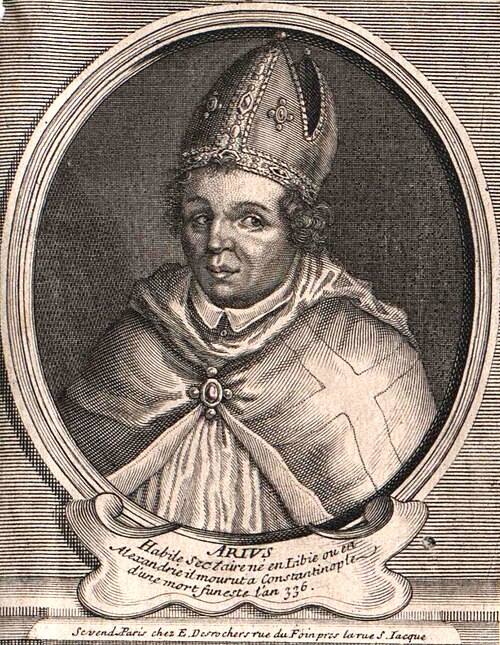
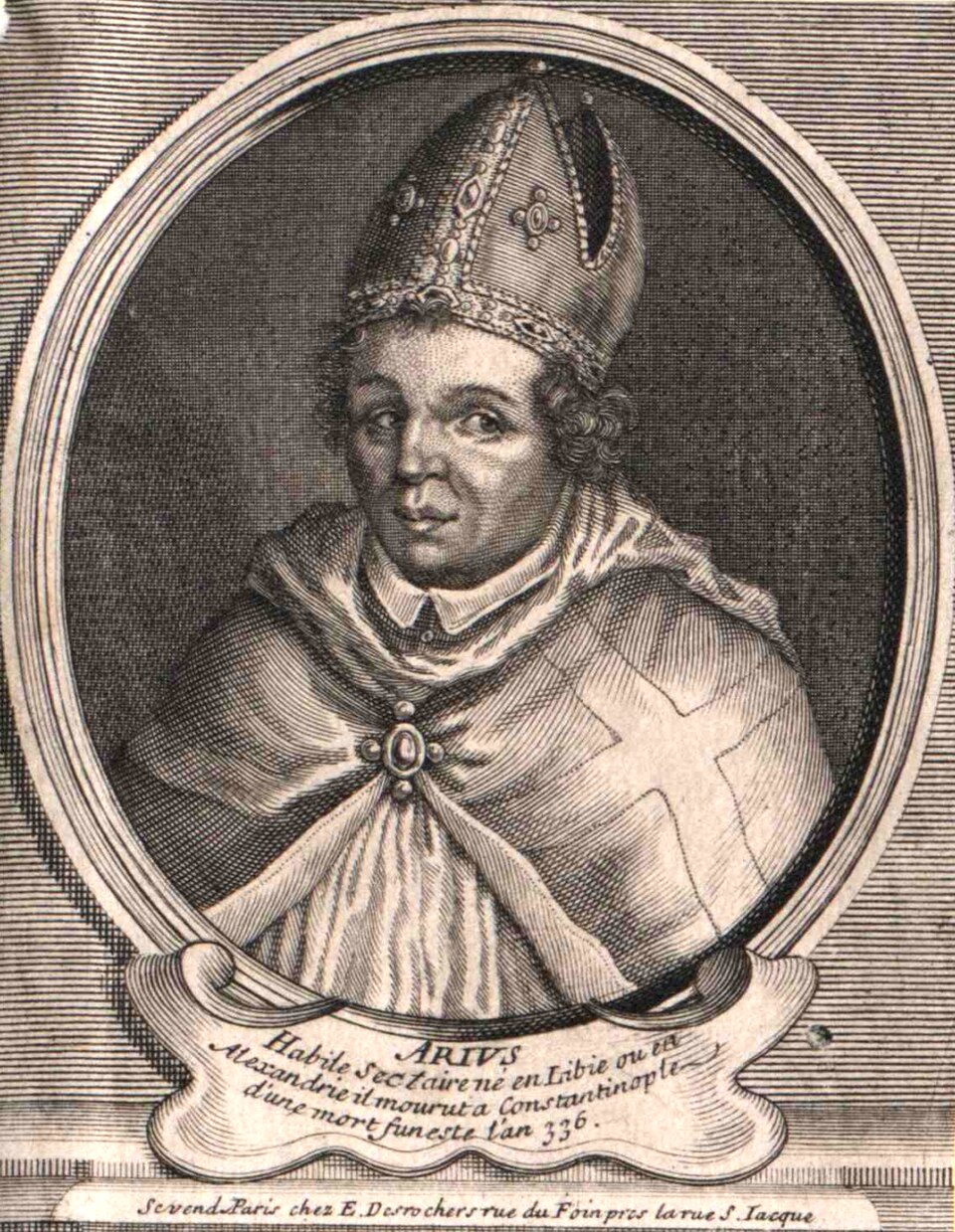
The Alexandrian presbyter whose teaching provoked the greatest doctrinal war in Christian history. Trained (by tradition) under Lucian of Antioch, Arius held that the Son, though the first and highest of creatures, was not eternal and not of the Father’s own being — “there was once when he was not” — so that the Word was a creature, however exalted. He spread the doctrine in catchy verses (the Thalia) sung by sailors and workmen. Condemned by his bishop Alexander and by the Council of Nicaea in 325, which coined homoousios (“of one substance”) to exclude him, he was exiled, recalled, and died suddenly in Constantinople in 336 on the eve of his forced reinstatement — a death the orthodox read as judgment. His name became the label for the denial of Christ’s full divinity for centuries; the whole Nicene achievement was framed against him.
Also listed in heretics & schismatics.
Common questions
When did Arius live?
Arius is dated c. 256 – 336 in the archive, which places Arius in the Nicene Age (AD 313–400). The dating is traditional and approximate; the archive marks it as uncertain rather than fixing a year the sources do not give.
Which early sources mention Arius?
Arius is named in 5 primary-source passages catalogued here, drawn from Arius, The council of Nicaea, Athanasius of Alexandria and Socrates Scholasticus. Every passage is quoted from a named public-domain translation, earliest first.
Where was Arius from?
The archive associates Arius with Libya, Alexandria. The sources record more than one location, so the places are listed in the order the record moves through them.
Who were Arius’ contemporaries?
The archive links Arius to 24 other figures, including Alexander of Alexandria, Athanasius of Alexandria, Lucian of Antioch and Eusebius of Nicomedia. Each connection is drawn from a source that places them together, not from inference.
Primary-source mentions (5)
Every passage below is quoted from a named public-domain translation, earliest first.
His own letter to Eusebius of Nicomedia (the voice of the accused)
c. AD 318To his very dear lord, the man of God, the faithful and orthodox Eusebius, Arius, unjustly persecuted by Alexander the Pope on account of that all-conquering truth.Arius · Letter to Eusebius of Nicomedia · source text
The Nicene anathemas (the propositions condemned clause by clause)
c. AD 325And those who say 'there was when He was not', and 'before being born He was not' — these the catholic and apostolic Church anathematizes.The council of Nicaea · The anathemas · source text
Athanasius, Letter to Serapion on the Death of Arius (the end at Constantinople)
c. AD 340Urged by the necessities of nature he withdrew, and suddenly, in the language of Scripture, falling headlong he burst asunder in the midst.Athanasius of Alexandria · Letter 54, to Serapion, on the death of Arius
Athanasius's Letter to Serapion on the death of Arius (Letter 54), written during his third exile — the account he had from the presbyter Macarius, who was at Constantinople when Arius died. Greek: Migne, Patrologia Graeca 25.685. English translation by Archibald Robertson, Nicene and Post-Nicene Fathers, 2nd series, vol. 4 (1892), public domain. Not to be confused with the Letters to Serapion on the Holy Spirit, which this archive holds as a separate text.
On the Councils 15 (quoting Arius’ Thalia)
c. AD 350‘God was not always a Father… once God was alone, and not yet a Father; afterwards He became a Father. The Son was not always; He came to be from things that were not.’ — such are the blasphemies of Arius.Athanasius of Alexandria · source text
Ecclesiastical History I.9 (Constantine's edict: his books to burn like Porphyry's)
c. AD 440If any treatise composed by Arius be discovered, let it be consigned to the flames, in order that no memorial of him whatever be left.Socrates Scholasticus · Ecclesiastical History I.9 · source text
Connected in the archive
People
- Alexander of Alexandria
- Athanasius of Alexandria
- Lucian of Antioch
- Eusebius of Nicomedia
- Hosius of Cordova
- Peter of Alexandria
- Achillas of Alexandria
- Philogonius of Antioch
- Secundus of Ptolemais
- Theonas of Marmarica
- Meletius of Lycopolis
- Colluthus of Alexandria
- Macarius of Jerusalem
- Alexander of Constantinople
- Theognis of Nicaea
- Asterius the Sophist
- Nicholas of Myra
- Eustathius of Antioch
- Maris of Chalcedon
- Aetius of Antioch
- Marcellus of Ancyra
- Euzoius of Antioch
- Photinus of Sirmium
- Ulfilas (Wulfila)
Events in this lifetime
- AD 268 · Antioch deposes Paul of Samosata, AD 268
- AD 272 · Aurelian awards the Antioch church, AD 272
- AD 301 · Hripsime and her company, AD 301
- AD 303 · The Great Persecution begins, AD 303
- AD 303 · The search of the church at Cirta, AD 303
- AD 306 · The Council of Elvira, AD 306
- AD 311 · Galerius’ edict of Serdica, AD 311
- AD 313 · The Edict of Milan, AD 313
- AD 314 · The Council of Arles, AD 314
- AD 320 · Silvanus tried before Zenophilus, AD 320
- AD 325 · The Council of Nicaea, AD 325
Place
Places served
The 2 places the sources put Arius, in the order the record moves through them. This is what the sources attest, not a reconstructed route.
- 1Libyaprovince only
- 2Alexandria