The Nicene Age · AD 313–400
Nicholas of Myra
c. 270 – c. 343 · Bishop of Myra · Father of Nicaea (by tradition) · Patara → Myra, Lycia
The Nicene Age

Who Nicholas of Myra was
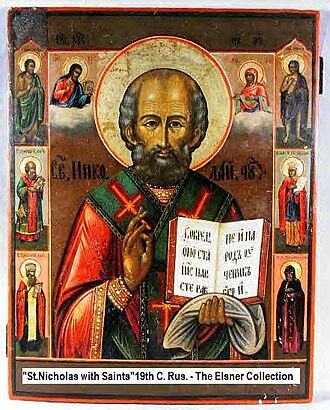
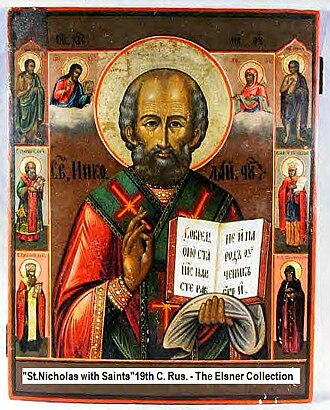
Bishop of Myra in Lycia, one of the most universally beloved saints of Christendom — famed for secret almsgiving (the dowry of gold left for three destitute girls, seed of the Santa Claus legend), for rescuing the condemned and the shipwrecked, and, by later tradition, for attending Nicaea and there striking the heretic Arius. The earliest firm evidence is thin and his historical outline modest, but the cult is ancient and vast. The archive keeps him as tradition presents him: a fourth-century Lycian bishop whose charity became legend.
No within-horizon literary witness at all; the cult's paper trail begins in the 6th century — the archive keeps him on tradition, honestly labeled.
Also listed in bishops beyond the great sees.
Common questions
When did Nicholas live?
Nicholas of Myra is dated c. 270 – c. 343 in the archive, which places Nicholas in the Nicene Age (AD 313–400). The dating is traditional and approximate; the archive marks it as uncertain rather than fixing a year the sources do not give.
Which early sources mention Nicholas?
Nicholas of Myra is named in 1 primary-source passage catalogued here, drawn from Greek tradition. Every passage is quoted from a named public-domain translation, earliest first.
Where was Nicholas from?
The archive associates Nicholas of Myra with Patara, Myra, Lycia. The sources record more than one location, so the places are listed in the order the record moves through them.
Who were Nicholas’ contemporaries?
The archive links Nicholas of Myra to 3 other figures, including Spyridon of Trimythous, Paphnutius the Confessor and Arius. Each connection is drawn from a source that places them together, not from inference.
Primary-source mentions (1)
Every passage below is quoted from a named public-domain translation, earliest first.
Byzantine hagiographic tradition (Life by Michael the Archimandrite, 9th c.)
c. AD 500By night he cast a purse of gold through the window of the poor man’s house, that his daughters might be married and not sold; and so he did a second and a third time, doing good in secret.Greek tradition · source text
Connected in the archive
People
Events in this lifetime
- AD 301 · Hripsime and her company, AD 301
- AD 303 · The Great Persecution begins, AD 303
- AD 303 · The search of the church at Cirta, AD 303
- AD 306 · The Council of Elvira, AD 306
- AD 311 · Galerius’ edict of Serdica, AD 311
- AD 313 · The Edict of Milan, AD 313
- AD 314 · The Council of Arles, AD 314
- AD 320 · Silvanus tried before Zenophilus, AD 320
- AD 325 · The Council of Nicaea, AD 325
- AD 339 · The persecution of Shapur II, AD 339
- AD 343 · The Council of Serdica, AD 343
Place
Places served
The 3 places the sources put Nicholas, in the order the record moves through them. This is what the sources attest, not a reconstructed route.