The Nicene Age · AD 313–400
Ulfilas (Wulfila)
c. 311 – 383 · Bishop & apostle of the Goths · Homoian Arian · Bible translator · Gothia → Nicopolis
The Nicene Age

Who Ulfilas (Wulfila) was
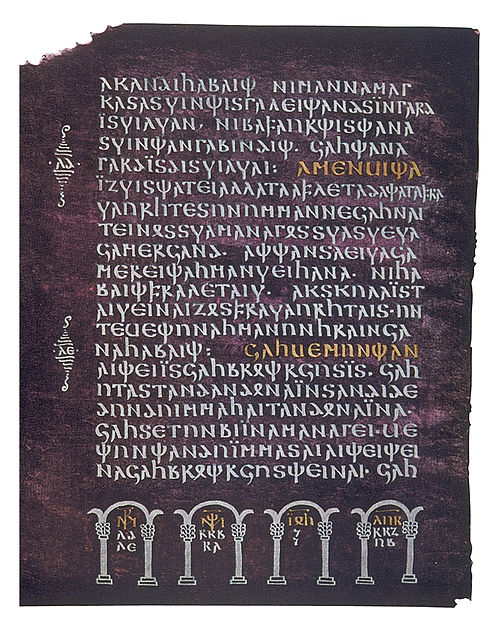
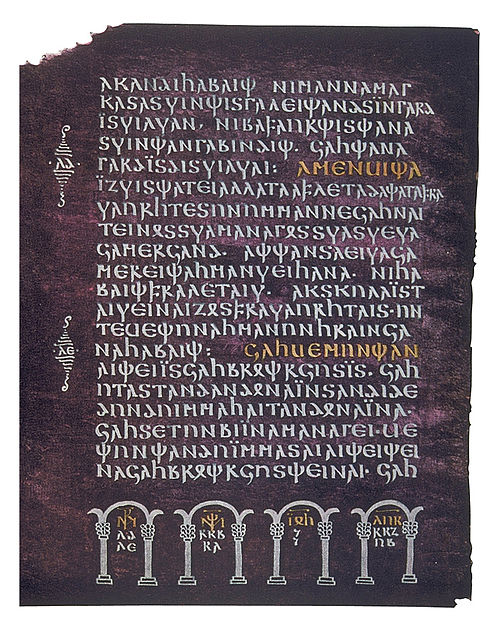
The apostle of the Goths — of part-Cappadocian captive descent, consecrated bishop (by the Arian Eusebius of Nicomedia’s circle) to evangelize the Gothic peoples beyond the Danube, whom he won to Christianity in its Homoian (moderate Arian) form. His towering achievement was linguistic: he devised a Gothic alphabet and translated the Bible into Gothic, the earliest literary monument of any Germanic language (surviving in the silver-lettered Codex Argenteus) — reputedly omitting the books of Kings lest they inflame a warlike people. Because he taught an Arian creed, the orthodox counted him a heretic even as his mission shaped the faith of the Goths, Vandals, and Lombards for centuries. Included here among the external figures as the Nicene sources classed him: a heretic bishop of monumental consequence.
Also listed in bishops beyond the great sees and heretics & schismatics.
Common questions
When did Ulfilas live?
Ulfilas (Wulfila) is dated c. 311 – 383 in the archive, which places Ulfilas in the Nicene Age (AD 313–400). The dating is traditional and approximate; the archive marks it as uncertain rather than fixing a year the sources do not give.
What did Ulfilas write?
Ulfilas (Wulfila) has 1 catalogued writing in the archive: The Gothic Bible.
Which early sources mention Ulfilas?
Ulfilas (Wulfila) is named in 2 primary-source passages catalogued here, drawn from Auxentius of Durostorum and Socrates & Philostorgius. Every passage is quoted from a named public-domain translation, earliest first.
Where was Ulfilas from?
The archive associates Ulfilas (Wulfila) with Gothia, Nicopolis. The sources record more than one location, so the places are listed in the order the record moves through them.
Writings (1)
The Gothic Bible
An alphabet invented, the scriptures translated — omitting Kings, 'lest they inflame a war-loving nation'; the Codex Argenteus carries the wreck of itAtta unsar þu in himinam, weihnai namo þein — Our Father, thou in the heavens, hallowed be thy name.Read the interlinear source text →
Primary-source mentions (2)
Every passage below is quoted from a named public-domain translation, earliest first.
Auxentius of Durostorum, Letter on Ulfilas (his pupil's memoir, in the Dissertatio Maximini)
c. AD 383[The only account of Ulfilas by someone who knew him: his pupil sets down the life, the faith and the death.]Auxentius of Durostorum · Auxentius, Epistula de Ulfila
The letter of Auxentius of Durostorum on the life, faith and death of his teacher Ulfilas — the only account of Ulfilas by someone who knew him. Preserved embedded in the Arian scholia on the Council of Aquileia in Paris, BnF lat. 8907, and edited with those scholia by Roger Gryson, Scripta Arriana Latina I, Corpus Christianorum Series Latina 87 (1982).
Ecclesiastical History II.41 (Philostorgius) & IV.33 (Socrates)
c. AD 439Ulfilas… invented the Gothic letters, and translated the sacred Scriptures into their tongue, that the barbarians might learn the divine oracles; but he embraced the Arian error, and led his nation into it.Socrates & Philostorgius · IV.33 · source text
Connected in the archive
People
- Eusebius of Nicomedia
- Arius
- Emperor Valens
- Sabbas the Goth
- Palladius of Ratiaria
- Auxentius of Durostorum
- Athanaric
- Sansalas
Events in this lifetime
- AD 313 · The Edict of Milan, AD 313
- AD 314 · The Council of Arles, AD 314
- AD 320 · Silvanus tried before Zenophilus, AD 320
- AD 325 · The Council of Nicaea, AD 325
- AD 339 · The persecution of Shapur II, AD 339
- AD 343 · The Council of Serdica, AD 343
- AD 361 · Julian’s pagan restoration, AD 361
- AD 366 · Damasus and the catacomb epigrams, AD 366
- AD 367 · Athanasius lists the 27 NT books, AD 367
- AD 372 · The martyrdom of Sabbas the Goth, AD 372
- AD 378 · Queen Mavia’s revolt, AD 378
- AD 380 · The Edict of Thessalonica, AD 380
- AD 381 · The Council of Constantinople, AD 381
- AD 381 · The Council of Aquileia, AD 381
Place
Places served
The 2 places the sources put Ulfilas, in the order the record moves through them. This is what the sources attest, not a reconstructed route.