Event · AD 366 · Rome — the catacombs and the Basilica of Sicininus
Damasus and the catacomb epigrams, AD 366
Damasus begins the epigram programme — the Roman catacombs opened, restored and inscribed for pilgrims

.jpg)
**A pope who answered a contested election by writing the martyrs’ graves into stone — and this library holds the epigrams, the man who cut them, and the calendar he had cut twelve years earlier.**
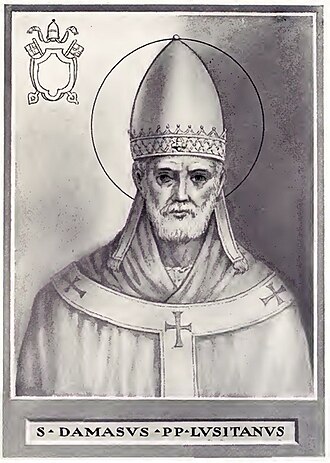
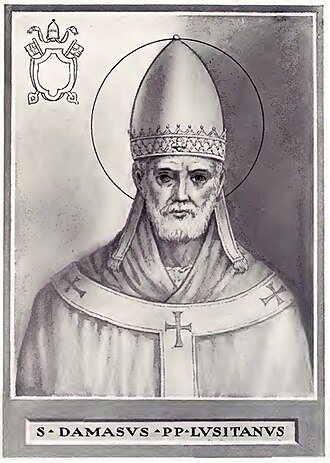
Damasus was elected in 366 and spent his pontificate restoring, opening and inscribing the Roman catacombs for pilgrims: **some sixty verse inscriptions, about thirty-five of them naming martyrs**, cut by the calligrapher **Furius Dionysius Filocalus** in the script still called Filocalian after him.
## The election first, because the sources will not let it be separated
**Ammianus Marcellinus, a pagan, gives the number.** Damasus and Ursinus contended for the see “burning with a superhuman desire of seizing the bishopric”, the city prefect withdrew to the suburbs, and in the basilica of Sicininus, where the Christians assembled, **a hundred and thirty-seven corpses were found in a single day.**
**The partisan dossier gives a different number.** The Ursinian documents preserved in the *Collectio Avellana* count **160 confirmed dead and say more were killed.** The archive prints both figures and does not average them: the pagan historian and the losing party disagree, and the disagreement is the evidence that the count was contested at the time.
**Damasus was cleared twelve years later**, at a synod of 378, and Ursinus condemned. That sequence — victory, accusation, and vindication only after a decade — is the political setting of the epigram programme, not a separate story from it.
## What the programme actually did
**It moved the cult of the martyrs inside the bishop’s authority.** The graves were already places of pilgrimage, reachable without the clergy and outside the basilicas the church controlled. **Damasus put his own name in almost every epigram**, so that a pilgrim reading the verse over a martyr’s grave read the bishop of Rome’s name with it.
**Three of his predecessors were singled out** with inscriptions in the cemetery of Callixtus — Sixtus II, Cornelius and Eusebius — chosen, not inherited: **he knew the burial places of a century of Roman bishops from the Chronograph’s own list and honoured a selection.**
**And the same hand cut both.** Filocalus had completed the illustrated Roman almanac of 354 — the *Depositio Episcoporum* and *Depositio Martyrum*, which this library holds — before Damasus employed him in the catacombs. **The calendar that recorded where the bishops lay and the epigrams that marked the spot are the work of one engraver, and the archive holds both.**
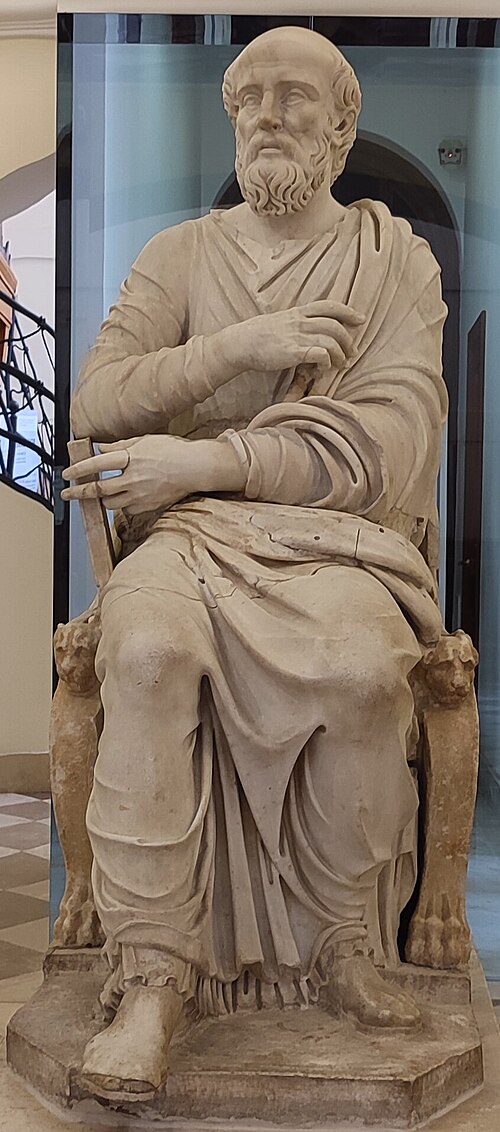
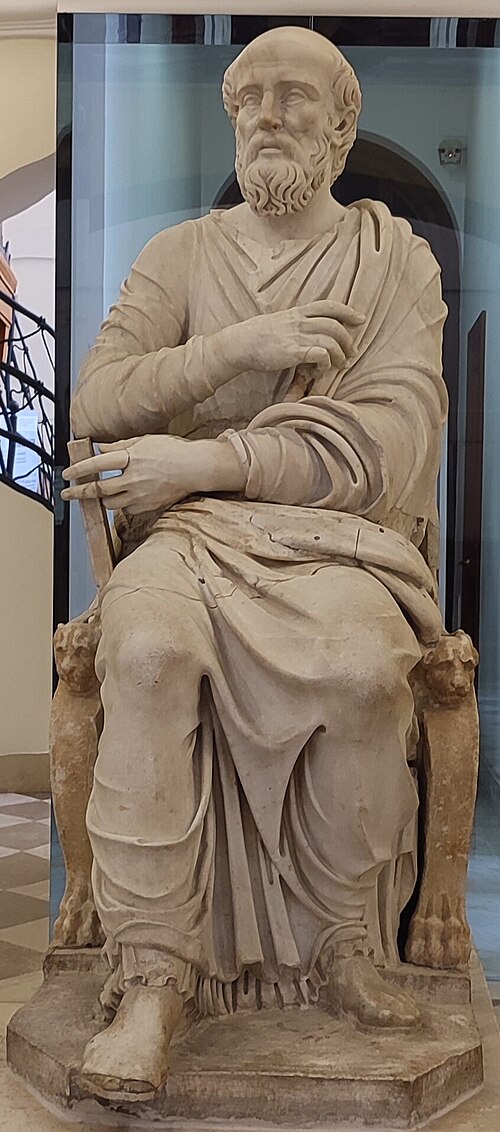
**One of the epigrams is for Hippolytus**, the presbyter this archive records as deported to the Sardinian mines in 235; fragments of it were recovered from the pavement of the Lateran. A pope of the 360s composing verse for a schismatic of the 230s is the martyr cult doing exactly what Damasus built it to do.
## ⚠ Four cautions
**These are self-authored inscriptions.** Damasus is the subject as well as the author of his own commemorative programme, and the archive reads the epigrams as episcopal publicity that happens to be excellent evidence — not as disinterested record.
**Survival is fragmentary.** Much of the corpus is known from medieval anthology copies rather than from surviving stone, and where a stone exists it is often in pieces.
**No public-domain English exists for the corpus.** Ferrua’s edition of 1942 is the standard Latin and Trout’s translation of 2015 is in copyright, so this record summarises and gives Latin where it quotes.
**And Ammianus is not a neutral witness either** — he was writing a pagan’s account of Christian ambition, and the archive says so while noting that the partisan Christian dossier reports a higher number, not a lower one.
The sources for this event
Every source the record rests on, with what it says and what it cannot carry.
The Epigrams of Damasus
c. AD 384[Some sixty verse inscriptions, about thirty-five naming martyrs, cut by **Filocalus** in the script named after him and set over the graves of the Roman catacombs. **Damasus names himself in almost all of them.** Three predecessors are honoured individually in the cemetery of Callixtus — Sixtus II, Cornelius and Eusebius — and one epigram is for **Hippolytus**, whose fragments were recovered from the pavement of the Lateran. **The programme is the physical core of the Roman martyr cult**, and it is also an assertion of jurisdiction over sites a pilgrim could otherwise reach without the church.]
*The Epigrams of Damasus* — held in this library (AD 366–384). Latin. Critical edition: A. Ferrua, *Epigrammata Damasiana* (1942). English: D. Trout (2015) — **in copyright, so nothing is quoted from it here**. ⚠ Much of the corpus survives through medieval anthologies rather than surviving stone.
Read the source text →Ammianus Marcellinus, Res Gestae XXVII.3.12–13
c. AD 390“137 dead bodies were found in the basilica of Sicininus, where the Christians hold their religious assemblies; and it was long before the angry minds of the people resumed their accustomed tranquillity.” [Ammianus sets it up with the judgement the passage is famous for: that the ambition of Damasus and Ursinus to seize the bishopric **surpassed the ordinary measure of human ambition**, that their supporters went as far as wounds and death, and that the city prefect, unable to stop it, withdrew to the suburbs. ⚠ The number is his; the partisan Christian dossier gives 160.]
*Res Gestae* — held in this library. Latin; public-domain English: C. D. Yonge (1862); the rendering below follows the public-domain text of Wace’s *Dictionary of Christian Biography* (1911) where it quotes Ammianus. ⚠ A pagan historian on Christian ambition — hostile in framing, and reporting a **lower** casualty figure than the Christian dossier does.
Read the source text →The Ursinian dossier in the Collectio Avellana (Gesta inter Liberium et Felicem and related documents)
c. AD 366[The Ursinian documents count **160 confirmed dead and state that more were killed**, and describe Damasus’s partisans attacking the Liberian basilica where Ursinus’s people had taken refuge. The dossier also preserves the imperial rescript by which Valentinian permitted the exiles to return. **The archive records the higher number and its source’s interest in the same breath**, and delivers no verdict on which count is right.]
**Not held in this library.** Latin: O. Guenther, *Epistulae imperatorum pontificum aliorum … Avellana quae dicitur collectio*, CSEL 35 (1895). ⚠ A partisan compilation assembled by the losing side; its numbers are advocacy, which is why the archive keeps them beside Ammianus rather than instead of him.
The Chronography of 354 — the Depositio Episcoporum
c. AD 354[The link the archive can make from its own shelves: **the calligrapher of the 354 almanac is the engraver of the epigrams.** Filocalus completed the Chronography under Liberius; Damasus then employed him in the catacombs. And the almanac’s burial list is where a bishop of the 360s would have learned **which of his predecessors lay where** — the information the epigram programme selects from. Two held texts, twelve years apart, by one hand.]
*The Chronography of 354* — held in this library. The burial calendars of the martyrs and bishops of Rome, the earliest surviving record of the Roman church’s liturgical year.
Read the source text →The Libellus Precum of Faustinus and Marcellinus
c. AD 384[A hostile witness from inside the church, and the archive holds it: rigorists petitioning the emperors against the establishment they say has persecuted them, in the last years of Damasus. **It is evidence that the settlement Damasus consolidated was contested to the end**, and it is cited here for that and nothing more.]
*The Libellus Precum* — held in this library. The petition of two rigorist priests against persecution by the establishment church. ⚠ **What it is used for here is narrow**: it shows that the Damasan church was being petitioned against by name at the end of his pontificate. Its specific charges concern other men, and the archive does not extend them to the epigram programme.
Read the source text →Jerome, the preface to the Gospels, addressed to Damasus
c. AD 383[The other half of Damasus’s programme, and the one that outlasted the stone: **Jerome became his secretary in 377 and was set to revise the Latin Gospels against the Greek**, the work that became the Vulgate. The preface is addressed to Damasus by name. **A pope who commissioned both the inscriptions in the catacombs and the revision of the Latin Bible** is a pope organising the Roman church’s memory and its text at once.]
*The Prefaces to the Vulgate and Commentaries* — held in this library. English: NPNF 2nd ser. 6, public domain.
Read the source text →Figures in this event (7)
- Damasus I of Rome
- Furius Dionysius Filocalus
- Hippolytus of Rome
- Xystus II (Sixtus II) of Rome
- Cornelius the Centurion
- Agnes of Rome
- Jerome of Stridon
Scholarship
- Damasus of Rome: The Epigraphic PoetryDennis Trout, 2015The epigrams with English translation and commentary; the standard modern treatment of the programme.
- The Christians and the Roman Empire in the Fourth Century: Damasus and the Roman MartyrsMarianne Sághy, 2000On the epigrams as an assertion of episcopal control over the martyr cult.
- Epigrammata DamasianaAntonio Ferrua, 1942The critical edition of the Latin text.