The Apostolic Fathers · AD 70–130
Ignatius of Antioch
Also known as Theophorus
c. 35 – c. 108 · Bishop of Antioch · Martyr · Antioch → Rome
The Apostolic Fathers
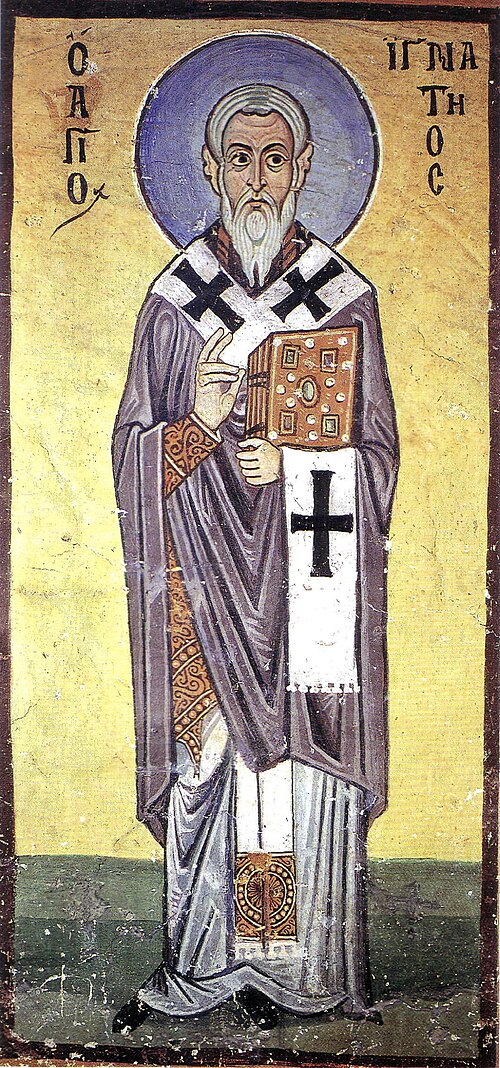
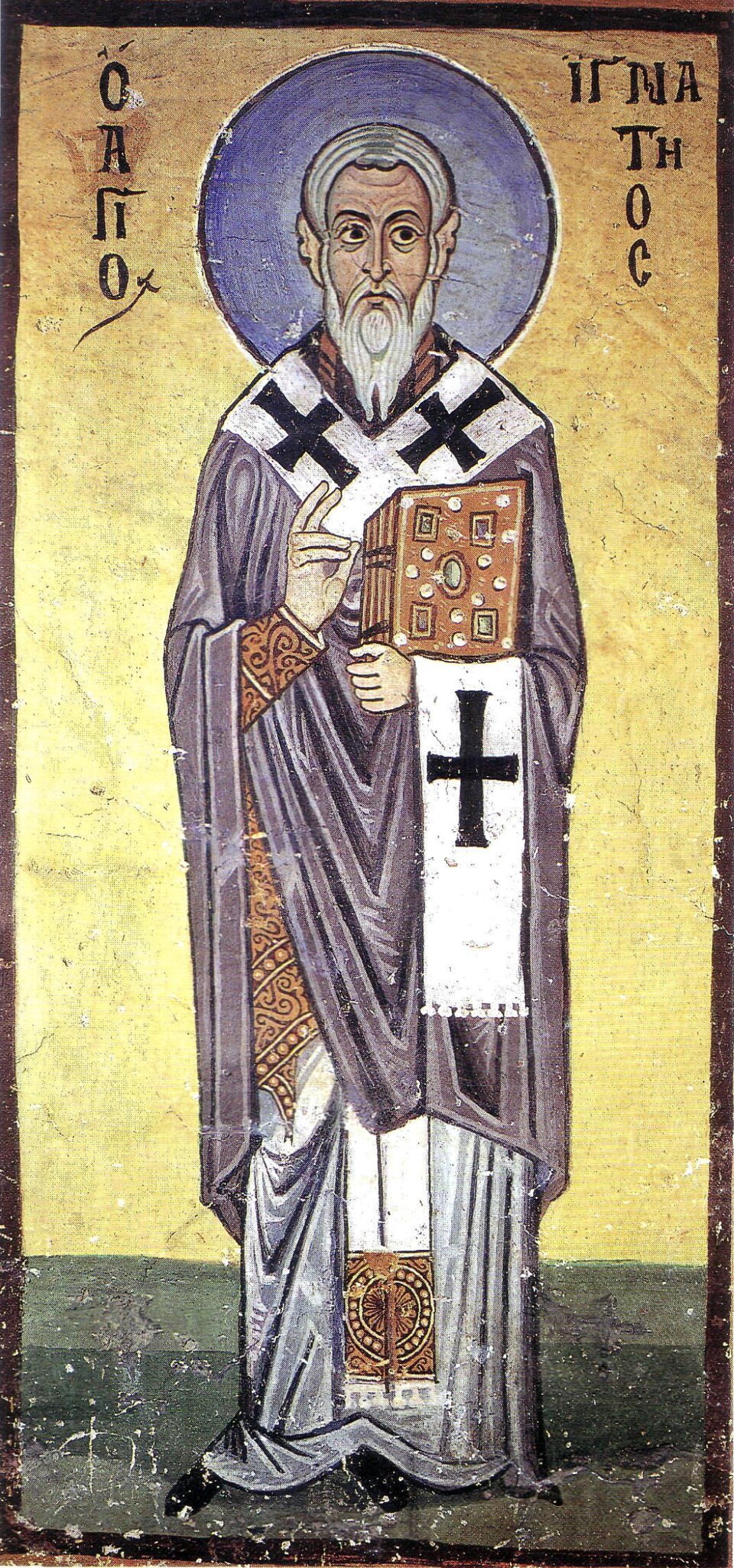
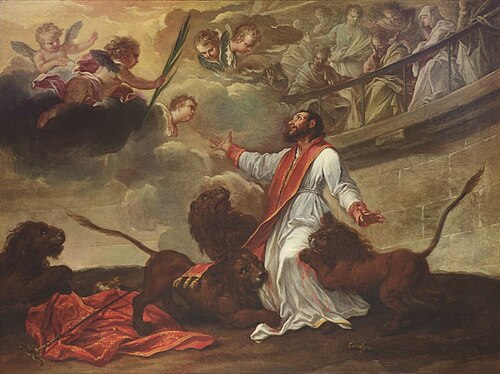
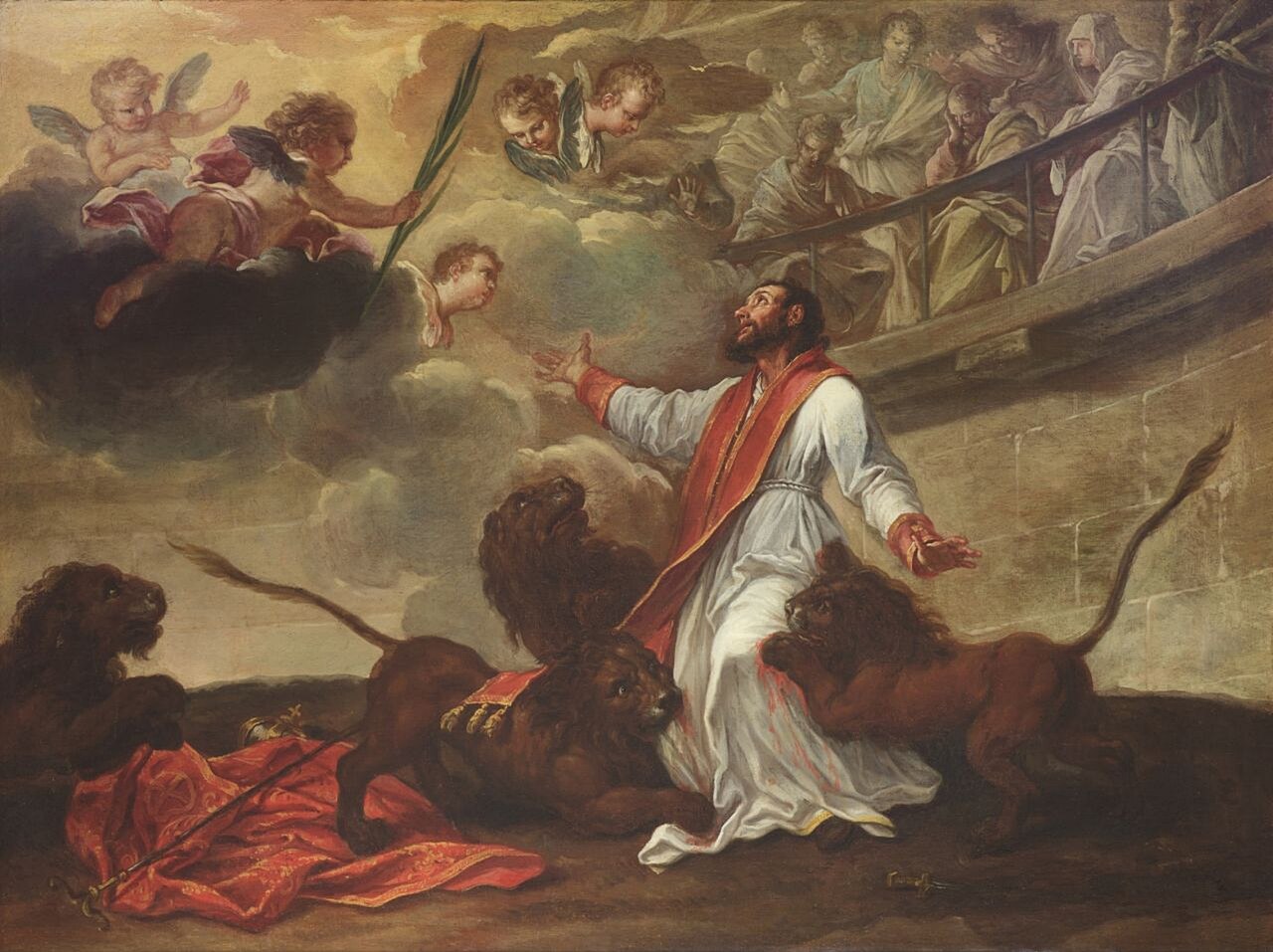
_-_Ignatios.jpg)


.jpg)
Who Ignatius of Antioch was
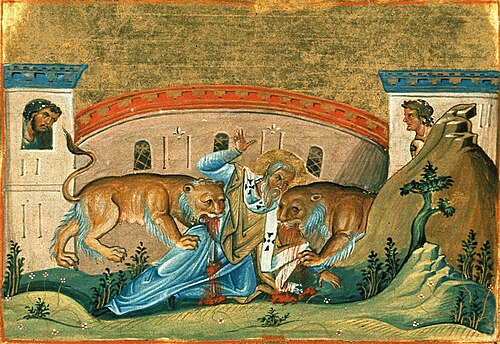
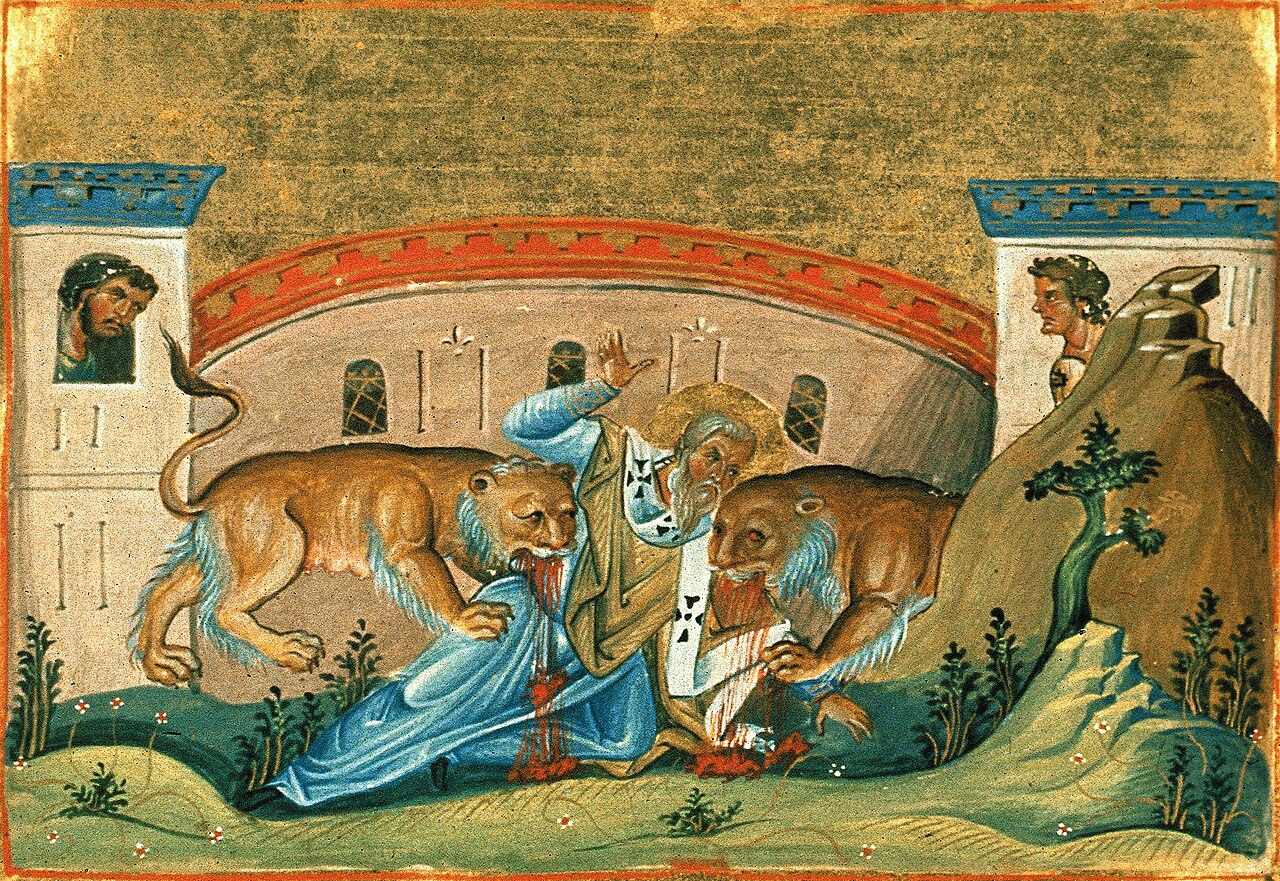
Ignatius, called Theophorus, “God-bearer,” was bishop of Antioch — the church that first sent out Paul — and by tradition a hearer of the apostle John. Condemned to the beasts under Trajan around 108, he was marched across Asia Minor under a guard of ten soldiers he called “leopards,” and from Smyrna and Troas dashed off seven letters to the churches along his route. They are the white-hot core of post-apostolic Christianity: pleas for unity around the bishop, the first surviving use of the phrase “the catholic church,” fierce insistence against the Docetists that Christ truly suffered in the flesh, and a lover’s longing for martyrdom that startled even his admirers.
Also listed in the bishops of Antioch and martyrs.
Common questions
When did Ignatius live?
Ignatius of Antioch is dated c. 35 – c. 108 in the archive, which places Ignatius in the Apostolic Fathers (AD 70–130). The dating is traditional and approximate; the archive marks it as uncertain rather than fixing a year the sources do not give.
What did Ignatius write?
Ignatius of Antioch has 2 catalogued writings in the archive: Epistle to the Romans and Epistle to the Smyrnaeans.
Which early sources mention Ignatius?
Ignatius of Antioch is named in 5 primary-source passages catalogued here, drawn from Polycarp of Smyrna, Irenaeus of Lyon, Eusebius of Caesarea and Jerome of Stridon. Every passage is quoted from a named public-domain translation, earliest first.
Where was Ignatius from?
The archive associates Ignatius of Antioch with Antioch, Rome. The sources record more than one location, so the places are listed in the order the record moves through them.
Writings (2)
Epistle to the Romans
c. 108I am the wheat of God, and let me be ground by the teeth of the wild beasts, that I may be found the pure bread of Christ.Read the interlinear source text →
Epistle to the Smyrnaeans
c. 108Wheresoever the bishop shall appear, there let the multitude also be; even as, wherever Jesus Christ is, there is the catholic church.Read the interlinear source text →
Primary-source mentions (5)
Every passage below is quoted from a named public-domain translation, earliest first.
To the Philippians 9
c. AD 135I exhort you all, therefore, to yield obedience to the word of righteousness, and to exercise all patience, such as ye have seen set before your eyes… in Ignatius and Zosimus and Rufus.Polycarp of Smyrna · 9 · source text
To the Philippians 13
c. AD 135The Epistles of Ignatius written by him to us, and all the rest which we have by us, we have sent to you, as you requested; they are subjoined to this Epistle.Polycarp of Smyrna · 13 · source text
Against Heresies V.28.4 (his word from the arena, quoted namelessly)
c. AD 180As a certain man of ours said, when he was condemned to the wild beasts because of his testimony with respect to God: 'I am the wheat of Christ, and am ground by the teeth of the wild beasts, that I may be found the pure bread of God.'Irenaeus of Lyon · Against Heresies V.28.4 · source text
Ecclesiastical History III.36 (his station and his journey in chains)
c. AD 325Report says that he was sent from Syria to Rome, and became food for wild beasts on account of his testimony to Christ.Eusebius of Caesarea · Ecclesiastical History III.36 · source text
On Illustrious Men 16
c. AD 392Ignatius, third bishop of the church of Antioch after Peter the apostle, condemned to the wild beasts in the persecution of Trajan, was sent bound to Rome.Jerome of Stridon · On Illustrious Men 16 · source text
Connected in the archive
Disciple of John by tradition; wrote to and was received by Polycarp; second bishop of Antioch after Peter’s foundation
People
- John the Apostle
- Polycarp of Smyrna
- Simon Peter
- Theophilus of Antioch
- Evodius of Antioch
- Onesimus
- Menander of Samaria
- Evaristus of Rome
- Burrhus of Ephesus
- Crocus of Ephesus
- Damas of Magnesia
- Philo of Cilicia
- Polybius of Tralles
- Rheus Agathopus
- Alce of Smyrna
- Tavia of Smyrna
- Pliny the Younger
- Emperor Trajan
- Apronianus of Magnesia
- Bassus of Magnesia
- Zotion of Magnesia
- Heros of Antioch
- Euplus of Ephesus
- Fronto of Ephesus
- Daphnus of Smyrna
- Eutecnus of Smyrna
Events in this lifetime
- AD 44 · Persecution under Herod Agrippa I, AD 44
- AD 49 · The Council of Jerusalem, AD 49
- AD 57 · Paul writes Romans, AD 57
- AD 62 · James the Just stoned, AD 62
- AD 64 · The Great Fire and Nero’s persecution, AD 64
- AD 70 · The fall of Jerusalem, AD 70
- AD 95 · Domitian’s reprisals, AD 95
- AD 96 · Rome writes to Corinth: 1 Clement, AD 96
Place
Places served
The 5 places the sources put Ignatius, in the order the record moves through them. This is what the sources attest, not a reconstructed route.
- 1AntiochBishop of Antioch in SyriaEusebius, HE 3.36
- 2SmyrnaWrote four letters from Smyrna in Polycarp’s companyIgnatius, To the Ephesians; Romans
- 3TroasWrote three more letters from TroasIgnatius, To the Philadelphians; Smyrnaeans
- 4PhilippiReceived and escorted onward by the PhilippiansPolycarp, To the Philippians 9
- 5RomeCarried there to die in the amphitheatreIgnatius, To the Romans 5