The Ante-Nicene Church · AD 180–313
Melito of Sardis
c. 110 – c. 180 · Bishop of Sardis · Poet of the Pascha · Sardis, Lydia
The Ante-Nicene Church
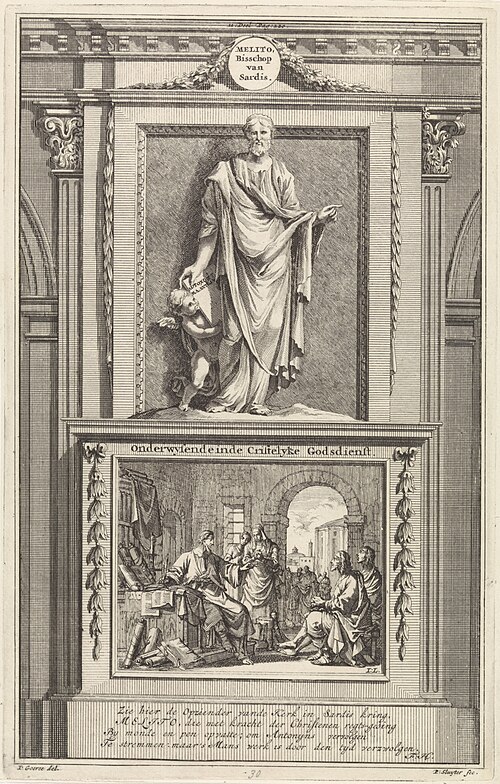
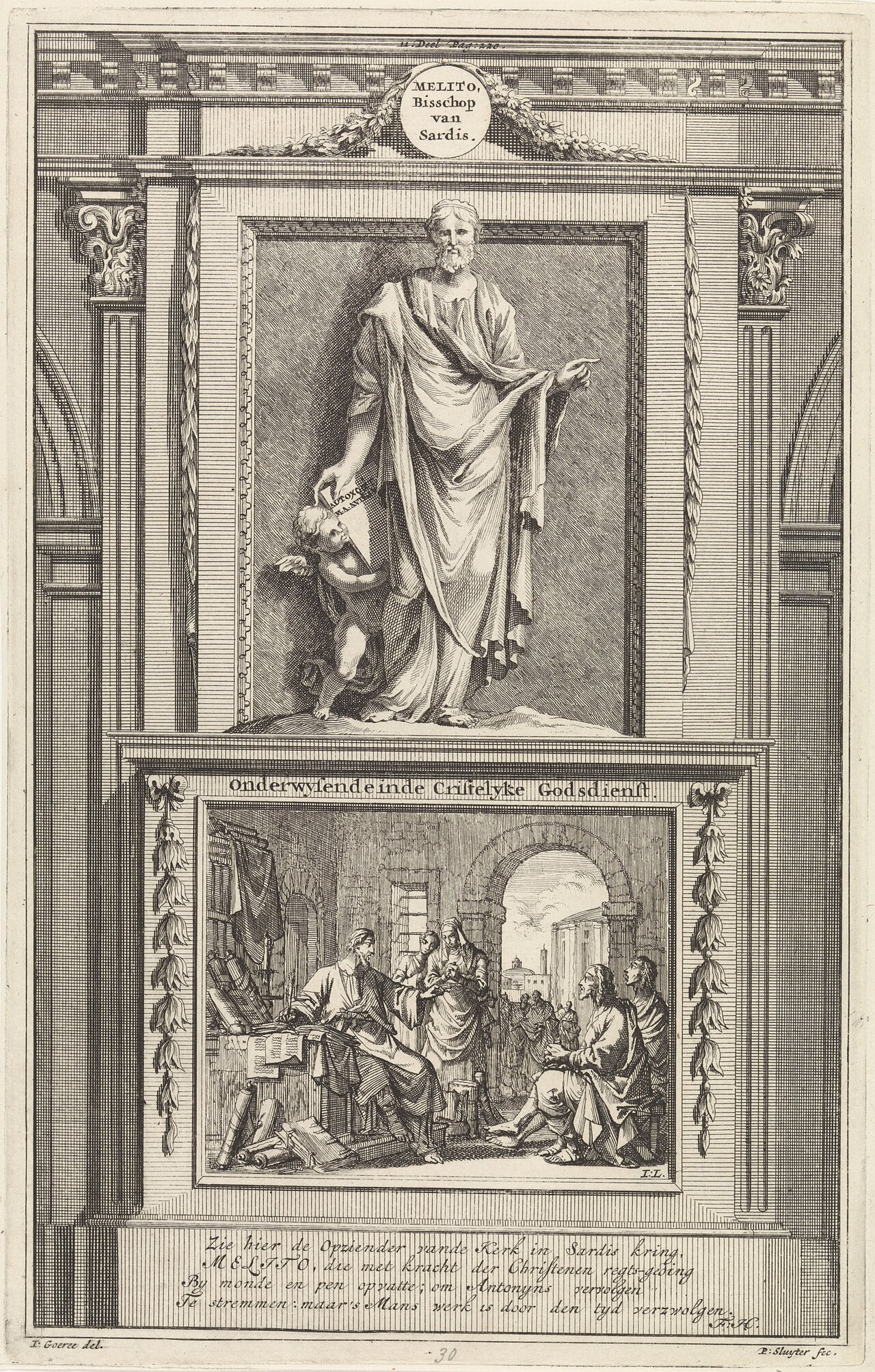
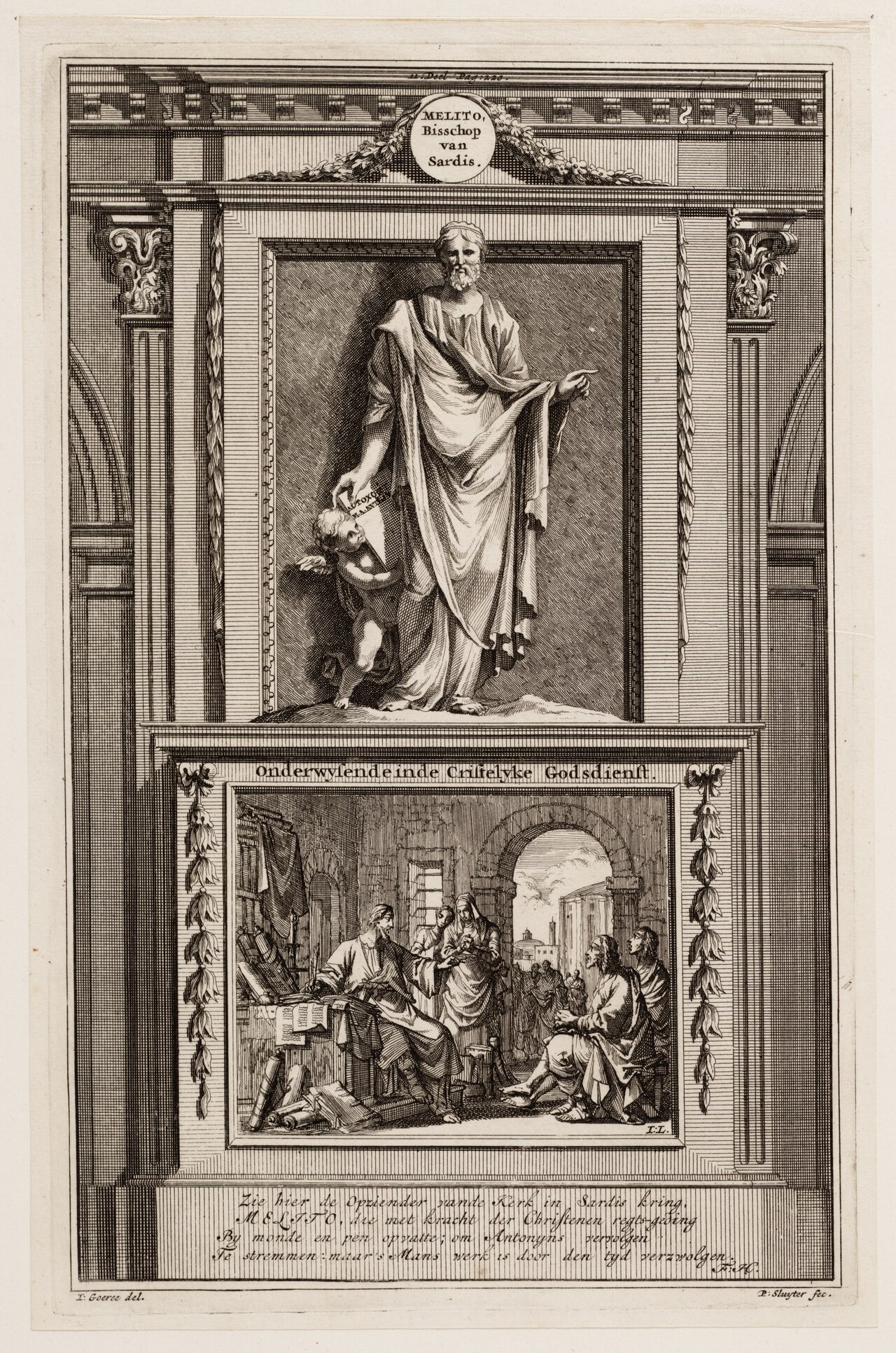

%2C_RP-P-1896-A-19368-1267.jpg)


Who Melito of Sardis was
Melito, bishop of the church that met in the shadow of Sardis’s great synagogue, was celebrated across Asia as a prophet “who lived altogether in the Holy Spirit.” He traveled to Palestine to establish the exact list of the Old Testament books — the earliest such Christian canon list we possess — petitioned Marcus Aurelius against the novel injustice of anti-Christian edicts, and kept the Quartodeciman Easter with the tradition of John. For seventeen centuries he was a name attached to lost titles, until papyrus finds in the twentieth century restored his Peri Pascha nearly whole: a torrent of rhythmic, incantatory prose on the Exodus fulfilled in Christ, the masterpiece of early Christian rhetoric.
Also listed in bishops beyond the great sees.
Common questions
When did Melito live?
Melito of Sardis is dated c. 110 – c. 180 in the archive, which places Melito in the Ante-Nicene Church (AD 180–313). The dating is traditional and approximate; the archive marks it as uncertain rather than fixing a year the sources do not give.
What did Melito write?
Melito of Sardis has 1 catalogued writing in the archive: Peri Pascha (On the Passover).
Which early sources mention Melito?
Melito of Sardis is named in 3 primary-source passages catalogued here, drawn from Polycrates of Ephesus, Eusebius of Caesarea and Jerome. Every passage is quoted from a named public-domain translation, earliest first.
Where was Melito from?
The archive associates Melito of Sardis with Sardis, Lydia. The sources record more than one location, so the places are listed in the order the record moves through them.
Writings (1)
Peri Pascha (On the Passover)
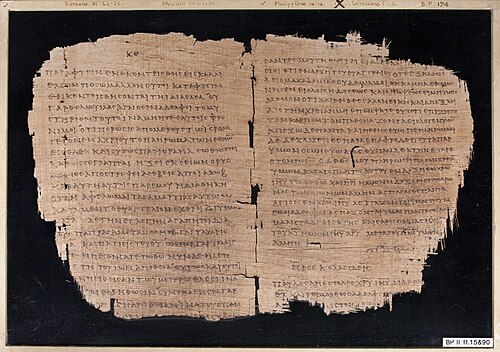
c. 160–170He who hung the earth in place is hanged. He who fixed the heavens in place is fixed in place. He who made all things fast is made fast on the tree… This is Jesus Christ. To him be glory for ever and ever. Amen.Read the interlinear source text →
Primary-source mentions (3)
Every passage below is quoted from a named public-domain translation, earliest first.
Polycrates to Victor, via Ecclesiastical History V.24
c. AD 190Melito the eunuch, who lived altogether in the Holy Spirit, and who lies in Sardis, awaiting the episcopate from heaven, when he shall rise from the dead.Polycrates of Ephesus · Ecclesiastical History V.24 · source text
Ecclesiastical History IV.26 (the catalogue of his works)
c. AD 325On Illustrious Men 24
c. AD 393Melito of Asia, bishop of Sardis, addressed a book to the emperor Marcus Antoninus Verus… in behalf of the Christian doctrine.Jerome · 24 · source text
Connected in the archive
Stood in the Johannine tradition of Asia with Polycarp; catalogued by Eusebius
People
- Polycarp of Smyrna
- Eusebius of Caesarea
- Sagaris of Laodicea
- Papirius of Smyrna
- Emperor Marcus Aurelius
- Polycrates of Ephesus
- Onesimus, brother of Melito
Events in this lifetime
- AD 112 · Pliny writes Trajan, AD 112
- AD 117 · Symeon and Ignatius martyred, AD 117
- AD 135 · Bar Kokhba crushed; Aelia Capitolina, AD 135
- AD 144 · Marcion expelled at Rome, AD 144
- AD 156 · The New Prophecy erupts, AD 156
- AD 177 · Persecution at Lyon and Vienne, AD 177
- AD 180 · The Scillitan martyrs, AD 180
Place
Places served
The one place the sources put Melito.