The Ante-Nicene Church · AD 180–313
Origen of Alexandria
Also known as Adamantius
c. 184 – c. 253 · Scholar · The century’s greatest mind · Alexandria → Caesarea Maritima
The Ante-Nicene Church
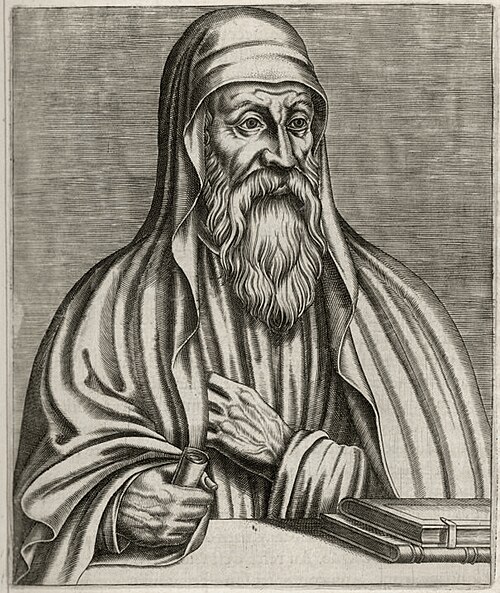
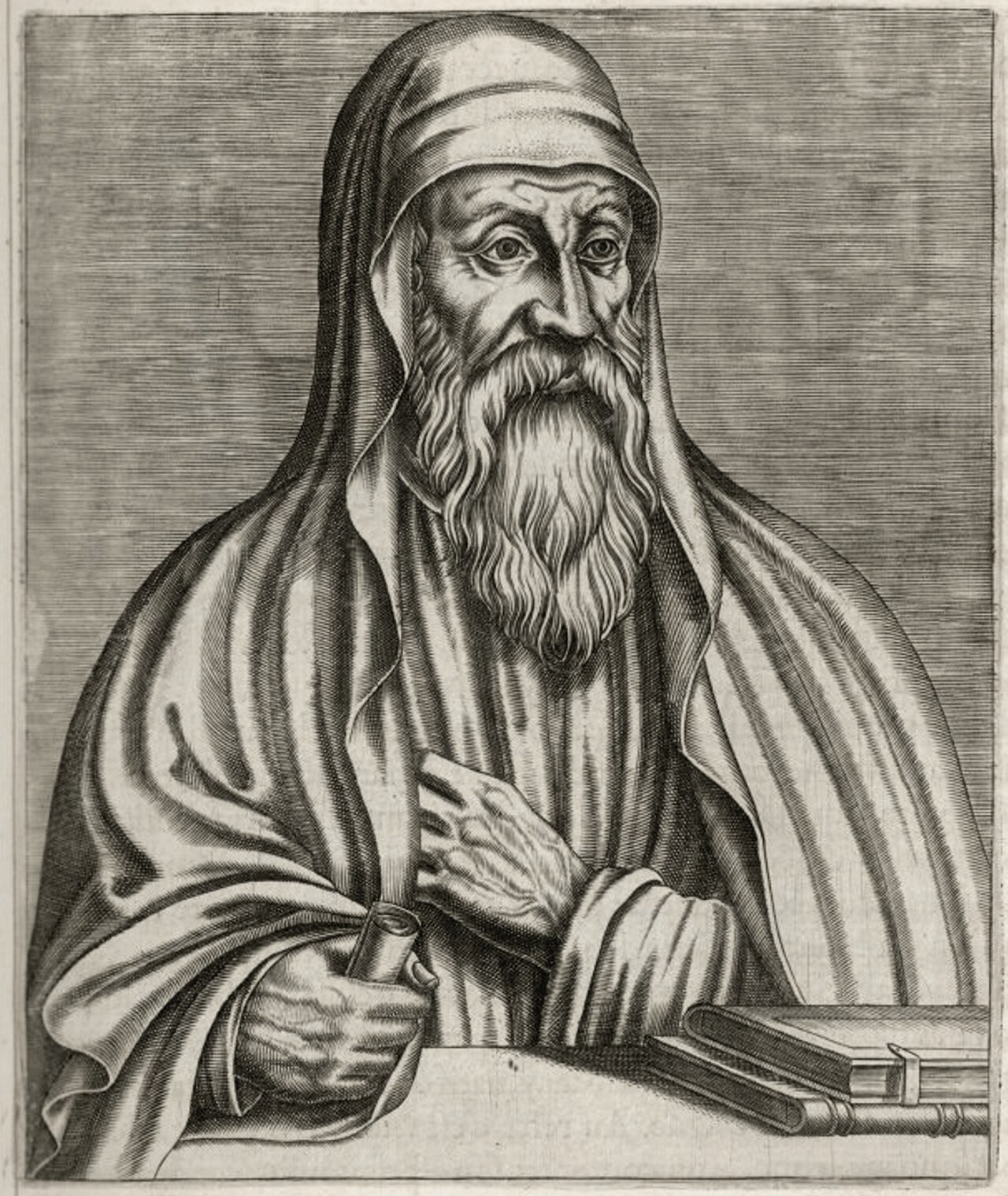
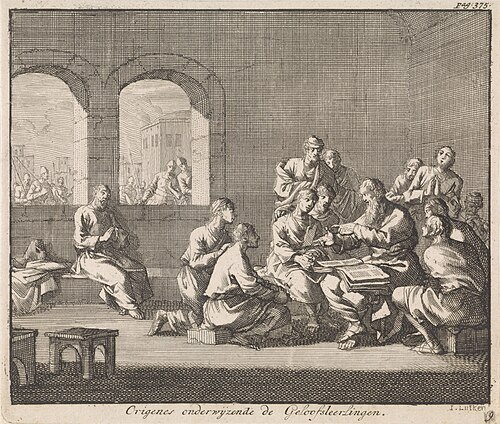
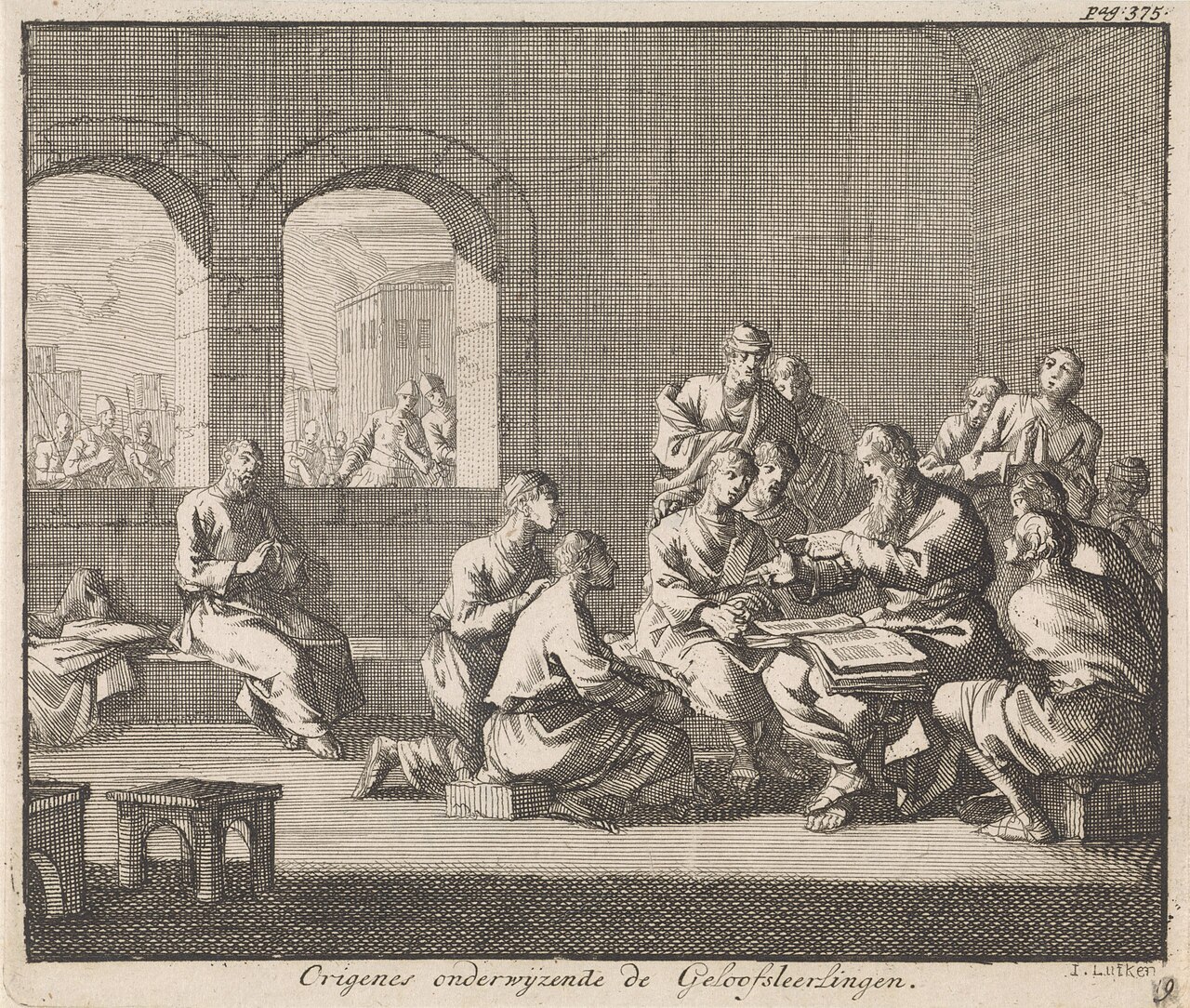

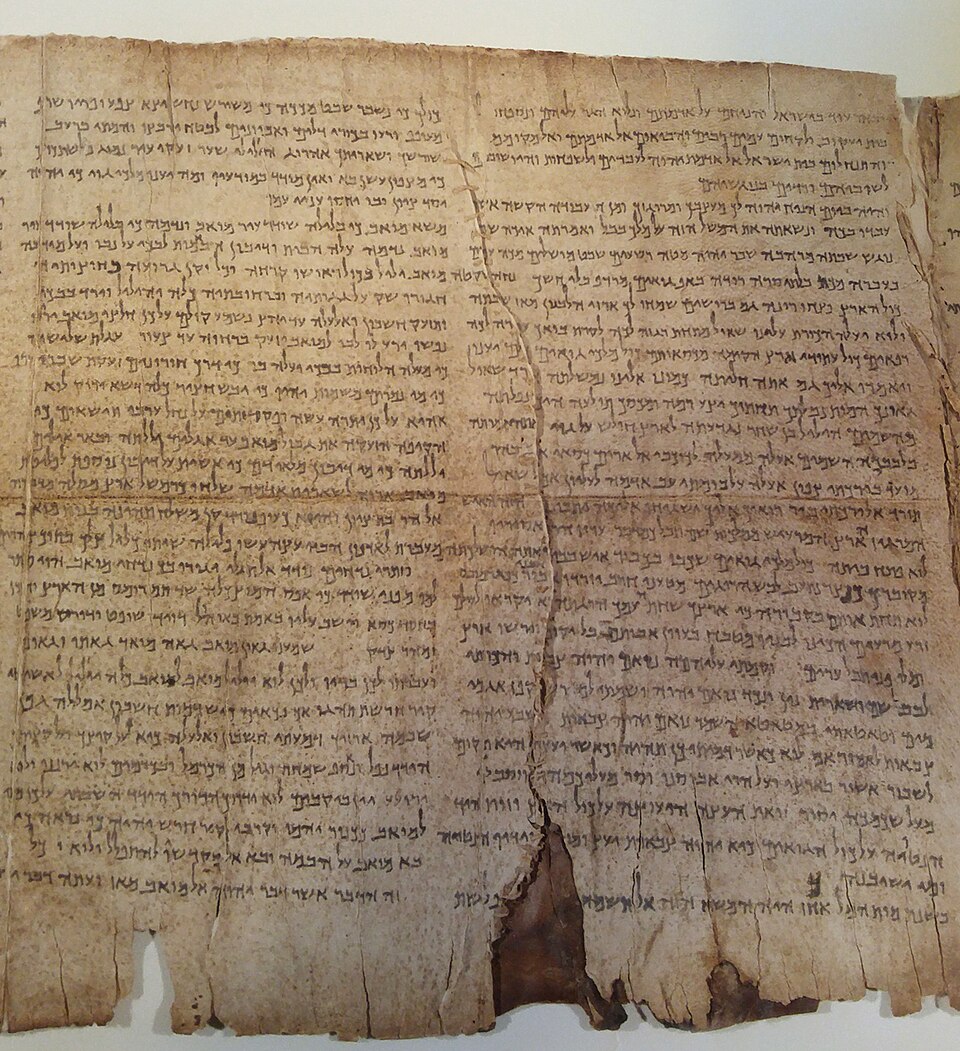


Who Origen of Alexandria was
Origen was seventeen when his father Leonides was beheaded in the persecution of 202; his mother hid his clothes to keep the boy from volunteering for martyrdom. He spent the next half-century in ferocious industry — teaching the catechetical school, learning Hebrew, and dictating to relays of stenographers a body of work ancient lists put in the thousands of titles: the Hexapla, six versions of the Old Testament in parallel columns; commentaries and homilies on nearly every book of Scripture; On First Principles, the first systematic theology; Against Celsus, the definitive answer to paganism’s best critic. Exiled to Caesarea by his bishop, tortured under Decius, he died of his injuries at Tyre — teacher of the century that followed, and posthumously its most contested name.
Common questions
When did Origen live?
Origen of Alexandria is dated c. 184 – c. 253 in the archive, which places Origen in the Ante-Nicene Church (AD 180–313). The dating is traditional and approximate; the archive marks it as uncertain rather than fixing a year the sources do not give.
What did Origen write?
Origen of Alexandria has 2 catalogued writings in the archive: On First Principles (De Principiis) and Against Celsus.
Which early sources mention Origen?
Origen of Alexandria is named in 6 primary-source passages catalogued here, drawn from Gregory Thaumaturgus, Pamphilus of Caesarea, Eusebius of Caesarea and Epiphanius of Salamis. Every passage is quoted from a named public-domain translation, earliest first.
Where was Origen from?
The archive associates Origen of Alexandria with Alexandria, Caesarea Maritima. The sources record more than one location, so the places are listed in the order the record moves through them.
Writings (2)
On First Principles (De Principiis)
c. 220–230That alone is to be accepted as truth which differs in no respect from ecclesiastical and apostolical tradition.Read the interlinear source text →
Against Celsus
c. 248The Scriptures were written by the Spirit of God, and have a meaning, not such only as is apparent at first sight, but also another, which escapes the notice of most — for those words which are written are the forms of certain mysteries. (De Principiis, pref.)Read the interlinear source text →
Primary-source mentions (6)
Every passage below is quoted from a named public-domain translation, earliest first.
Panegyric to Origen (his pupil's farewell tribute)
c. AD 238Apology for Origen (written with Pamphilus in prison)
c. AD 309Ecclesiastical History VI.3
c. AD 325For they say that his manner of life was as his doctrine, and his doctrine as his life. Therefore, by the divine Power working with him he aroused a great many to his own zeal.Eusebius of Caesarea · VI.3 · source text
Panarion 64 (the adversarial dossier)
c. AD 375On Illustrious Men 54
c. AD 392A man of immortal genius, who understood dialectics, geometry, arithmetic, music, grammar, and rhetoric.Jerome of Stridon · On Illustrious Men 54 · source text
Letter 84 (Jerome's reckoning with his old master)
c. AD 400I praised him as an interpreter, not as a teacher of doctrine; his genius, not his faith.Jerome of Stridon · Letter 84 · source text
Connected in the archive
Formed in Clement’s Alexandria; taught Gregory Thaumaturgus and Dionysius; his library at Caesarea formed Pamphilus and Eusebius
People
- Clement of Alexandria
- Gregory Thaumaturgus
- Dionysius the Great
- Eusebius of Caesarea
- Hermas of Rome
- Celsus
- Heracleon
- Theodotion the Translator
- Symmachus the Translator
- Basilides the Soldier
- Heraclides of Alexandria
- Herais of Alexandria
- Hero of Alexandria
- Leonides of Alexandria
- Plutarch of Alexandria
- Potamiaena of Alexandria
- Serenus II of Alexandria
- Serenus of Alexandria
- Heraclitus the Commentator
- Emperor Septimius Severus
- Demetrius of Alexandria
- Sextus Julius Africanus
- Ammonius of Alexandria
- Beryllus of Bostra
- Heraclas of Alexandria
- Emperor Philip the Arab
- Ambrosius, patron of Origen
- Alexander of Jerusalem
- Theoctistus of Caesarea
- Firmilian of Caesarea
- Athenodorus of Pontus
- Theognostus of Alexandria
- Theotecnus of Caesarea
- Porphyry of Tyre
- Pamphilus of Caesarea
- Methodius of Olympus
- Juliana
- Laetus
- Julia Mamaea
- Protoctetus
- Neon of Laranda
- Atticus of Synada
- Severa
- Bassus
Named alongside Origen in the sources
This figure is placed with Origen by the record — in a council roll, a martyr-act, a letter or a history — without Origen naming them in return.
Events in this lifetime
- AD 190 · The Quartodeciman controversy, AD 190
- AD 202 · Perpetua and Felicity martyred, AD 202
- AD 235 · Maximinus Thrax targets the clergy, AD 235
- AD 250 · The Decian persecution, AD 250
- AD 251 · The Novatianist schism, AD 251
Place
Places served
The 2 places the sources put Origen, in the order the record moves through them. This is what the sources attest, not a reconstructed route.